
Bread Prices in Switzerland 2026: Where a Loaf Costs Less
35 bread deals at 5 chains for the canton of Zurich, most valid until Wed 30 Sept. Lowest price per kilo: CHF 2.88/kg. Updated 28 Sept 2026.
Lowest prices per kilo
See all 35- deals
- 35
- chains
- 5

 Coop2+ items −20%
CHF 2.88 per kilo
CHF 1.44
 Coop2+ items −30%
CHF 3.27 per kilo
CHF 2.45
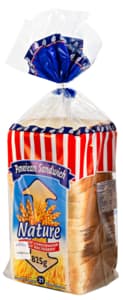
 Aligrountil Sat 3 Oct
CHF 3.64 per kilo
CHF 3.00
Promotions only, not regular shelf prices. Price per kilo: deal price divided by the weight in kilos, checked against the chain’s own figure where there is one. Source: deals published by the chains.
All bread deals
For the canton of Zurich
35 deals
- 2+ items −20%
- 2+ items −30%
- −35%
- 2+ items −30%
- −33%
- 2+ items −30%
- 2+ items −30%
- 2+ items −20%
- −29%
- −43%
- −17%
- −16%
- −34%
- −16%
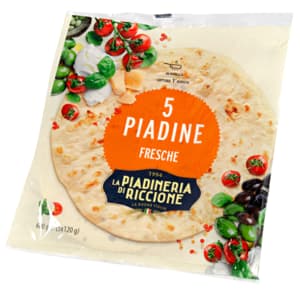
Classic Piadina
AligroLa Piadineria di Riccione · 600 gCHF 5.67 per kilo
CHF 3.40was
4.05until Sat 3 Oct
- −25%
- 2+ items −20%
- −20%
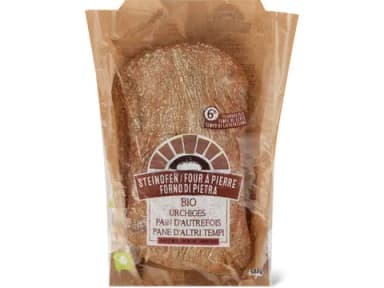
Old-style bread Organic, dark flour
 MigrosForno di pietra · 500 g
CHF 6.30 per kilo
CHF 3.15was
3.95until Wed 30 Sept
- −21%
- −47%
- Deal
- −15%
- 2+ items −20%
- −36%
- −26%













Guide
In October 2025 a price war pushed the everyday 500 g loaf to a level last seen in 1970, in nominal francs; bakery bread did not follow. Below: what the Swiss bread names mean, where that gap comes from and how to save on specialty bread.
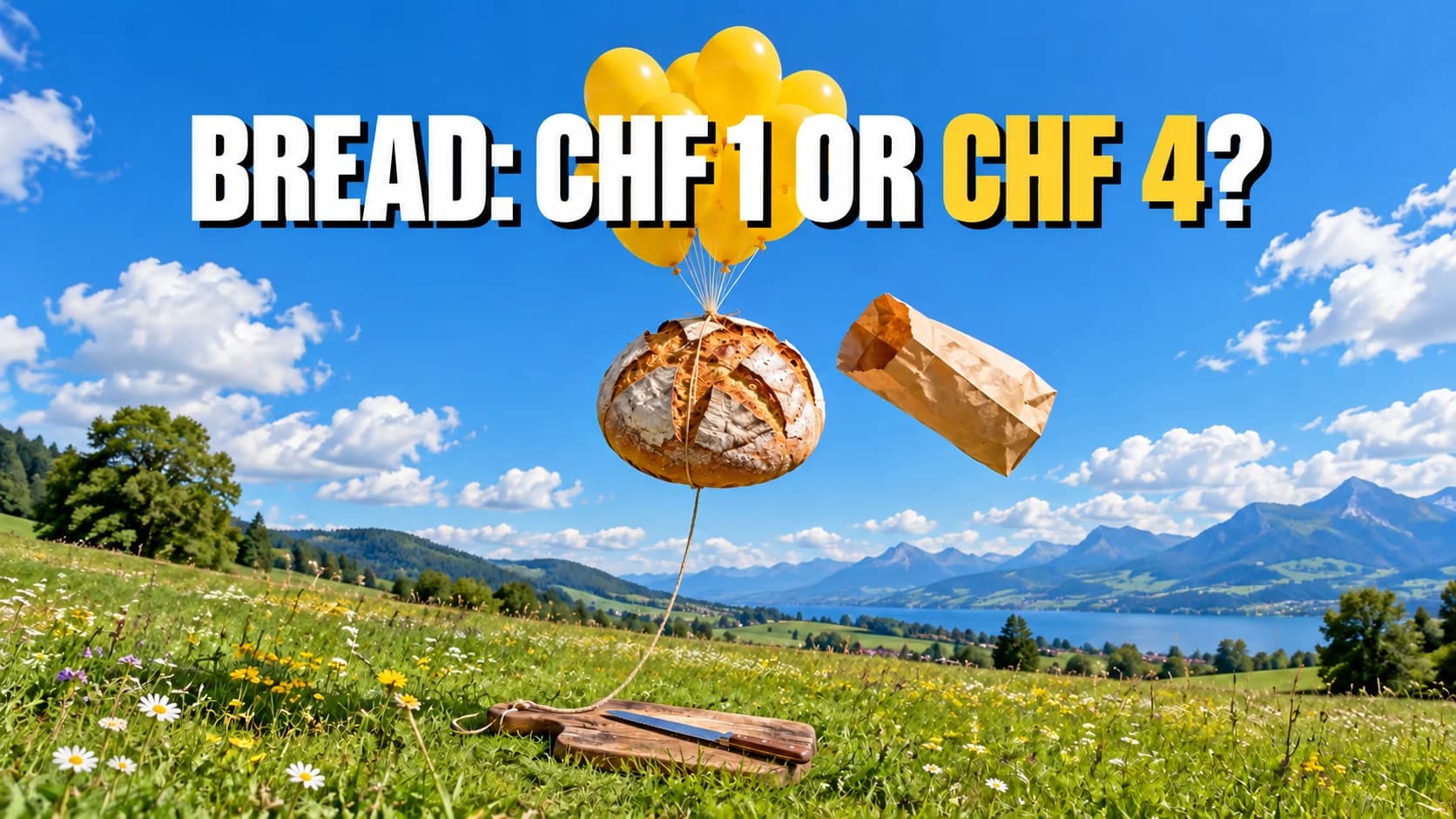
In the October 2025 price war, bread in Switzerland came down to CHF 0.99 for a 500g Halbweissbrot at Aldi and Lidl, the lowest shelf price in the table below. Migros, Coop, and Denner matched at CHF 1.00 within days. A handmade Pfünderli at an independent bakery still costs CHF 3.80 to CHF 4.00, and the gap between those two numbers is the whole story of how Swiss bread is sold today.
Sources checked regularly. Prices verified against retailer websites and confirmed via SRF, 20 Minuten, NZZ, and Beobachter reporting from October 2025 to February 2026. Live offers in the Rappn app.
Rappn is an independent grocery price comparison app in Switzerland, with no commercial agreements with any retailer.
The 99-rappen bread war and what it means for your shopping
For most of the last decade a 500g Halbweissbrot at Migros cost CHF 1.20, at Coop CHF 1.20, at Aldi CHF 1.19. In mid-October 2025 Aldi Suisse cut its Halbweissbrot to CHF 0.99 (a 17% drop) and its Ruchbrot to CHF 1.09 (a 13% drop). According to its own October 2025 announcement, Aldi claimed the title of "cheapest bread in Switzerland" with that move. Lidl matched within 24 hours and went further, putting both Halbweiss and Ruch at CHF 0.99. Denner followed the same day. Migros cut to CHF 1.00 by Wednesday. Coop announced the same move on its Prix Garantie line shortly after.
That was not a sale: those became the new shelf prices. According to the Swiss Federal Statistical Office's national consumer index, the average bread price in 2024 was CHF 2.58 per loaf. After this price war, in the May 2026 check, the entry-level Pfünderli at every major retailer except a real bakery sat at or below CHF 1.00 per 500g. To put that in historical context, the Tagesanzeiger noted in October 2025 that the last time bread was this cheap in nominal Swiss francs was 1970.
There is a regulatory tail to this story. Faire Märkte Schweiz has asked the Swiss Competition Commission (WEKO) for a sector investigation into the grain, milling and bakery market, arguing that simultaneous price moves by Migros, Coop and Denner, which together hold around 80 per cent of the Swiss food market, create cartel-like structures. The documented complaint against Coop and the millers' association is dated 9 October 2024, and the association renewed the call after the bread price war. As of September 2026 WEKO has neither opened an investigation nor published a decision. Migros CEO Mario Irminger told SRF's Eco Talk in December 2025: "We had to follow because the market price changed. We don't actually support these activities. We think they're wrong." That is an unusually candid admission from a CEO actively cutting prices, and it tells you the cuts are loss-leaders. The financial pain falls on the retailers, but the side effect lands on the country's bakery sector, which has thinned out: the Swiss Bakers-Confectioners Association today counts around 1,300 active members with 2,500 points of sale, down from roughly 2,500 producing businesses in the early 2000s. When the association last published a rate, it put the decline at 3 to 4 per cent a year, about 70 businesses. For more on how to use these dynamics to your advantage, see save money on groceries in Switzerland.
Live bread offers of the seven Swiss chains, Ruchbrot, Vollkorn, baguette, ciabatta. Which loaf is on offer shifts weekly, and Rappn shows you where.
Find this week's bread deals. Rappn is freeFree, no account required · iOS & Android
"bread" · Bakery
Offers
Reference, May 2026: bread prices at seven retailers
Prices as of May 2026, not current. Current deals are at the top of this page.
| Retailer | Halbweissbrot 500g | Ruchbrot 500g | Notes |
|---|---|---|---|
| Aldi | CHF 0.99 | CHF 1.09 | Started the price war. Industrial production. |
| Lidl | CHF 0.99 | CHF 0.99 | Lowest combined price. Baguettes 250g at CHF 0.99. |
| Migros | CHF 1.00 | CHF 1.00 | M-Budget line. Some specialty SKUs still at CHF 1.20. |
| Coop | CHF 1.00 | CHF 1.00 | Prix Garantie line. |
| Denner | CHF 1.00 | CHF 1.00 | Migros-owned discounter. No in-store bakery. |
| Aligro | Wholesale, varies | Wholesale, varies | Cash and carry for restaurants and businesses. |
| Otto's | Varies | Varies | Bread appears occasionally in its offers. |
In the May 2026 check, the everyday comparison came down to five retailers: Migros, Coop, Aldi, Lidl, and Denner. Which chains have bread on promotion this week, wholesale and clearance offers included, is in the list at the top of this page.
Beyond Halbweiss and Ruch, the picture changes fast. Specialty breads (Vollkornbrot, Dinkelbrot, Roggenbrot, Zopf) were not part of the price war and in May 2026 ranged from CHF 2.50 to CHF 5.00 at Migros and Coop, with comparable products at Lidl vs Aldi usually 5 to 10% cheaper. The Aktion calendar matters here: most Swiss specialty bread sees a 25 to 40% discount at least once a month, which is exactly where price tracking pays off.
Pfünderli, Ruchbrot, Halbweissbrot: what the names actually mean
Three Swiss-German names show up on every bread shelf, and outside Switzerland none of them mean anything obvious.
Pfünderli is a 500g loaf, named after the old measure "Pfund" (pound). It is a format, not a recipe. A Pfünderli can be Halbweiss, Ruch, or anything else, as long as the loaf weighs 500g.
Halbweissbrot is a half-white bread, made with Halbweissmehl (Type 720 in Swiss flour grading). Lighter crumb, softer crust, the everyday default in most Swiss households outside Romandie.
Ruchbrot is the Swiss signature: made from Ruchmehl (Type 1100), a flour with more bran and germ than Halbweissmehl but less than full whole-wheat. The crumb is darker, the crust crisper, and the flavor more pronounced. Most Swiss eat Ruchbrot more often than any other bread.
In French-speaking Switzerland these are sold as pain mi-blanc (Halbweiss) and pain bis (Ruch). In Italian-speaking Ticino, pane semibianco and pane bigio.
Discounter bread vs artisan bakery: why one costs CHF 1 and the other CHF 4
The price war exposed a question Swiss shoppers usually avoid: how can the same nominal product cost CHF 1 at one shop and CHF 4 at another?
Different products. The 99-rappen Pfünderli is industrial: pre-mixed dough, often imported, short fermentation, machine-shaped, baked in retailer-operated bakeries that mostly reheat frozen or par-baked goods. The CHF 4 Pfünderli is hand-shaped, fermented for hours, baked from scratch by trained staff earning at least CHF 4,400 a month for an EFZ qualification under the sector GAV, in force since 1 January 2025 and indexed to inflation from 2026. It is not the same loaf at a markup. It is a different product made by a different process.
| Segment | Typical product | Price range | Typical seller |
|---|---|---|---|
| Industrial discounter | 500g Halbweiss or Ruch | CHF 0.99 to CHF 1.00 | Aldi, Lidl, Migros, Coop, Denner |
| Specialty supermarket | Vollkorn, Dinkel, Roggen, Zopf | CHF 2.50 to CHF 5.00 | Migros, Coop in-store bakery |
| Independent bakery | Handmade Pfünderli, traditional loaves | CHF 3.50 to CHF 4.50 | Local Bäcker (Lyner, Hotz Rust, regional bakeries) |
| Hipster manufaktur | Sourdough, ancient grains, slow ferment | CHF 9.90 to CHF 16.00 | John Baker, Jung, Freja, Sourgood (Zurich) |
The Beobachter reported in January 2026 that artisan sourdough at Freja in Zurich costs CHF 16 per loaf and Sourgood charges CHF 22 per kilo. Whether that is "worth it" is taste, ethics, and budget, not a fact. Whether the CHF 1 industrial loaf is the same product as the CHF 4 handmade one is a fact: it is not.
The market is voting with its wallet. Two out of every three loaves of bread sold in Switzerland in 2024 were bought outside a traditional bakery, according to the Swiss Bakers and Confectioners Association via SRF.
Bread prices change every week. Track them.
Pin Ruchbrot, Vollkorn, or your favourite specialty bread in Rappn. Get notified the moment your loaf drops in price at any of the 7 retailers you shop. Open Rappn.
How to actually save on bread without giving up quality
Three habits cover almost all the savings that exist in this category.
Buy specialty bread on Aktion, never at full price. Migros and Coop rotate Vollkorn, Dinkel, Roggen, and Zopf through 25 to 40% promotions roughly every three to four weeks. In May 2026 the full-price ticket on a Coop Vollkornbrot was around CHF 3.50, the Aktion ticket closer to CHF 2.20. Same loaf. The same logic applies across the category-by-category comparison at the four largest retailers.
Use loyalty for bread you'd buy anyway, not for bread you wouldn't. Cumulus and Supercard both run scheduled bonus-point campaigns on baked goods, usually 5x or 10x points on full-price specialty bread. That brings the effective price of full-price specialty bread closer to discounter level. The trap is using points to justify volume you didn't need. See Cumulus vs Supercard for how the math actually works.
Freeze ahead. A CHF 1.00 Pfünderli stays usable for one day fresh and around two months frozen sliced. Buying two on a Saturday and freezing one is functionally a 50% saving on Wednesday's loaf. This is the single highest-leverage bread habit in Switzerland and it costs nothing to adopt.
For shoppers near the border, German and French and Italian bread is significantly cheaper, but the CHF 150 customs allowance since January 2025 plus travel and time mean bread alone almost never justifies a cross-border trip. Bread becomes worth the trip only as part of a larger basket. If you live in Basel, Geneva, or Chiasso, this matters; if you live in Bern, it doesn't.
Updated: .
Why Rappn?
Rappn is an independent grocery price comparison app in Switzerland, with no commercial agreements with any retailer. Our comparisons are truly independent.
- 100% free: no subscription, no hidden costs
- Neutral: no commercial agreements with Migros, Coop, Aldi, Lidl, Denner, Aligro, or Otto’s
- Updated daily, as soon as the chains publish their deals
- The chains’ deals in one place: search, filter, compare, no account needed
Ready to save on groceries?
Install Rappn and compare for yourself this week. No account required.Scan the code, install Rappn and compare current offers. No account needed.
Built in Switzerland, for Switzerland

Frequently Asked Questions
Why does bread cost CHF 0.99 in Switzerland in 2026?
Because Aldi Suisse cut its Pfünderli to CHF 0.99 in October 2025 to claim the title of cheapest bread retailer, and every major competitor (Lidl, Migros, Coop, Denner) matched within days. The cuts are loss-leaders, supported by retailer cross-subsidisation, and the Swiss Competition Commission was asked to review whether the simultaneous reactions were independent.
Where is the absolute cheapest bread in Switzerland?
In the May 2026 check: Lidl, where both 500g Halbweissbrot and 500g Ruchbrot cost CHF 0.99. Aldi matched on Halbweiss (CHF 0.99) but was 10 rappen higher on Ruchbrot (CHF 1.09). Migros, Coop Prix Garantie, and Denner all sat at CHF 1.00 for both. This week's bread deals, sorted by price per kilo, are at the top of this page.
Is the 99-rappen bread the same quality as supermarket bread three years ago?
The retailers say yes, the bakers' association says no. The industrial Pfünderli relies on mechanical mixing, short fermentation, and (in some cases) imported par-baked dough. Independent bakers argue this is different from the longer-fermented bread Migros and Coop sold at CHF 1.20 a few years ago. Taste differences are subjective; production differences are real.
How much does a real bakery loaf cost in Switzerland?
A handmade 500g Pfünderli at a traditional bakery costs CHF 3.80 to CHF 4.50, with regional variation. In Zurich, hipster sourdough bakeries like Freja and Sourgood charge CHF 9.90 to CHF 16.00 per loaf, which represents a different product category, not just a markup.
Which Swiss supermarkets actually bake their own bread on site?
Migros operates in-store bakeries in most larger branches under the "Frisch & Handgemacht" line. Coop runs in-store bakeries at Coop Pronto and many Coop Supermärkte. Aldi and Lidl operate bake-off stations that finish frozen or par-baked dough, mostly produced industrially. Denner does not have in-store bakeries. Aligro and Otto's do not produce fresh bread.
Has the price war made bread cheaper across the board, or only the headline product?
Only the headline product. The Halbweiss and Ruch Pfünderli at CHF 1.00 are loss-leaders. Specialty breads (Vollkorn, Dinkel, Roggen, Zopf, regional varieties) were not cut, and in May 2026 they ranged from CHF 2.50 to CHF 5.00. Tracking specific specialty breads through promotions is where most household savings on bread actually come from.