The Evian “price war” (5–11 Feb 2026): four tricks
Swiss promo weeks can feel like a battle. This week, Evian is the perfect example of how supermarkets run a "price war" without playing the same game.
This week, Evian is a perfect example of how Swiss supermarkets run a “price war” without all playing the same game. On paper it looks like “everyone has Evian on offer”. In reality, each chain uses different rules to push you toward a specific behaviour: buy more, shop in a specific format (megastore/online), make an extra trip, or throw more items into your basket.
Below is what’s happening, and how you, as a consumer, can actually win from it without getting nudged into spending more overall.
What supermarkets are trying to make you do (the psychology behind the offer)
When a supermarket discounts a famous brand like Evian, the goal is rarely “let’s be nice”. Most of the time it’s one of these:
- Get you into their ecosystem (store or online)
A well-known brand at a great price is a magnet. Once you’re there, the store expects you to buy other items at normal margins. - Make you buy more than planned
“Min. 2” / “2+” is the strategy. It forces a stock-up, ties up more of your budget, and reduces the chance you’ll compare again next week. - Make you react to the % badge instead of doing the math
“-50%” triggers urgency and excitement. It’s designed to short-circuit unit-price thinking. - Shift your habit
If they can make you pick their store for one popular item, they’re betting you’ll add “just a few more things” and slowly move your default shopping there.
Expected consumer behaviour (what they want):
You see a big discount → you feel urgency (“this week only”) → you buy the minimum required quantity → you add extra items because you’re already there → you stop comparing because “this store had the deal”.
The Evian offers this week (05/02–11/02) and what each one nudges you to do
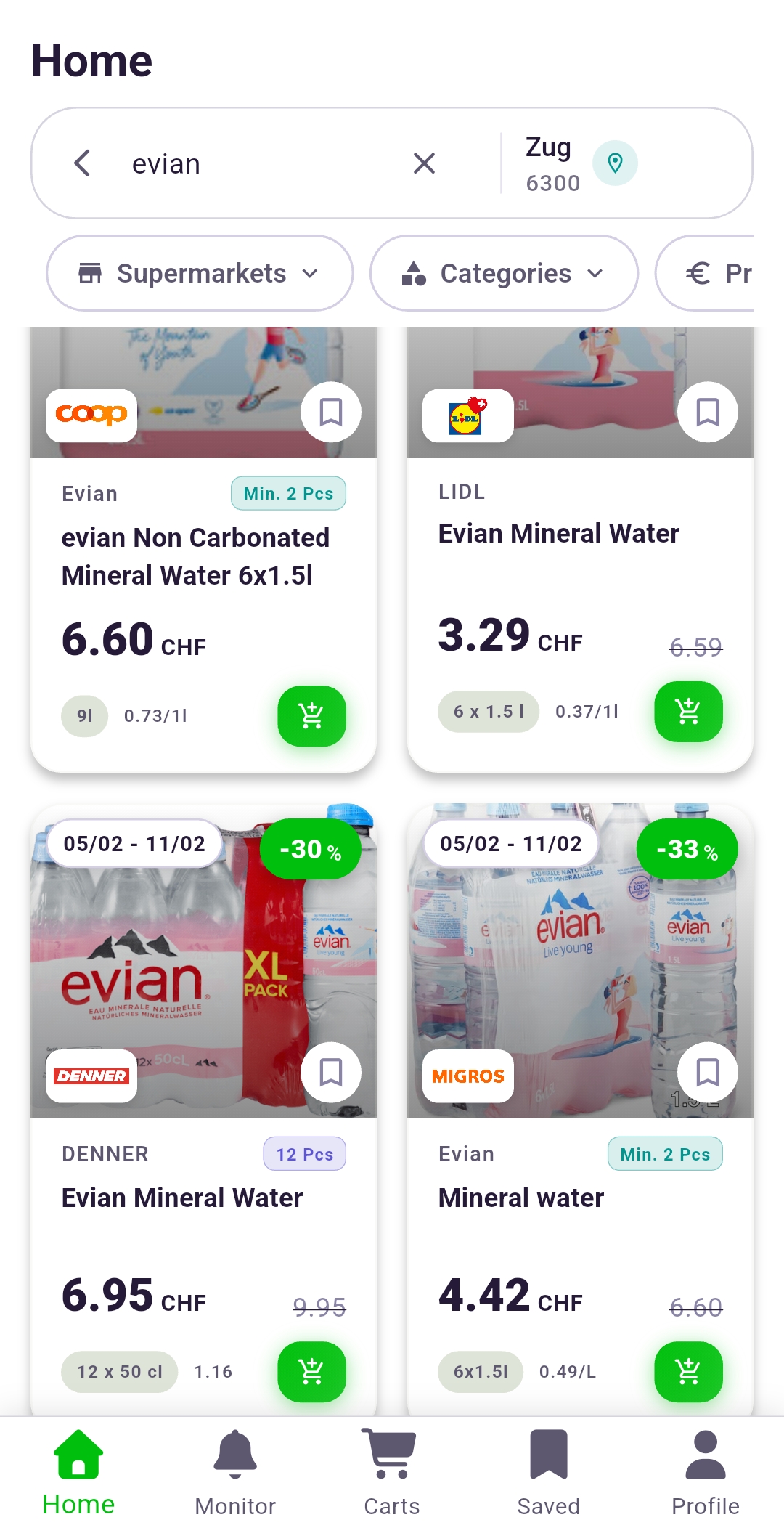
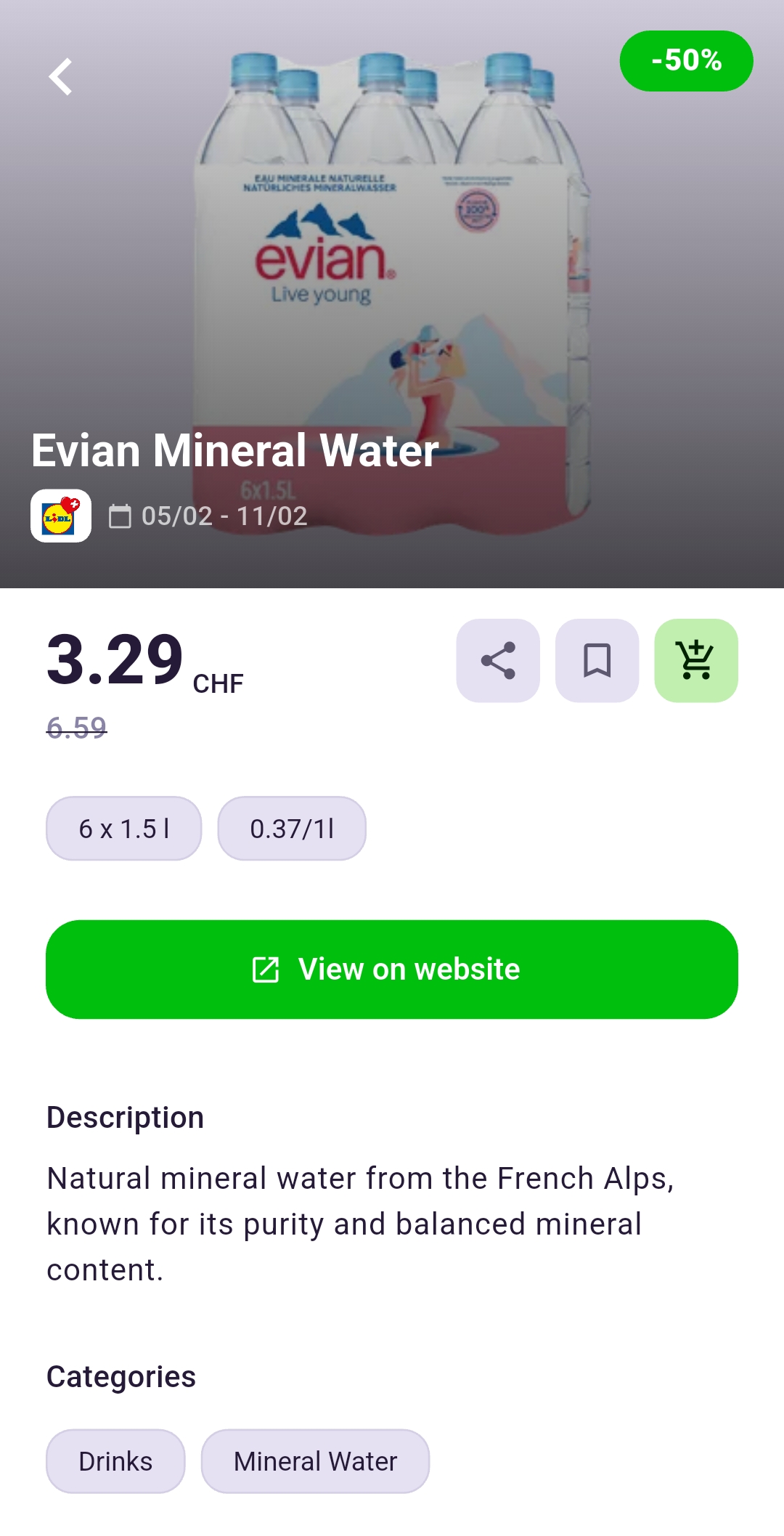
1) Lidl: the clean “lowest CHF/L” deal (no hoops)
- Pack: 6×1.5L = 9L
- Price: CHF 3.29
- Unit price: ~CHF 0.37/L
The nudge: “We’re the cheapest, come here.”
It’s simple and it works, because you don’t need to read fine print.
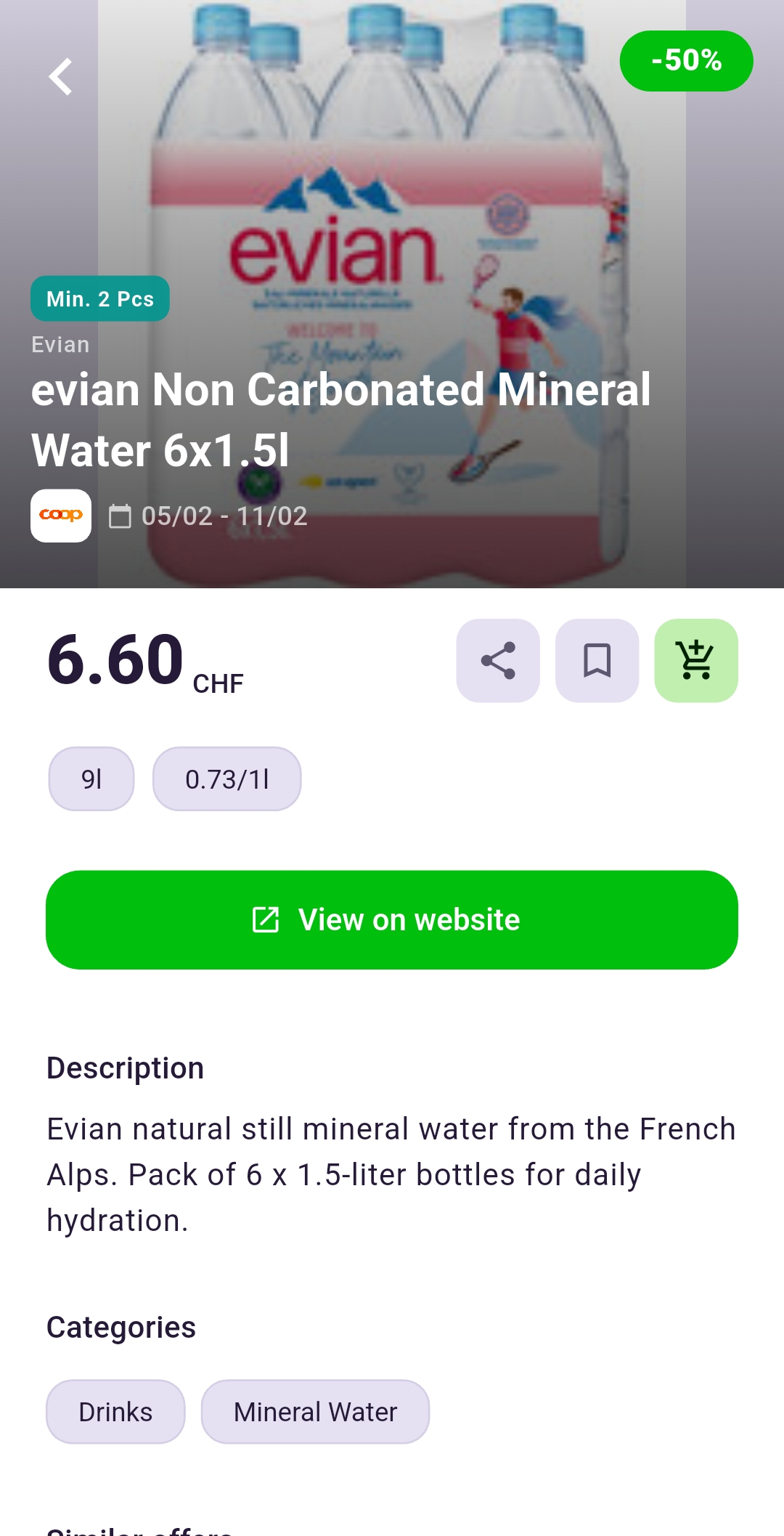
2) Coop: matches discounter price, but only if you buy big and shop in the right channel
This is the important nuance:
- Offer: -50% for 2+
- Valid only: Coop Megastores or Coop Online
- Pack: 6×1.5L = 9L
- “Normal promo card” price shown per pack: CHF 6.60
- Discounted price per pack when buying 2+: CHF 3.30
- Minimum purchase: 2 packs = 18L
- Minimum total at checkout: CHF 6.60 (because you must buy at least 2)
Unit price at the discounted rate:
- CHF 3.30 / 9L ≈ CHF 0.37/L (basically matching Lidl)
The nudge: “We’ll give you the best price, but you must commit to volume (18L) and use our megastore/online channel.”
That’s a strong behavioural lever, especially online, where it’s easy to add extra items to the cart.
3) Migros: solid compromise if it’s your base store (also forces 18L)
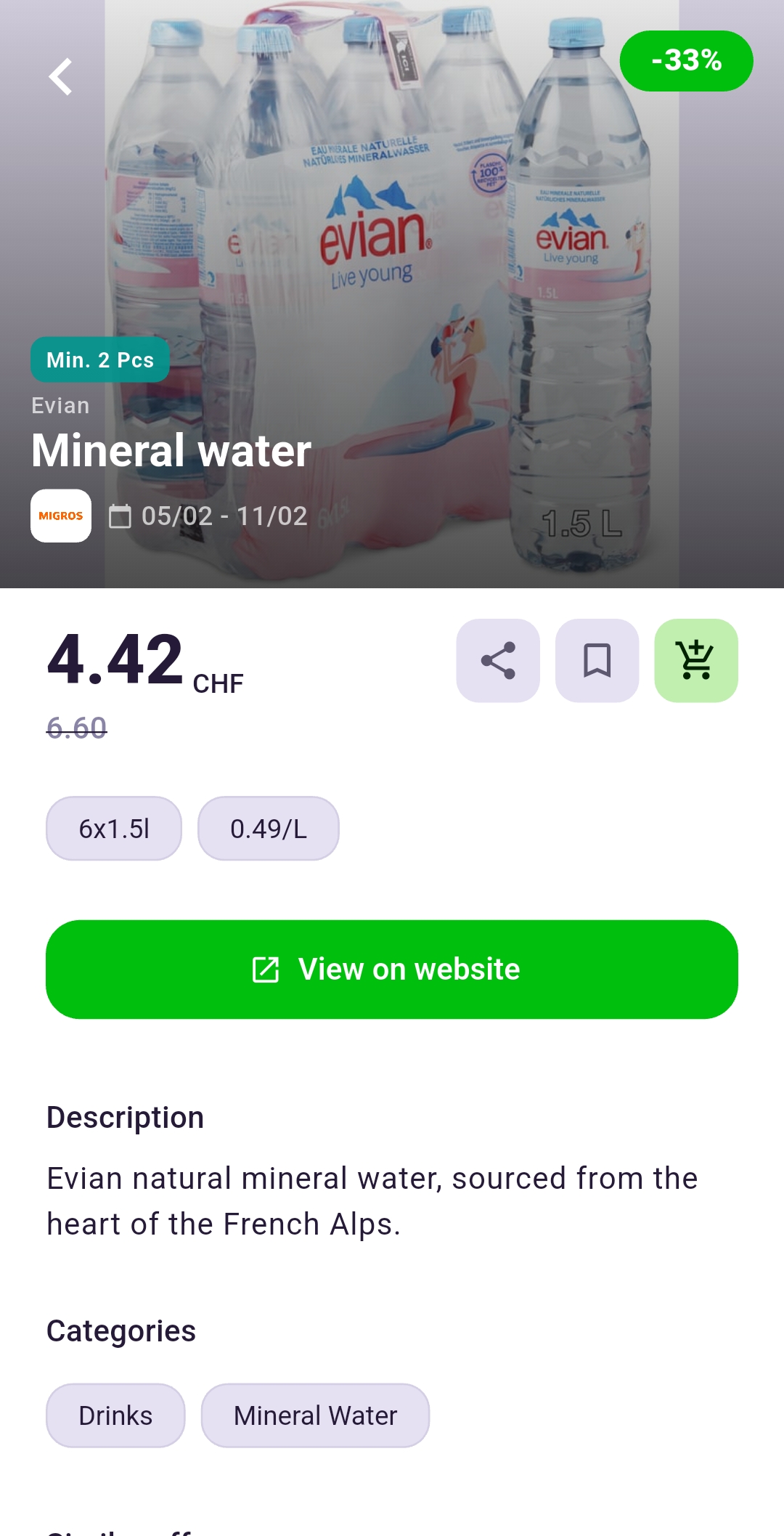
- Pack: 6×1.5L = 9L
- Price: CHF 4.42
- Unit price: ~CHF 0.49/L
- Condition: Min. 2 packs = 18L
- Minimum total: CHF 8.84
The nudge: “Stay with us for your normal shop.”
It’s not trying to be the lowest; it’s trying to keep you from switching stores for one item.
4) Denner: convenience positioning (small bottles), not a per-litre fight
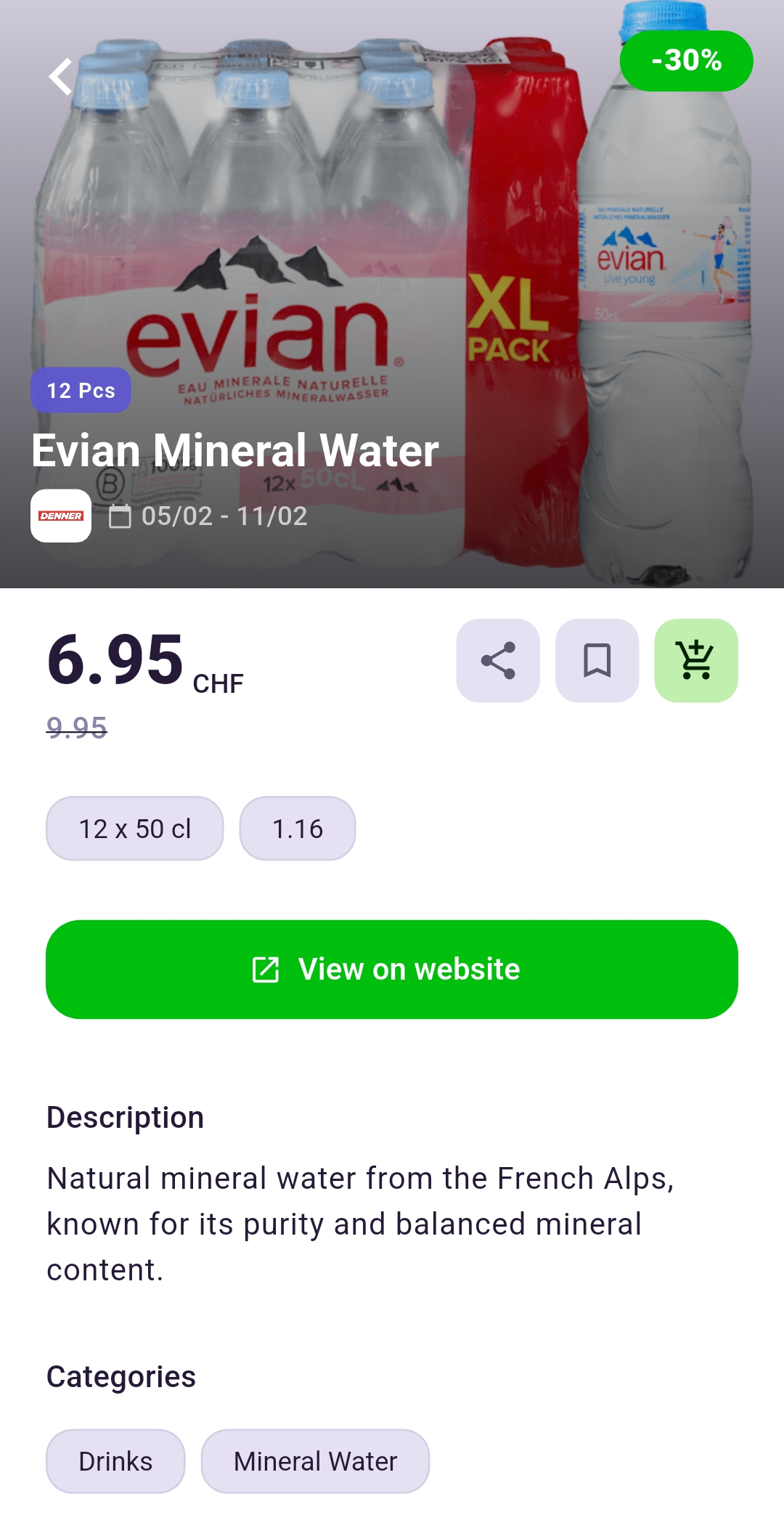
- Pack: 12×50cl = 6L
- Price: CHF 6.95
- Unit price: ~CHF 1.16/L
The nudge: “Small bottles are handy.”
This is a different product logic: you’re paying for portability (work, school, travel), not litre-efficiency.
How the consumer wins the price war (without getting manipulated)
1) Buy based on CHF/L, not the % badge
This week, the honest ranking on “home stock-up water” is:
- Lidl: ~0.37/L (simple)
- Coop Megastore/Online: ~0.37/L only if buying 2+ (18L minimum)
- Migros: ~0.49/L (18L minimum)
- Denner: ~1.16/L (different use case)
2) Treat “Min. 2 / 2+” as a real cost
18L isn’t just “more water”. It’s:
- storage space,
- carrying weight,
- money tied up in stock.
If you won’t realistically use it, the promo becomes “cheap” only on paper.
3) Extend the price war to lower your average price
The real win is locking in the low point so you don’t pay full price next week.
A reusable rule for branded water:
- Stock-up: ≤ CHF 0.40/L
- Okay if convenient: CHF 0.40–0.55/L
- Skip: ≥ CHF 0.60/L
Then:
- when it hits stock-up (Lidl, or Coop if you already use Megastore/Online and want 18L), buy 2–3 weeks worth
- when it’s expensive again, buy zero
4) Don’t let a deal force an extra trip unless savings are meaningful
If a “cheap” deal costs you time and an extra basket, you didn’t win. A practical threshold many people use: only add a stop if you save roughly CHF 10–15+ on items you already buy.
The bigger point: Evian is just the example
Next week it’s coffee, detergents, cheese, pasta, paper goods. The structure repeats:
- a famous item becomes the hook
- conditions shape your behaviour (min quantity, channel restrictions)
- the store expects extra spend once you’re there
If you stay calm, check CHF/L, and only stock up when it fits your real life, the price war works for you, not against you.
How Rappn helps (and why these screenshots matter)
The hard part isn’t “finding offers”. It’s decoding the rules quickly: different stores, different dates, different minimum quantities, and restrictions like “only online/megastore”.
Rappn makes these price wars usable by showing:
- the same product across supermarkets in one place
- unit prices (CHF/L or CHF/kg) for fast comparisons
- conditions like “Min. 2 / 2+”
- dates and (where available) format restrictions
The screenshots above (captured on 08.02.2026) show just one example, and the same approach applies every week to dozens of everyday items.