Cheapest plant milk in Switzerland: where to buy oat, soy and almond drinks
Plant drinks vary widely in price, and own brands like Migros V-Love and Coop Karma usually sit well below branded cartons such as Oatly and Alpro. Here is a neutral guide to oat, soy, almond and rice drinks, barista vs regular, and organic, plus how to compare per litre and check this week's real prices for free.
Rappn compares prices across all 7 chains live: free, no account.
Find your plant drink for less. Rappn is free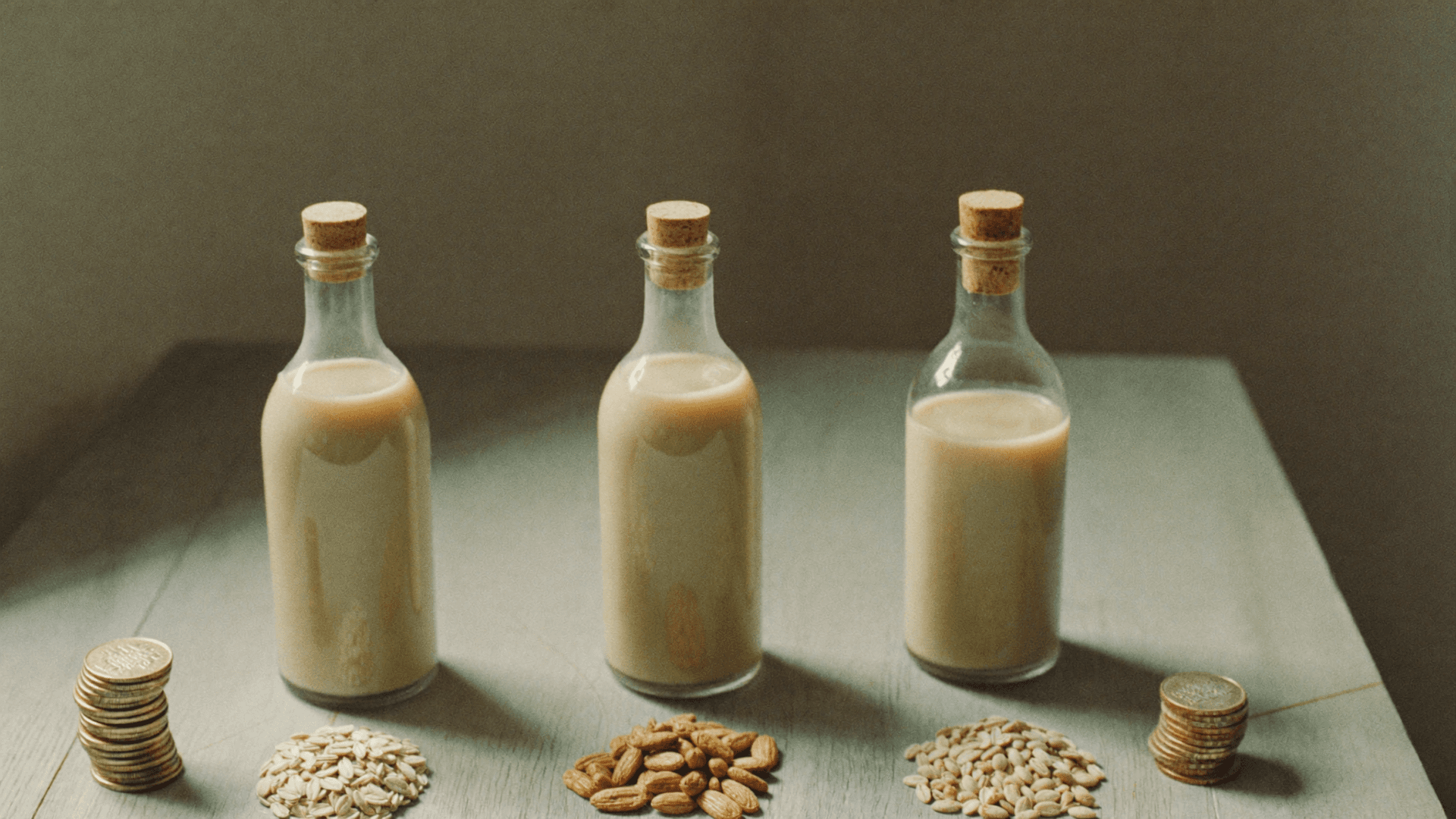
Plant drinks are one of the fastest-growing corners of the Swiss chilled aisle, but the price gap between a branded carton and an own-brand one can be large for what is, in the end, oats or soy and water. Oat, soy, almond, rice and the newer hazelnut, coconut and pea drinks now sit in every big chain, sold both as branded names like Oatly, Alpro and Joya and as supermarket own brands such as Migros V-Love and Coop Karma, with Aldi Suisse and Lidl running their own lines too. The cheapest carton is rarely the same one week to the next, and the only honest way to compare is per litre, not per pack. This guide explains where to look and how to judge value, then sends you to live prices.
Sources checked regularly: the retailers' own published ranges and product pages (Migros V-Love, Coop Karma including the Swiss-grown organic oat drink produced at Emmi, Aldi Suisse and Lidl plant-drink lines, the latter under Vemondo); Swiss consumer-test publications K-Tipp and Kassensturz (SRF) and the barista oat-drink comparisons widely cited in the coffee press; and general reporting on the growth of milk alternatives in Swiss retail. Under Swiss labelling the word "milk" is reserved for dairy, so these products are sold as plant "drinks". Specific prices change every week, so this guide explains how to judge value rather than quoting figures that go stale; check live prices in the Rappn app.
Rappn is the only neutral grocery price comparison app in Switzerland, with no commercial agreements with any retailer. We are not paid by Coop, Denner, Migros, Aldi, Lidl, Aligro or Otto's to rank them, and nothing below is sponsored.
Own brand vs branded: where the real saving is
The single biggest lever on the price of a plant drink is the brand. A branded carton, such as Oatly or Alpro, usually sits at the top of the shelf on price, because you are paying for the name, the marketing and often a particular taste people have grown loyal to. The supermarket own brands, Migros V-Love and Coop Karma, are typically positioned well below the branded equivalents while covering the same core types: oat, soy, almond and rice. At the discounters, Aldi Suisse and Lidl carry their own plant-drink ranges (Lidl groups its vegan products under the Vemondo name), and these are generally pitched as the keenest everyday option. If you buy a plant drink every week, switching from a branded carton to a comparable own brand is one of the largest painless savings in the whole basket, and blind tastings by Swiss consumer testers regularly find own-brand drinks hold up well against the big names.
Barista vs regular: do not overpay by accident
Most plant-drink ranges now come in two versions: a regular drink and a "barista" version formulated to foam and to hold up in hot coffee without splitting. The barista line usually costs more. That premium is worth it if you make lattes and cappuccinos at home and want reliable microfoam, but it is wasted money if you only pour the drink on cereal or use it in cooking, where the regular version does the same job for less. Check which one is actually in your trolley, because it is easy to grab the dearer barista carton out of habit.
Plant drink types at a glance
Different bases suit different uses and sit at different price points. This is a neutral, qualitative map, not a price list, because the cheapest option shifts with promotions.
| Type | Typical price level | Best for |
|---|---|---|
| Oat drink | Often the value pick | All-rounder for coffee, cereal and cooking; widest own-brand choice |
| Soy drink | Usually keen | Highest protein; a long-established, widely stocked base |
| Rice drink | Mid | Naturally sweet, light; good for those avoiding soy and nuts |
| Almond drink | Mid to higher | Light, nutty; popular cold, watch for sweetened versions |
| Barista versions (any base) | Premium | Home lattes and foam; skip if you only use it on cereal |
| Hazelnut, coconut, pea and blends | Varies | Specific flavours and diets; choice is widest at the big two |
Organic, ambient and pack size
Three more details move the price. Organic plant drinks, including Coop's Bio Suisse oat drink made from Swiss-grown oats and Migros organic lines, cost more than the standard versions, so choose organic where it matters to you and the everyday version elsewhere. Ambient cartons (the long-life ones on a normal shelf) and chilled cartons (in the fridge) are often the same drink at a different price, and the ambient version stores for months, which makes it easy to stock up when it is on offer. Finally, watch pack size: a larger or multipack carton usually lowers the price per litre, which is the number that actually matters. For a wider look at organic ranges across the chains, see our best organic supermarket in Switzerland guide.
How to compare plant drinks properly
The shelf price is misleading because pack sizes differ. A one-litre carton and a smaller bottle are not comparable until you work out the price per litre, and that is exactly where own brands and offers pull ahead. This is the gap Rappn fills. You search "oat drink" or "soy drink" and see every active offer across Coop, Denner, Migros, Aldi, Lidl, Otto's and Aligro at once, with the price per litre next to the shelf price so you compare like with like. Everything is filtered to your canton, and you can set an alert so you are told the moment a plant drink you buy regularly drops in price. It is free, and it has no commercial deal with any retailer. If your goal is the lowest total bill across the whole shop, our cheapest supermarket in Switzerland guide widens the field, and best value supermarket weighs price against quality.
So where is plant milk cheapest?
The neutral answer: for the lowest base price, a supermarket own brand or a discounter line in the oat or soy category is usually the value pick, and switching from a branded carton is the biggest easy saving. Pick the regular version over barista unless you genuinely foam at home, choose organic only where it matters, and always read the price per litre rather than the pack price. No single carton is "always cheapest", and a deep weekly Aktion can put a branded drink below its own-brand rival for a week. The only way to know who wins your basket today is to compare the live offers side by side, which is the whole reason Rappn exists.
Last reviewed regularly. Prices and promotions change weekly; this guide is updated as the Swiss retail landscape shifts.
Sources checked: .
Plant drinks swing widely in price between branded names, supermarket lines and discounters, and promotions move often. Rappn gathers the plant-drink offers across chains so you can switch to the lower price without giving up the type you like.
Offers
Free, no account required · iOS & Android
Why Rappn?
Rappn is the only neutral grocery price comparison app in Switzerland, with no commercial agreements with any retailer. Our comparisons are truly independent.
- 100% free: no subscription, no hidden costs
- Neutral: no commercial agreements with Migros, Coop, Aldi, Lidl, Denner, Aligro, or Otto’s
- Real-time data: prices updated continuously
- +10,000 offers, +3,000 supermarkets, 100% free
Ready to save on groceries?
Install Rappn and compare for yourself this week. No account required.Scan the code, install Rappn, and start tracking real grocery savings this week. No account required.
Built in Switzerland, for Switzerland

Frequently Asked Questions
Where is plant milk cheapest in Switzerland?
For the lowest base price, a supermarket own brand or a discounter line is usually the value pick: Migros V-Love and Coop Karma sit well below branded cartons, and Aldi Suisse and Lidl run their own plant-drink ranges. Oat and soy drinks tend to be the most keenly priced bases. No single carton is always cheapest, because a strong weekly promotion can briefly put a branded drink below an own brand, so the reliable way to know is to compare the price per litre across the chains for the week you are shopping.
Is own-brand plant milk as good as Oatly or Alpro?
Often, yes, for everyday use. Supermarket own brands such as Migros V-Love and Coop Karma cover the same core types (oat, soy, almond, rice) at a lower price, and blind tastings by Swiss consumer testers regularly find own-brand drinks hold up well against the big names. Taste is personal, especially in coffee, so it is worth trying a couple. For pouring on cereal or cooking, most people struggle to tell the difference, which makes the own brand an easy saving.
What is the difference between barista and regular plant milk?
The barista version is formulated to foam and to stay stable in hot coffee without splitting, and it usually costs more. If you make lattes or cappuccinos at home, the premium is worth it for reliable microfoam. If you only use the drink on cereal or in cooking, the regular version does the same job for less, so it is easy to overpay by grabbing the barista carton out of habit. Check which one is actually in your trolley.
Which plant drink type is cheapest: oat, soy, almond or rice?
Oat and soy drinks tend to be the most widely stocked and keenly priced, especially as own brands, which makes them the usual value picks. Rice and almond drinks often sit a little higher, and almond can climb further in unsweetened or premium versions. The base you choose should also suit the use: oat is a flexible all-rounder, soy is highest in protein, and rice and almond are lighter. Always compare per litre rather than per pack.
How do I compare plant milk prices across supermarkets?
Use the price per litre, not the shelf price, because pack sizes differ and a smaller bottle can look cheaper than it is. In Rappn you search for example oat drink and see every current offer across Coop, Denner, Migros, Aldi, Lidl, Otto's and Aligro at once, with the price per litre next to the shelf price, filtered to your canton. You can set a price alert for a drink you buy regularly. The app is free and neutral, with no commercial deals with retailers.