Grocery shopping in Switzerland: a guide for newcomers and expats
Just arrived? Swiss grocery shopping has its own logic: unfamiliar chains, high prices, early closing and Sundays shut. This welcoming guide explains the main supermarkets, the loyalty cards, the deposit system and how to keep your first-week bill down.
Rappn compares prices across all 7 chains live: free, no account.
Get started with Swiss groceries. Rappn is free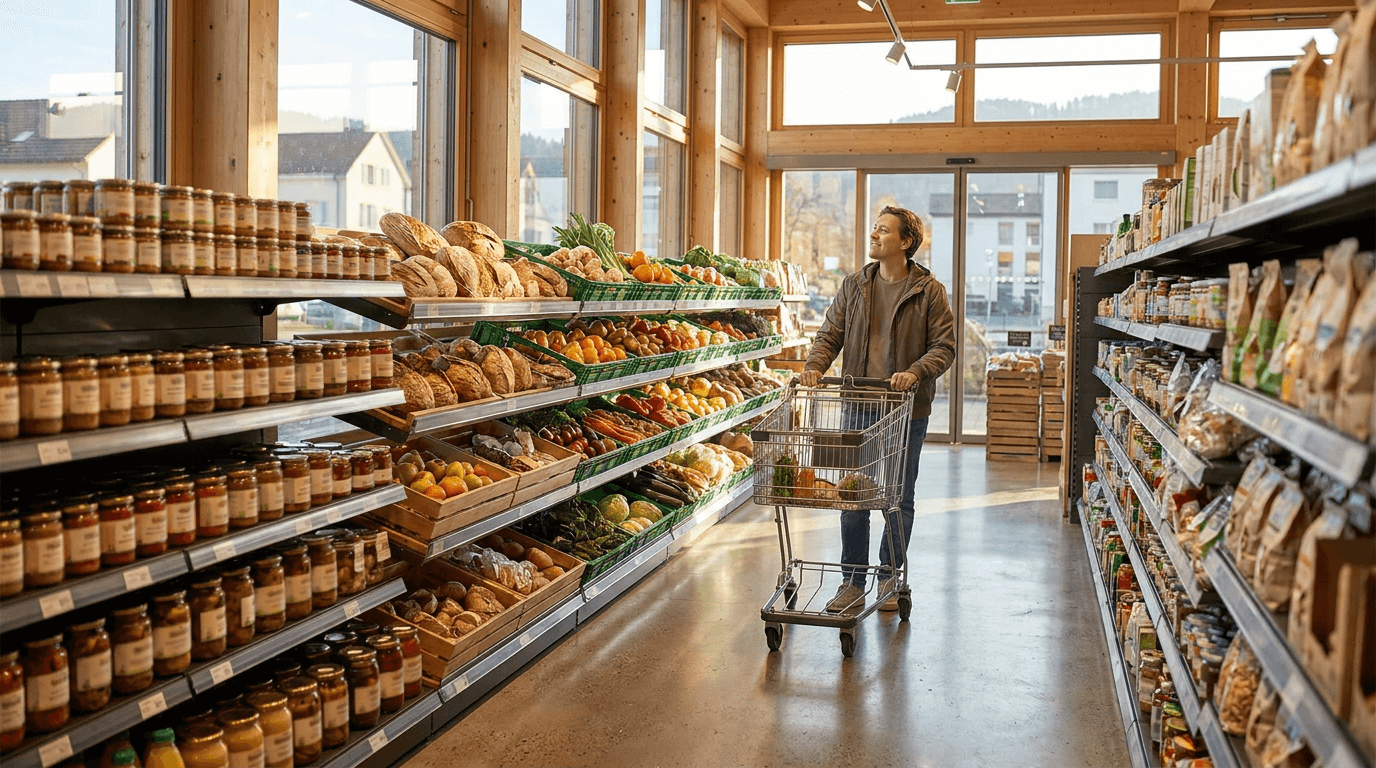
Welcome to Switzerland. Your first grocery run here can feel different from anywhere you have lived before: the chains are unfamiliar, the prices look high, the shops close earlier than you expect and almost everything is shut on Sunday. None of it is complicated once someone explains the logic, and that is what this guide does. We walk you through who the main supermarkets are and where each one sits, why food costs more here than across the border, how opening hours and Sunday closures really work, the loyalty cards worth activating in your first week, the bottle and can deposit, self-checkout, and the own-brand budget lines that quietly save Swiss households a lot of money. By the end you will shop like a local, and you will know exactly how to keep the bill down.
Sources checked regularly: the Federal Statistical Office (BFS / OFS) and Eurostat for general price-level context (Switzerland consistently sits among the highest in Europe for food); Swiss consumer-test publications K-Tipp and Kassensturz (SRF), and Bon a Savoir / FRC, for own-brand and quality tests; the retailers' own published information (Migros, Coop, Aldi, Lidl, Denner; the Cumulus and Supercard loyalty programmes; PET and beverage-can recycling). Specific prices change constantly, so this guide explains how the system works rather than quoting figures that go stale; check live prices in the Rappn app.
Rappn is the only neutral grocery price comparison app in Switzerland, with no commercial agreements with any retailer. We are not paid by Migros, Coop, Aldi, Lidl, Denner, Aligro or Otto's to rank them, and nothing below is sponsored.
The main chains and where each one sits
Swiss food retail is dominated by two full-range giants, Migros and Coop. These are your one-stop shops: a huge assortment, fresh produce, a meat and cheese counter, bakery, branded goods and their own budget lines all under one roof. A historical quirk worth knowing on day one is that the classic Migros supermarket does not sell alcohol or tobacco, so if you want wine with dinner you will reach for Coop or a discounter instead. Below the two giants sit the cheaper formats. Aldi and Lidl are international discounters with smaller, focused ranges and keen everyday prices. Denner is a long-established Swiss discounter, strong on branded staples, wine, coffee and spirits, and it is majority-owned by the Migros group rather than being an independent third force. The simple mental model: go to Migros or Coop when you want range and fresh, and to Aldi, Lidl or Denner when you want a tight, cheaper basket.
Store types at a glance
This is a qualitative map to get you oriented, not a price ranking. The cheapest shop for your specific trolley changes week to week, which is the whole reason a comparison habit pays off here.
| Store type | Price level | Range and what newcomers should know |
|---|---|---|
| Migros (full-range) | Mid | Huge assortment, fresh, own brands; classic stores do not sell alcohol or tobacco; Cumulus loyalty card |
| Coop (full-range) | Mid | Huge assortment, fresh, sells alcohol; Prix Garantie budget line; Supercard loyalty card |
| Aldi / Lidl (discounter) | Lower | Smaller, focused range, keen everyday prices; fewer brands; good for staples |
| Denner (discounter) | Lower | Branded staples, strong wine, coffee and spirits; smaller, quicker stores |
| Station and convenience | Higher | Small Coop / Migros at stations, open late and on Sundays; convenient but pricier |
Why food costs more here, and why comparing pays off
Your instinct is right: Switzerland sits among the most expensive countries in Europe for food, and prices are noticeably higher than in neighbouring Germany, France, Italy and Austria. The Federal Statistical Office and Eurostat confirm this year after year. The reasons are structural, not a temporary blip: high wages and operating costs, a strong franc, a small domestic market and protective tariffs that shield Swiss agriculture, dairy and bread from cheaper imports. You cannot change the price level, but you can absolutely change your bill, because the gap between the cheapest and the most expensive option for the same item is often large, and it moves every week with promotions. That is why building a quick comparison habit is the single most useful thing a newcomer can do. For the bigger picture on costs, see our guide to grocery inflation in Switzerland.
Opening hours and the Sunday rule
Plan your week around this: most supermarkets open in the morning and close in the early evening on weekdays, often a bit later one evening a week, with shorter hours on Saturday. The big one for newcomers is Sunday. As a rule, ordinary supermarkets are closed on Sundays and on public holidays across most of Switzerland, and the same applies to many holidays that vary by canton. The practical workaround is the small Coop and Migros outlets inside major train stations and airports, which are open late and on Sundays precisely because travel hubs are exempt. They are a lifesaver when you forget something, but they carry a smaller range at higher prices, so they are for top-ups, not the weekly shop. The habit to build: do your main shop on a weekday or Saturday, and treat Sunday as closed.
Loyalty cards, deposits and self-checkout
Two loyalty programmes are worth activating in your first week. Cumulus is the Migros card and Supercard is the Coop card; both are free, collect points as you shop and turn them into vouchers or discounts over time. If you will be here more than a few weeks, not signing up is simply leaving money on the table, and the discounter apps from Aldi and Lidl carry their own offers too. On packaging: Switzerland takes recycling seriously, and you return empty PET drink bottles and beverage cans to collection points in the stores rather than to the bin, with glass taken to neighbourhood bottle banks. It keeps the system clean and is expected of everyone. Finally, self-checkout is everywhere. Both giants offer self-scan tills, and Migros and Coop have app-based scan-as-you-shop options, so do not be surprised to find more self-service lanes than staffed ones at busy times.
Your first-week budgeting playbook
Here is the short version for a newcomer who wants to settle in without overspending. First, do not assume one chain is always cheapest: it depends on the basket and the week. Second, lean on the own-brand budget lines. Coop's Prix Garantie and the Migros budget range cover everyday staples at much lower prices, and Swiss consumer tests by K-Tipp and Kassensturz repeatedly find that budget and own-brand products often match name brands in blind tests, so trading down is frequently a free saving. Third, compare per unit, not per pack: the price per kilo or per litre is the only honest way to judge two different sizes. Fourth, activate Cumulus and Supercard and check the discounter apps. And fifth, before the weekly shop, compare live offers across all the chains in one place. Our guides to the cheapest supermarket in Switzerland and the best value supermarket go deeper on this.
How Rappn helps you land softly
This is exactly what Rappn is built for. You search a product, for example coffee or olive oil, and see every active offer across Migros, Coop, Aldi, Lidl, Denner, Otto's and Aligro at once, with the price, the discount and the store. The unit price sits next to the shelf price so you compare like with like, everything is filtered to your canton, and you can set an alert so you are told the moment something you buy regularly drops in price. It is free, neutral and has no commercial deal with any retailer, which makes it a calm way to learn the Swiss grocery landscape in your first weeks instead of guessing. For the app itself, see our grocery price comparison app page.
Last reviewed regularly. Prices, promotions and opening hours change; this guide is updated as the Swiss retail landscape shifts.
Sources checked: .
New to Switzerland, the chains, own-brand tiers and loyalty cards take a while to learn. Rappn gives you one place to see offers across Migros, Coop, Aldi, Lidl and Denner, so you can shop with confidence from your first week.
Welcome
Free, no account required · iOS & Android
Why Rappn?
Rappn is the only neutral grocery price comparison app in Switzerland, with no commercial agreements with any retailer. Our comparisons are truly independent.
- 100% free: no subscription, no hidden costs
- Neutral: no commercial agreements with Migros, Coop, Aldi, Lidl, Denner, Aligro, or Otto’s
- Real-time data: prices updated continuously
- +10,000 offers, +3,000 supermarkets, 100% free
Ready to save on groceries?
Install Rappn and compare for yourself this week. No account required.Scan the code, install Rappn, and start tracking real grocery savings this week. No account required.
Built in Switzerland, for Switzerland
Frequently Asked Questions
Which supermarket is best for newcomers in Switzerland?
There is no single best one, because it depends on what you are buying. Migros and Coop are the two full-range giants and the easiest place to do a complete weekly shop, with fresh produce, counters and own budget lines. Aldi, Lidl and Denner are discounters with smaller ranges and keener everyday prices, ideal for a tight, cheaper basket. A good newcomer habit is to use a full-range store for the big shop and a discounter for staples, and to compare live prices rather than assuming any one chain is always cheapest.
Why is food so expensive in Switzerland?
Switzerland consistently sits among the most expensive countries in Europe for food, and prices are noticeably higher than in neighbouring Germany, France, Italy and Austria, according to the Federal Statistical Office and Eurostat. The causes are structural: high wages and operating costs, a strong franc, a small domestic market, and protective tariffs that shield Swiss agriculture, dairy and bread from cheaper imports. You cannot change the price level, but you can lower your own bill by comparing offers, using own-brand budget lines and watching promotions.
Are supermarkets open on Sundays in Switzerland?
As a rule, no. Ordinary supermarkets are closed on Sundays and on public holidays across most of Switzerland, and weekday hours usually end in the early evening. The main exception is the small Coop and Migros outlets inside major train stations and airports, which are open late and on Sundays because transport hubs are exempt. They are perfect for a forgotten item but carry a smaller range at higher prices, so plan your main shop for a weekday or Saturday.
Should I get a Cumulus or Supercard loyalty card?
If you will be in Switzerland for more than a few weeks, yes. Cumulus is the Migros loyalty card and Supercard is the Coop one. Both are free, collect points as you shop and convert them into vouchers or discounts over time. There is no real downside, and not signing up means leaving money on the table. The discounters Aldi and Lidl also have their own apps with offers, so it is worth installing those too if you shop there.
How does the bottle and can deposit work in Switzerland?
Short answer: Switzerland has no deposit on single-use PET bottles or aluminium cans, so returning them costs nothing and pays nothing. Only some reusable glass bottles carry a deposit, typically CHF 0.30, and from 2027 that becomes a legal minimum for reusable beverage packaging. You return empty PET drink bottles and beverage cans free of charge at any of the roughly 72,700 collection points, most easily the ones inside supermarkets, rather than throwing them in the household bin, and glass goes to neighbourhood bottle banks sorted by colour. It is part of everyday routine here and is expected of everyone. Keeping a small bag for empties and dropping them off on your next shop is the easy way to stay on top of it.