Milk and Cheese Prices in Switzerland: 2026 Guide
8 milk deals at 5 chains for the canton of Zurich. Lowest price per litre: CHF 1.29/l. Updated 28 Sept 2026.
Lowest prices per litre
See all 8- deals
- 8
- chains
- 5

 Denner
CHF 1.29 per litre
CHF 7.75
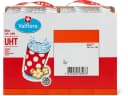
 Migrosuntil Wed 30 Sept
CHF 1.32 per litre
CHF 15.80
Whole milk, 3.5% fat, pasteurized
 AldiMilfina · 1 l
CHF 1.35 per litre
CHF 1.35
Promotions only, not regular shelf prices. Price per litre: deal price divided by the volume in litres, checked against the chain’s own figure where there is one. Source: deals published by the chains.
All milk deals
For the canton of Zurich
8 deals
- −30%
- −15% Bundle
- Deal
- Deal
- No imageDeal
- −10%
Emmi good day High Protein Pasteurised Milk
 Coop1 l
CHF 2.60 per litre
CHF 2.60was
2.90until Wed 30 Sept
- No verifiable price per litre
- −20%
- −16%
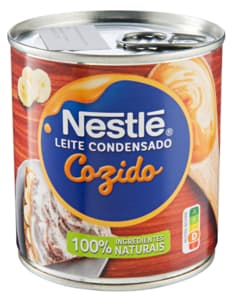
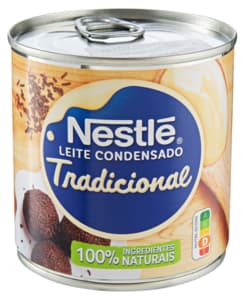
Nestlé Sweetened condensed milk 370g
 Aligro
CHF4.70was
5.60Price per litre not verifiable
until Sat 3 Oct




Guide
Milk and cheese prices in Switzerland spread widely by line, pack size and label. This guide explains the typical price bands for milk and cheese, why Swiss dairy costs more than across the border and which habits lower the dairy bill. The current milk and cheese deals are listed at the top of this page.

A liter of milk in Switzerland costs between CHF 1.00 and CHF 1.95 depending on the retailer, packaging, and label. Swiss-made hard cheese (Gruyère AOP, Emmentaler AOP) typically runs CHF 22 to CHF 30 per kilo at supermarkets, while imported semi-hard cheese can drop to CHF 13 to CHF 15. Swiss dairy is among the most expensive in Europe, but the gap between the cheapest and most expensive option for the same liter or kilo is huge, and that gap is where the savings live.
Sources checked regularly. Prices verified at retailers' official sites and independent tests (K-Tipp, Kassensturz, Saldo, bonus.ch, Agrarbericht 2025). Live offers in the Rappn app.
Rappn is an independent grocery price comparison app in Switzerland, with no commercial agreements with any retailer.
What milk actually costs in Switzerland
The Swiss milk market splits into three clear price bands. Budget UHT lines (M-Budget at Migros, Prix Garantie at Coop) sit around CHF 1.00 per liter, sold only in larger formats (2L Tetra at Migros, 1.5L plastic at Coop) without resealable caps. Standard branded UHT and pasteurised milk in 1L resealable cartons sits between CHF 1.55 and CHF 1.85. Premium lines (mountain milk, organic, regional) run CHF 1.65 to CHF 1.95.
| Milk type (1L equivalent) | Migros | Coop | Aldi | Lidl | Denner |
|---|---|---|---|---|---|
| Budget UHT (2L / 1.5L pack) | CHF 1.00 (M-Budget) | CHF 1.00 (Prix Garantie) | CHF 1.00 to 1.10 | CHF 1.00 to 1.10 | CHF 1.05 to 1.15 |
| Standard pasteurised (1L) | CHF 1.55 to 1.65 | CHF 1.55 to 1.75 | CHF 1.40 to 1.55 | CHF 1.40 to 1.55 | CHF 1.45 to 1.60 |
| Organic (1L) | CHF 1.85 (Migros Bio) | CHF 1.90 (Naturaplan) | CHF 1.80 (retour aux sources) | CHF 1.80 (Bio) | varies |
| Mountain / regional (1L) | CHF 1.65 (Heidi) | CHF 1.75 (Pro Montagna) | no price recorded | no price recorded | no price recorded |
Prices are typical 2026 shelf prices and exclude weekly Aktion. Discounts of 20% to 35% are common on milk during weekly promotions. For the full retailer landscape, see the cheapest supermarket in Switzerland ranking.
Live dairy offers across all 7 Swiss retailers. Switch the search to your dairy product and compare the price per litre or kilo week by week.
See dairy deals. Rappn is freeFree, no account required · iOS & Android
"milk" · Milk · Cheese
Offers
What cheese actually costs
| Cheese category | Typical price range (per kg) | What you pay for 200g |
|---|---|---|
| Mozzarella (fresh, M-Classic / Coop) | CHF 8 to CHF 12 | CHF 1.60 to CHF 2.40 |
| Raclette (M-Budget / Strähl entry-level) | CHF 15 to CHF 20 | CHF 3.00 to CHF 4.00 |
| Raclette du Valais AOP | CHF 28 to CHF 38 | CHF 5.60 to CHF 7.60 |
| Emmentaler AOP (mild, 4 months) | CHF 18 to CHF 24 | CHF 3.60 to CHF 4.80 |
| Gruyère AOP (mild, 6 months) | CHF 22 to CHF 28 | CHF 4.40 to CHF 5.60 |
| Gruyère AOP réserve (10+ months) | CHF 28 to CHF 38 | CHF 5.60 to CHF 7.60 |
| Appenzeller (classic) | CHF 22 to CHF 30 | CHF 4.40 to CHF 6.00 |
| Tête de Moine AOP | CHF 32 to CHF 42 | CHF 6.40 to CHF 8.40 |
Grated cheese costs 15% to 25% more per kilo than the same cheese in a block. Cheese counters at Migros and Coop are typically CHF 2 to CHF 5 per kilo cheaper than the pre-packed shelf for the same product, with the trade-off that you have to wait. Aldi and Lidl carry around 25 to 40 cheese SKUs versus 200 to 400 at a mid-sized Migros or Coop, so depth comes at a discounter cost. For the budget vs standard split inside Migros and Coop themselves, see M-Budget vs Prix Garantie.
Your dairy basket is on a 7-day repeat. Track it.
Pin your usual milk, yogurt, butter and cheese in Rappn. Get notified the moment any of them goes on Aktion at any retailer near you. Open Rappn.
Why Swiss dairy costs more than in neighbouring countries
Swiss consumer prices for milk and cheese are confirmed above neighbouring countries by the Federal Office for Agriculture's Agrarbericht 2025. Per the Agrarbericht 2025, data year 2024, a kilo of butter cost CHF 17.88 in Switzerland against CHF 7.26 in Germany, so the German price is 41% of the Swiss one, the largest gap of any dairy product. A liter of pasteurised whole milk in Germany typically retails at CHF 0.80 to CHF 1.00, roughly 40% to 60% below the Swiss standard line.
Three structural reasons explain most of the gap. The Swiss average producer price was 76.4 Rappen per kilo in 2023, the highest since 2009 (75.34 Rp in 2022), with cheese milk above dairy milk and organic milk near 88 Rp; Gruyère AOP milk is the outlier at over 90 Rp. All of that sits well above the EU average. Tariff protection on dairy imports under the WTO and Swiss agricultural policy keeps cheap European milk and cheese out of Swiss retail at scale. And Swiss retail margins on branded dairy are simply higher than the discounter norm in Germany or France. The CHF 150 tax-free allowance for cross-border shopping (since January 2025) makes German or French dairy a real option for households within 30 minutes of a border, especially for hard cheese and butter.
How to actually cut your dairy bill
Five tactics that work, in order of impact.
Switch milk to budget lines unless you specifically need a 1L resealable carton. M-Budget 2L and Prix Garantie 1.5L are the same milk for 35% to 45% less. The single biggest weekly saving sits here.
Buy hard cheese in blocks, not pre-grated, and grate at home. Grated cheese carries a packaging and processing premium of CHF 4 to CHF 8 per kilo for what is essentially the same product.
Time fondue and raclette purchases. Migros, Coop, and Denner all run heavy discounts on Gruyère, Vacherin Fribourgeois, and raclette mixes from October through February, often 20% to 30% off. Outside these months, prices return to full.
Use Aldi and Lidl for organic milk and basic cheese. Organic milk at the discounters is CHF 1.80 per liter, while the same organic at Migros Bio (CHF 1.85) and Coop Naturaplan (CHF 1.90) costs slightly more. The price watchdog has documented organic premiums at Migros and Coop running 20% to 25% above discounter equivalents on broader food prices in Switzerland.
Track promotions on the products you actually buy. Dairy is one of the most discounted categories in Swiss flyers because it is high-frequency and high-volume. Stocking up during Aktion (most cheese keeps 4 to 6 weeks vacuum-sealed) compounds the savings. This is exactly what the Rappn app is built for, with save money on groceries in Switzerland covering the broader playbook.
Updated: .
Why Rappn?
Rappn is an independent grocery price comparison app in Switzerland, with no commercial agreements with any retailer. Our comparisons are truly independent.
- 100% free: no subscription, no hidden costs
- Neutral: no commercial agreements with Migros, Coop, Aldi, Lidl, Denner, Aligro, or Otto’s
- Updated daily, as soon as the chains publish their deals
- The chains’ deals in one place: search, filter, compare, no account needed
Ready to save on groceries?
Install Rappn and compare for yourself this week. No account required.Scan the code, install Rappn and compare current offers. No account needed.
Built in Switzerland, for Switzerland
Frequently Asked Questions
Why is milk so expensive in Switzerland?
Swiss farmgate milk prices are roughly twice the EU average, dairy import tariffs limit cheap competition, and retail margins are higher than in neighbouring discount-driven markets. Even within Switzerland, the same liter of milk can vary from CHF 1.00 (budget UHT) to CHF 1.95 (organic mountain). Choosing the right line and the right retailer matters more than the country premium.
Is M-Budget milk really the same milk as Migros M-Classic?
According to Migros's own statements (confirmed multiple times in Swiss press), M-Budget UHT is the same milk as the conventional Migros UHT line. The price difference comes from the larger 2L pack format, simpler packaging, lower marketing spend, and a thinner margin. The same applies to Coop's Prix Garantie milk versus standard Coop pasteurised.
Where can I find the cheapest cheese in Switzerland?
It depends on the cheese and the week. For Swiss AOP cheeses (Gruyère, Emmentaler, Appenzeller), Migros and Coop have wider selection, and the meaningful price differences appear during weekly promotions and at the cheese counter versus pre-packed. The list at the top of this page shows this week's cheese promotions with the price per kilo. Cross-border in Germany or France adds another 30% to 40% off for hard cheese, within the new CHF 150 customs allowance.
Are organic milk and cheese worth it in Switzerland?
Organic milk at Aldi and Lidl (CHF 1.80) costs roughly the same as standard milk at Migros and Coop, so the organic premium is small at the discounters. At Migros Bio (CHF 1.85) and Coop Naturaplan (CHF 1.90), the premium over standard milk is 15% to 20%. The Swiss organic standard (Bio Suisse) is among the strictest in Europe, which is part of what you are paying for.
How much does the average household spend on dairy in Switzerland?
Per-capita dairy consumption in Switzerland is roughly 293 kg per year (44.7 kg drinking milk, 23.71 kg cheese, 4.9 kg butter, plus yogurt and cream). At 2026 average prices, that translates to roughly CHF 600 to CHF 900 per person per year on dairy alone, or CHF 50 to CHF 75 per month. On that dairy basket, the model for a household of four combining budget lines, weekly promotions and the right retailer mix comes to CHF 80 to CHF 150 a month, a modelled example and not a measured saving.