
Where to Buy Wine, Beer and Spirits in Switzerland: The 2026 Guide
541 red wine deals at 5 chains for the canton of Zurich. Lowest price per litre: CHF 1.62/l. Updated 3 Oct 2026.
Lowest prices per litre
See all 541- deals
- 541
- chains
- 5
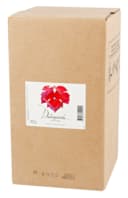
 Aligrountil Sat 3 Oct
CHF 1.62 per litre
CHF 16.20
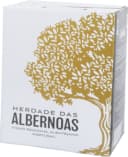
Alentejo Herdade das Albernoas Wine
Aligrountil Sat 3 OctCHF 2.18 per litre
CHF 10.90
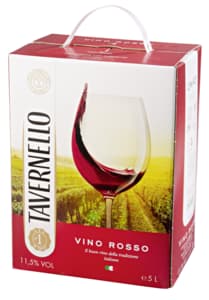
Bag-in-box Negroamaro Puglia IGT
 AldiRoversi · 3 l
CHF 3.00 per litre
CHF 8.99
Promotions only, not regular shelf prices. Price per litre: deal price divided by the volume in litres, checked against the chain’s own figure where there is one. Source: deals published by the chains.
All red wine deals
For the canton of Zurich
300 deals
Showing the 300 deals with the lowest price per litre, out of 541.
- −32%
- −35%
- Deal
- −15%
- Deal
- −10%
- −10%
- −45%
- −41%
Valdepeñas Tempranillo Cabernet red wine
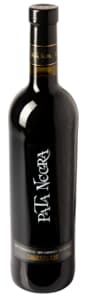
AligroPata Negra · 6 × 750 mlCHF 4.44 per litre
CHF 20.00was
34.00until Sat 3 Oct
- −50%
- −36%
- −15%
- Deal
- −44%
- −44%
- −16%
- Deal
- −50%
- Deal
- −44%
- −50%
- −50%
- −50%
- −25%



Guide
Migros has never sold alcohol since the 1928 Duttweiler statutes, and in June 2022 every one of its 10 regional cooperatives voted no to lifting the ban. Switzerland still drinks 30 L of wine per capita per year, so where does it come from? The guide profiles the six chains that sell wine and spirits, from weekly Aktion wines to buying by the case, plus the months when alcohol goes on promotion.
Switzerland's largest supermarket chain has never sold a bottle of wine. Migros, with 659 M, MM and MMM supermarkets at the end of 2025 and the second-largest share of Swiss food retail, has been alcohol-free since 1928, when founder Gottlieb Duttweiler enshrined the ban in the cooperative's statutes. In June 2022, when members voted on whether to finally allow alcohol sales, they said no in every single one of the ten regional cooperatives. The country, meanwhile, still drinks around 30 litres of wine per capita per year, plus beer, spirits and rising volumes of sparkling. So where does it all come from? This guide is the answer.
Sources: Migros corporate communications on the 4 June 2022 alcohol-ban vote (all 10 regional cooperatives voted no, ~630'000 voters); Denner press releases on Weinshop and store count; Aligro corporate site (open-to-everyone policy, 14 stores); Otto's company profile (~100 stores, ~50'000 articles, Sursee HQ). Prices verified across retailers in April to May 2026.
Rappn is an independent grocery price comparison app in Switzerland, with no commercial agreements with any retailer.
The Swiss alcohol retail map (and the one chain that is not on it)
If you walk into a Migros, you will find Swiss chocolate, mountain cheese, organic bread, an entire wall of mineral water, and exactly zero bottles of alcoholic beer, wine or spirits. The chain even launched a non-alcoholic beer in 2023, called "Non", as a kind of symbol of its alcohol-free identity. The brand has built an unusual moat: in a country where alcohol is otherwise treated like any other grocery, Migros is the place you can shop without the category existing at all.
Everyone else sells alcohol. That includes the six other major retailers Rappn tracks: Coop, Aldi Suisse, Lidl Schweiz, Denner, Aligro and Otto's. Each plays a different role, and choosing the wrong one for the wrong purchase can easily double the price of the same bottle. The rest of this guide breaks down what each retailer offers.
Compare current offers and their supplied unit prices. Check the pack size, canton and validity dates. Preset search: «wine».
Track wine & spirits Aktionen. Rappn is freeFree, no account required · iOS & Android
"wine" · Wine & spirits · Migros sells none since 1928
Offers
Why Migros doesn't sell alcohol (and why it still doesn't, after 2022)
Gottlieb Duttweiler founded Migros in 1925 as a five-truck mobile grocery business. In 1928, three years after the cooperative was incorporated, the statutes were amended to permanently exclude alcohol and tobacco from the assortment. Duttweiler's stated motivation was social: alcohol abuse was a driver of household poverty, and he wanted Migros to be a store that families could shop in without the category being present at all.
For 94 years no one in the cooperative seriously challenged the rule. Then, in 2020, five delegates filed a motion to put the question to the membership. After two years of internal debate, the vote was scheduled for 4 June 2022. The proposal needed a two-thirds majority in each of the ten regional cooperatives to change the statute.
The result was unambiguous. Every region voted no. Zurich rejected the change with roughly 80% against. Ticino, the most receptive region, only managed 44.7% yes. More than 630'000 members voted, the highest turnout the cooperative had ever recorded for any ballot. The Migros board responded by introducing "Non", a non-alcoholic Migros lager, in 2023, as a symbolic in-store reminder of what the cooperative had voted to remain.
One nuance matters for shoppers. The ban applies to Migros-branded stores, restaurants and takeaways only. The Migros Group as a corporate parent does sell alcohol, and a lot of it, through its subsidiaries: Denner (the discount chain), migrolino (the convenience format at petrol stations and railway stations, 384 sites at the end of 2025), VOI Migros-Partner, and online through the Denner shop-in-shop built into migros.ch, where alcohol results carry a small "Partner" label. Migros Ticino also runs the wine and spirits chain Enoteca Vinarte, which expanded into German-speaking Switzerland in 2025. The old leshop.ch brand no longer exists: it was renamed Migros Online in November 2020 and the domain now redirects to migros.ch. Walk into a migrolino attached to a Migros petrol station and you can buy beer. Walk three metres into the Migros supermarket next door and you cannot. The brand-level boundary is strict and is policed deliberately.
Denner: the Migros Group's alcohol arm, with weekly wine promotions
Denner is the protagonist of Swiss alcohol retail. Around 872 sales points nationwide as of 2025 (612 directly operated plus 260 Denner Partner franchises), owned 100% by the Migros Group since end of 2009, and run independently with a deliberate discount and wine-focused identity. The chain's own positioning is wine-first ("Life is too short to drink bad wine" is the literal Denner slogan), and the dedicated Weinshop, now part of denner.ch at denner.ch/de/weinshop, delivers across the country.
What makes Denner the default for most price-conscious wine buyers in Switzerland:
- Range: Several thousand wines in the catalogue, with a particularly strong line in mid-tier Italian and Spanish reds (CHF 6 to CHF 15 per bottle) and credible Swiss wines from Valais and Vaud.
- Aktion depth: Weekly wine promotions regularly hit 30% to 50% off, and the Wochenende-Knaller weekend deals can push specific labels lower still.
- Online wine delivery: Nationwide, CHF 9.90 flat fee, free over CHF 400. The only retailer in Rappn's seven where you can have full case-quantity wine delivered to your door at supermarket prices.
- In-store: Smaller footprint than a full supermarket, so the wine aisle takes a disproportionate share of the floor space.
If your goal is "I want a decent CHF 10 bottle without driving anywhere special", Denner is the answer 80% of the time. For Rappn's deeper Denner walkthrough, see the Denner products and prices page.
Coop and Mondovino: the full-service alternative
Coop is the second-largest supermarket chain in Switzerland and the only major full-range supermarket that competes directly with Denner on wine. Its wine arm is branded Mondovino, and the difference in approach to Denner is structural.
Where Denner sells volume, Coop curates. The Mondovino online catalogue currently shows over 900 Swiss wines alone, plus hundreds more from Italy, France, Spain, Portugal and beyond. The selection skews further into premium and into producer-of-the-month features than Denner's. Coop partners directly with the Grand Prix du Vin Suisse, Mondial des Pinots, MUNDUSvini, and review platforms including Robert Parker and Antonio Galloni.
The Mondovino Club is the real value lever. Membership is free, and it unlocks a recurring 20% discount on any purchase of 12 or more bottles, plus an exclusive weekly club offer. If you buy wine by the case rather than by the bottle, the Mondovino Club is often the better fit than Denner for premium and for Swiss wines specifically.
For the wider Coop assortment context, the Coop products and prices page covers the full chain.
Lidl Schweiz: the discounter with award-listed wines
Lidl Schweiz's house wine brand is Vinissimo, and the assortment is heavily rotated rather than fixed: most wines appear for a few weeks, sell through, and are replaced. The model is the opposite of Denner's "steady catalogue with promos". You shop the week's selection or you miss it.
Internationally, Lidl wines have a very strong reputation with wine critics: UK Lidl has won multiple Decanter World Wine Awards and MUNDUSvini medals over the past decade, and the buying organisation behind those wines is the same one supplying Lidl Schweiz. Whether a specific medal-winning vintage is on Swiss shelves in a given week is unpredictable, which is exactly why the Lidl wine forums in Switzerland thrive.
Practical advice for Lidl wine shoppers: check Lidl Plus app weekly since wines often appear as themed weekend or thematic-week features; prices typically CHF 4.50 to CHF 12, with occasional CHF 20+ premium drops; the CHF 5 to CHF 9 band is where Lidl offers a lot of wine for the money; spirits selection is narrower but the basics (vodka, gin, whisky) are competitively priced.
Aldi Suisse: the everyday choice
Aldi Suisse sells alcohol but treats it with less of a wine-club identity than Lidl. The assortment is steadier and tighter: a core range of beers, a small but rotating wine selection, basic spirits, and seasonal expansions for Christmas and apéro periods. Aldi's wine is usually priced in the same CHF 5 to CHF 10 band as Lidl, but with fewer awarded surprises and fewer rotations.
Aldi is also a reasonable place to buy beer by the crate for casual drinking, particularly its own-label lagers. For wine specifically, most Swiss shoppers find Lidl or Denner more interesting.
Aligro: the cash-and-carry wine cellar
Aligro is Switzerland's largest independent cash-and-carry retailer. Fourteen stores across both French- and German-speaking Switzerland, around 30'000 articles under one roof, and a wine department that genuinely rivals a dedicated wine merchant.
Two corrections to common misconceptions about Aligro, since both come up in search:
- Aligro is open to everyone. No membership, no professional ID, no card required to enter and shop. The customer card is free and unlocks extra discounts, but it is optional.
- Aligro is not significantly cheaper on individual bottles than Denner on a sale. The advantage shows up when you buy by the case or the half-case, where Aligro's PRO-Actions and weekly promotions can deliver 15% to 40% off, and where the assortment depth (Bordeaux crus, Tuscan estates, Burgundy by named producer, Champagne house ranges) goes far beyond what Denner or Coop carry.
If you are organising a wedding, an apéro for 30, or stocking a cellar, Aligro is worth a look. For Rappn's detailed walkthrough see Aligro Switzerland products and prices.
Aligro does not have a Ticino branch. Ticino residents looking for a similar format use Prodega (Transgourmet, Coop group) or TopCC, the cash-and-carry arm of the Swiss Spar group, which has belonged to Tannenwald Holding AG in Basel since 8 September 2025.
Otto's: the opportunistic wine bargain
Otto's is the family-owned discounter most international guides forget exists. Around 100 stores nationwide, headquartered in Sursee, with an assortment of around 50'000 articles spanning food, household, perfume, furniture, electronics and, yes, quality wines.
Otto's wine model is built around opportunity buying. The chain does not maintain a stable catalogue. Instead, it buys end-of-line lots, parallel imports and overstock from producers and distributors, prices them low, and sells until they are gone. The selection on any given visit is unpredictable; when something good is in store, it is often well below Coop or Denner on equivalent labels; the premium end can occasionally include Bordeaux or Champagne names at striking discounts, but availability is genuinely random.
If you enjoy the hunt, Otto's rewards you. If you want a specific bottle on a specific day, choose Denner or Coop. For the deeper retailer profile, see Otto's Switzerland products and prices.
When alcohol actually goes on sale: the Aktion calendar
Swiss alcohol pricing follows a fairly regular annual rhythm, and knowing it helps you buy the same wine in a promotion week rather than at full price.
- Late January to February: post-Christmas inventory clearance. Especially good for Champagne, premium reds and gift packs.
- Pre-Easter (March): lamb pairing focus brings strong reds onto Aktion. Italian Primitivo, Spanish Rioja and Bordeaux all see promotional runs.
- May to June: rosé and Prosecco season kicks off, with weekly Aktion focus.
- August to early September: apéro season runs into autumn, and white wines from Valais, Vaud and Italy go on Aktion.
- October to November: harvest releases and the buildup to the year-end gift season starts the longest promotional window of the year.
- December: Champagne, gift packs and premium wines come on promotion most often.
The single most useful habit for any Swiss wine shopper is to delay non-urgent buying until the relevant Aktion window. For the full retailer ranking see cheapest supermarket in Switzerland.
Updated: .
Why Rappn?
Rappn is an independent grocery price comparison app in Switzerland, with no commercial agreements with any retailer. Our comparisons are truly independent.
- 100% free: no subscription, no hidden costs
- Neutral: no commercial agreements with Migros, Coop, Aldi, Lidl, Denner, Aligro, or Otto’s
- Updated daily, as soon as the chains publish their deals
- The chains’ deals in one place: search, filter, compare, no account needed
Ready to save on groceries?
Install Rappn and compare for yourself this week. No account required.Scan the code, install Rappn and compare current offers. No account needed.
Built in Switzerland, for Switzerland

Frequently Asked Questions
Does Migros sell wine and alcohol in 2026?
No. Migros has never sold alcohol or tobacco in its supermarkets, restaurants or takeaways since the ban was written into its statutes in 1928. In June 2022 the cooperative's members voted on lifting the ban; all ten regional cooperatives voted to keep it. The Migros Group does sell alcohol through subsidiaries (Denner, migrolino, VOI Migros-Partner, Enoteca Vinarte) and online through the Denner shop-in-shop on migros.ch, but never under the Migros brand.
Where is the cheapest place to buy wine in Switzerland?
It changes every week: the list at the top of this page compares the current wine deals of all retailers by price per litre, colour by colour. In our April to May 2026 checks, a Denner wine Aktion (often 30% to 50% off) usually gave the lowest prices for everyday wine in the CHF 5 to CHF 15 range, especially online, and Lidl offered occasional surprises in the same band. For buying by the case, the Coop Mondovino Club (20% off on 12 or more bottles) and Aligro on PRO-Actions were usually worth checking first.
Are Lidl wines actually good?
Lidl's house brand Vinissimo and its rotating European selection are regularly recognised by international wine critics. The same buying organisation that supplies Lidl in the UK (where wines have won Decanter and MUNDUSvini medals) supplies Lidl Schweiz. The catch is that the assortment rotates weekly, so a wine you liked last month may not be in store this month.
Do you need a membership to shop at Aligro?
No. Aligro is open to everyone, no card or registration required. The customer card is free and gives additional discounts, an annual bonus and access to trade-only promotions, but you can walk in, shop and pay without one.
Does Denner have cheaper wine than Coop?
In our April to May 2026 checks, Denner was usually cheaper on weekly Aktion wines and on its core mid-tier catalogue (CHF 6 to CHF 15). Coop was competitive on premium wines and is structurally cheaper once you buy 12 or more bottles via the free Mondovino Club (20% off). For one or two bottles on offer, Denner. For a full case of premium, Coop.
Why are Swiss supermarket wines so much cheaper than at independent merchants?
Volume and direct-producer contracts. Denner and Coop buy in container quantities from producers in Italy, Spain and France, often under exclusive labels. The result is that comparable wines often sit on a supermarket shelf below independent-merchant pricing, with the trade-off that the supermarket assortment is less specialised and rotates less predictably.