
How to cook cheaply in Switzerland: the method
Cooking cheaply means fresh over ready-made and own-brand over brand. Per the BLV study (2014), a weekly basket of fresh ingredients cost a couple around CHF 109, from convenience products around CHF 145. Plus: cheap staples (pulses, eggs, seasonal veg), budget own-brands (38 to 51 % cheaper than comparable products in the Kassensturz basket comparison of November 2025) and cooking around the current promotions. Recipes are in the Rappn app, onto your shopping list in one tap.
Rappn compares the current promotions of 7 Swiss retailers, updated daily: free, no subscription.
Explore recipes in Rappn, free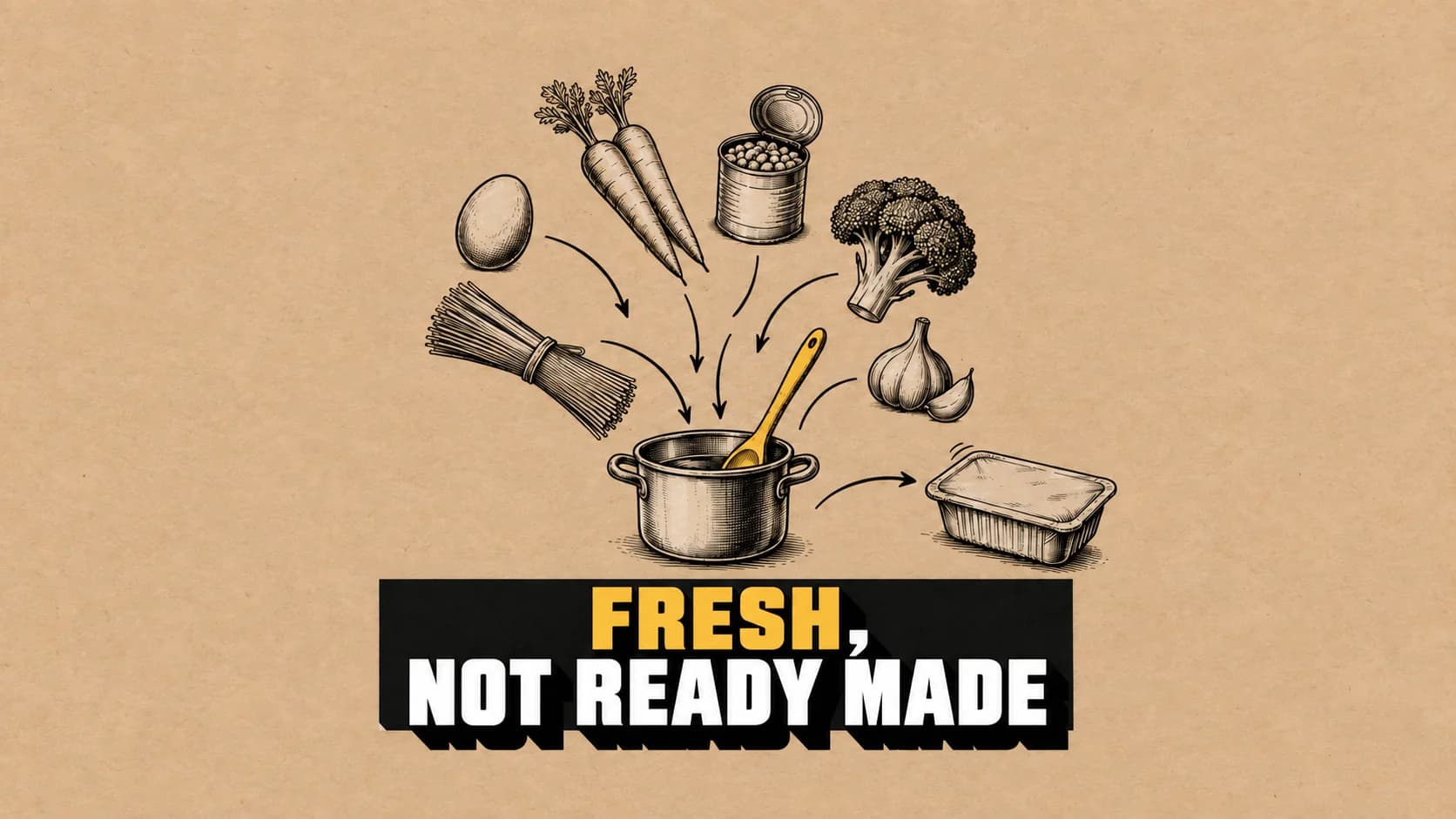
Cooking cheaply has little to do with going without and a lot to do with two decisions: fresh over ready-made, and own-brand over brand. A study by the Federal Food Safety Office (BLV), carried out by the Bern University of Applied Sciences (2014), showed it clearly: a weekly basket of fresh ingredients cost a couple household around CHF 109, while the same healthy basket from convenience products cost around CHF 145. It is not health that is expensive, but convenience.
Rappn is an independent grocery price comparison app in Switzerland, with no commercial agreement with any retailer. Migros, Coop, Aldi, Lidl, Denner, Aligro and Otto's do not pay us to rank them, and nothing below is sponsored.
How do you really cook cheaply in Switzerland?
| Rule | Why it works | Evidence |
|---|---|---|
| Fresh over ready-made | convenience drives the cost | BLV study (2014): CHF 109 vs 145/week |
| Cheap staples | pulses, eggs, seasonal veg | category ranking (qualitative) |
| Own-brand over brand | Budget basket 38 to 51 % cheaper than comparable products in November 2025 | Kassensturz (SRF), November 2025 |
| Cook around promotions | cheapest chain changes weekly | price comparison needed |
The screens show recipe browsing with filters and a recipe whose servings and quantities you adjust, so you cook exactly as much as you need.
Explore recipes in Rappn, freeFree, no subscription · iOS & Android
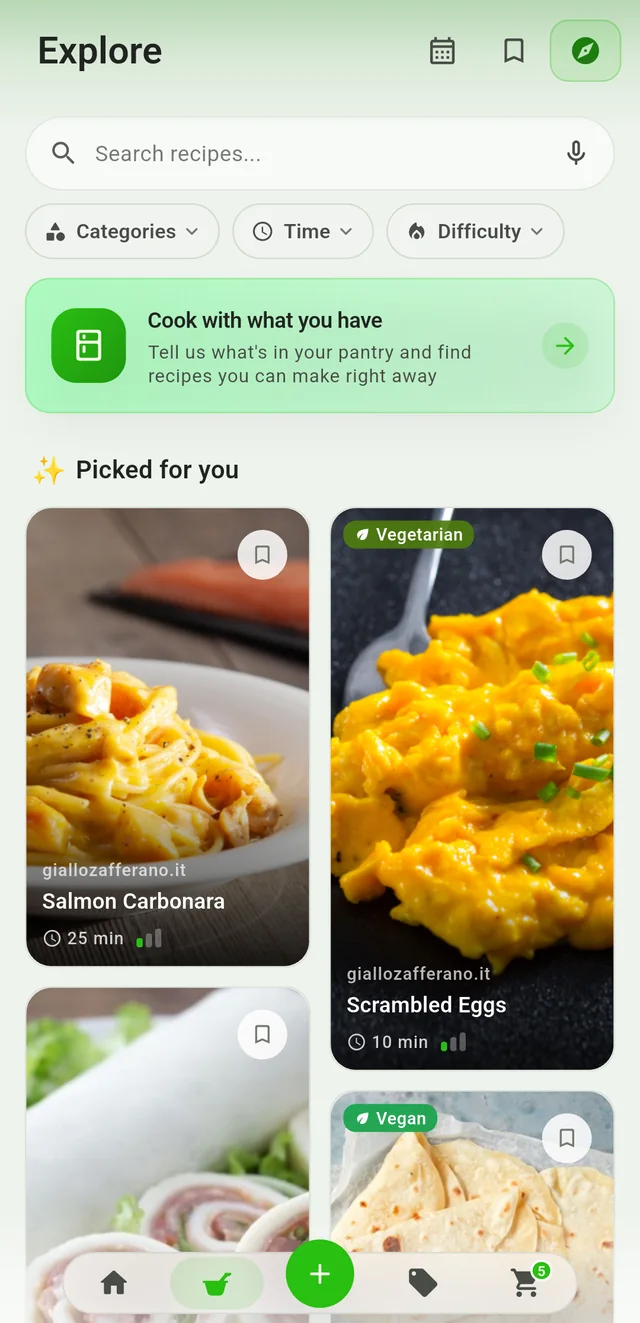
Filter recipes by time
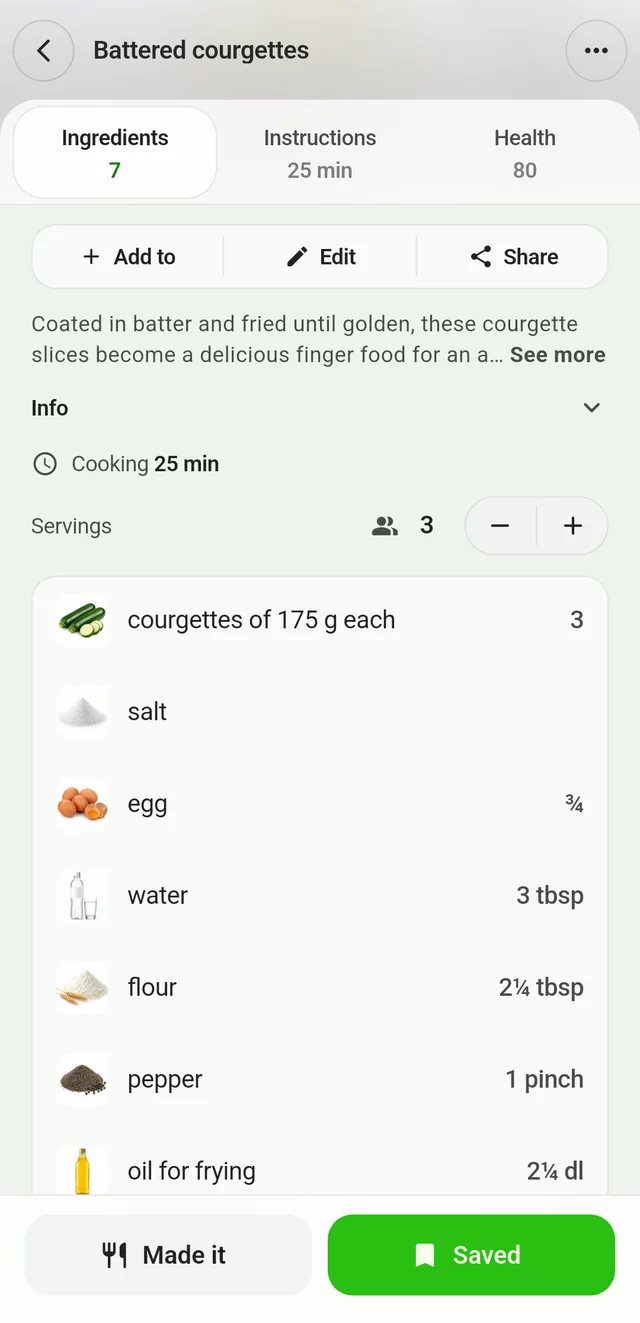
Adjust the servings
From principle to plate
These rules are evergreen, but the specific ingredients change every week with the promotions. So no fixed recipe list tells you what is on offer this week. Look at this week's offers first, filtered to your canton, then pick a dish from the Rappn recipes around the ingredient that is discounted. That turns "fresh, own-brand, seasonal" into a concrete weekly basket.
Batch cooking: cook once, eat for days
Cooking a large batch once and eating it across several days saves on three fronts: money, time and energy. The cheap base, meaning lentils, rice or pasta, can be bought in bigger units, and the larger pack is usually cheaper per kilo than the small one. Planning one big pot also means a more targeted shop and less thrown away. That pays off twice over, because less thrown away is money directly saved.
The trick against boredom is variety from the same base. One big pot of lentils becomes a curry today, a bowl tomorrow and a soup later. Because you heat the stove only once, you also save time and energy. Whatever you will not eat in the next few days, portion it and freeze it. This is exactly what the Swiss anti-food-waste bodies recommend: plan the week and batch-cook in one go. What is left is to know what freezes well.
- Cook one big pot of a cheap base (lentils, rice, pasta) and vary it: curry, bowl, soup.
- Buy the base in bigger units; the larger pack is usually cheaper per kilo.
- Portion and freeze whatever you will not eat soon.
- Freezes well: cooked rice, pasta, soups and stews, bread, cooked meat. Poorly: leafy salads, cream- or mayonnaise-based dishes, whole potatoes.
For a dish you cook once and eat over several days, the Kitchen in Rappn helps you plan it. In the Planner, "Plan week" lets you pick the day and the meal for each recipe, and the servings on a recipe can be adjusted so the quantities rescale. The ingredients go to your "Weekly shop" cart; the full routine is in how to meal plan in Switzerland, and quick weeknight dinners covers the short evenings.
Download Rappn: you see the offers of the seven chains for your canton, with the price per kilo, litre or piece, and add a recipe to your shopping list in one tap. For what healthy cooking really costs, see eat healthy on a budget, and how to cook under five francs per person, cook under CHF 5 per person.
Updated: .
Why Rappn?
Rappn is an independent grocery price comparison app in Switzerland, with no commercial agreements with any retailer. Our comparisons are truly independent.
- 100% free: no subscription, no hidden costs
- Neutral: no commercial agreements with Migros, Coop, Aldi, Lidl, Denner, Aligro, or Otto’s
- Updated daily, as soon as the chains publish their deals
- The chains’ deals in one place: search, filter, compare, no subscription
- Meal planner in the Kitchen tab: plan the week, send the ingredients to your list

Ready to save on groceries?
Install Rappn and compare for yourself this week. No account required.Scan the code, install Rappn and compare current offers. No account needed.




Frequently Asked Questions
What is the cheapest way to cook in Switzerland?
Cook fresh instead of ready-made (per the 2014 BLV study the biggest lever: around CHF 109 instead of CHF 145 per week for a couple household), rely on cheap staples like pulses, eggs and seasonal vegetables, choose budget own-brands, and cook around the current promotions.
Which ingredients are cheapest to cook with?
Structurally cheapest per portion are dried pulses (lentils, chickpeas, beans), eggs, low-fat quark, seasonal vegetables, and own-brand pasta and rice. The most expensive are fresh meat, fish and ready meals. That is a rough ordering, not a fixed franc figure.
Is cooking fresh really cheaper than ready meals?
Yes. The BLV study by the Bern University of Applied Sciences (2014) compared weekly baskets for a couple household: from fresh ingredients around CHF 109, from convenience products around CHF 145. Convenience drives the cost, not health. The figures are from 2014 and show the structure, not today's prices.
Why should I cook around the promotions?
Because no Swiss chain is permanently the cheapest. Offers change weekly, and the same staple is cheapest at one chain one week, another the next. Building the menu around the current promotions rather than the other way round makes the shop cheaper. Which ingredients are on offer this week you see live in Rappn.
Is batch cooking really worth it?
Yes. Cooking one big pot of a cheap base like lentils, rice or pasta lets you buy bigger units that are cheaper per kilo, waste less, and save time and energy. Portion and freeze whatever you will not eat soon.