
Use up leftovers: recipes that turn food waste into francs
Using up leftovers costs next to nothing, because the ingredients are already paid for. In Switzerland each person throws away around 90 kilograms of still-edible food worth over CHF 600 a year (foodwaste.ch), and households cause around 40 percent of the waste. The principle: leftovers plus one cheap addition like an egg or a tin of pulses make a new meal.
Rappn compares the current promotions of 7 Swiss retailers, updated daily: free, no subscription.
Cook with what you have in Rappn, free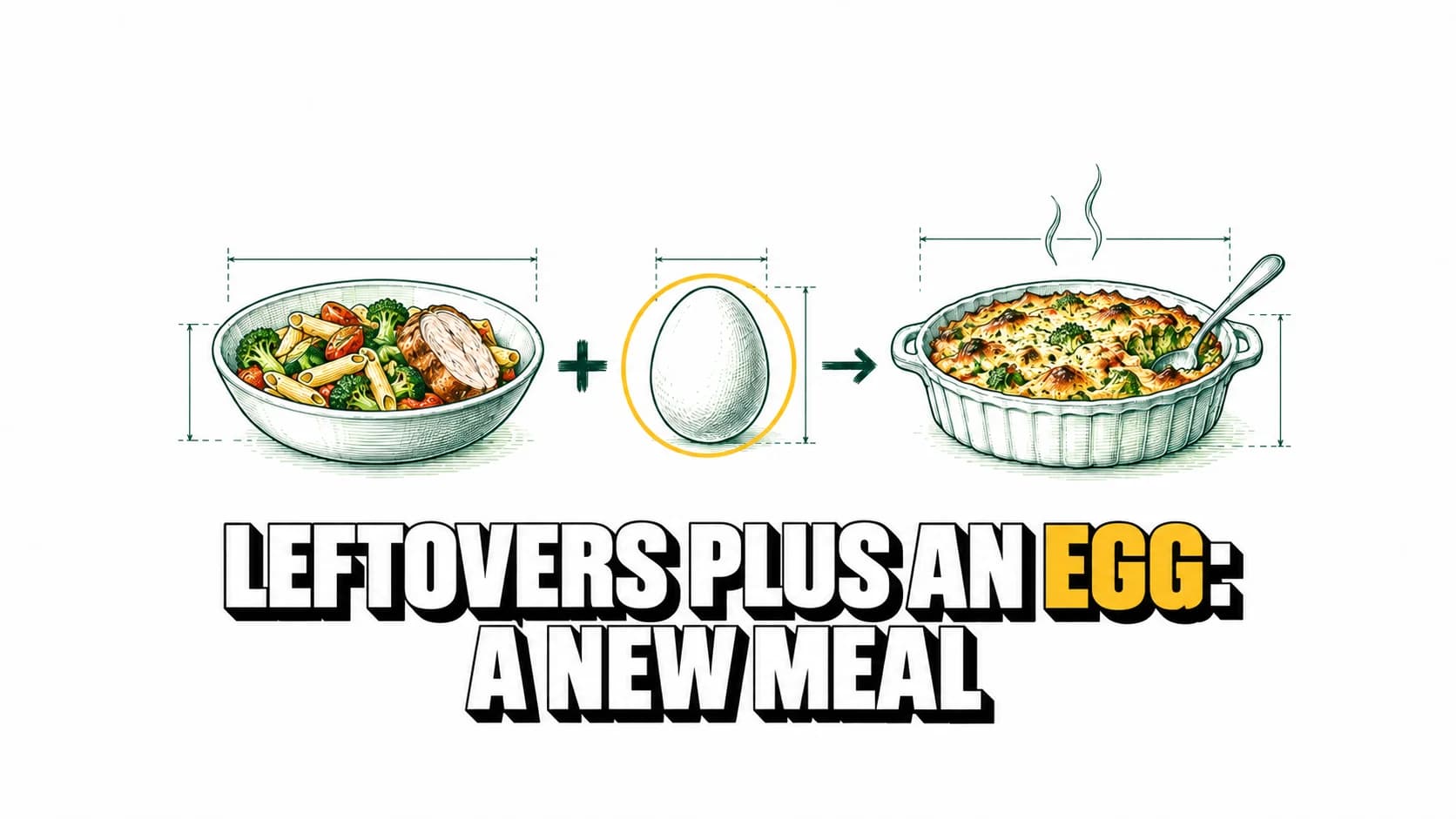
Using up leftovers is the cheapest cooking there is, because the ingredients are already paid for. In Switzerland each person throws away around 90 kilograms of still-edible food a year, worth over CHF 600 (foodwaste.ch). A large part of that could be recovered with a few leftover recipes, and households cause around 40 percent of the food waste.
Rappn is an independent grocery price comparison app in Switzerland, with no commercial agreement with any retailer. Migros, Coop, Aldi, Lidl, Denner, Aligro and Otto's do not pay us to rank them, and nothing below is sponsored.
How do I use up leftovers sensibly?
| Leftover | Becomes | Cheap addition |
|---|---|---|
| Cooked rice | fried rice, bowl | egg, seasonal veg |
| Pasta | bake, frittata | own-brand cheese |
| Vegetable scraps | soup, stir-fry | tinned lentils |
| Day-old bread | French toast, croutons | egg, milk |
When you are not sure what to make of the leftovers, the Kitchen in Rappn has "Cook with what you have": type an ingredient and get matching recipes. The things you have are kept under "At home", and "What can I cook with this" starts from that list. More on turning a stocked kitchen into a plan is in what to cook with what you have and in how to meal plan in Switzerland.
The screens show "Cook with what you have" and your "At home" list, so leftovers and pantry items lead to a recipe.
Cook with what you have in Rappn, freeFree, no subscription · iOS & Android
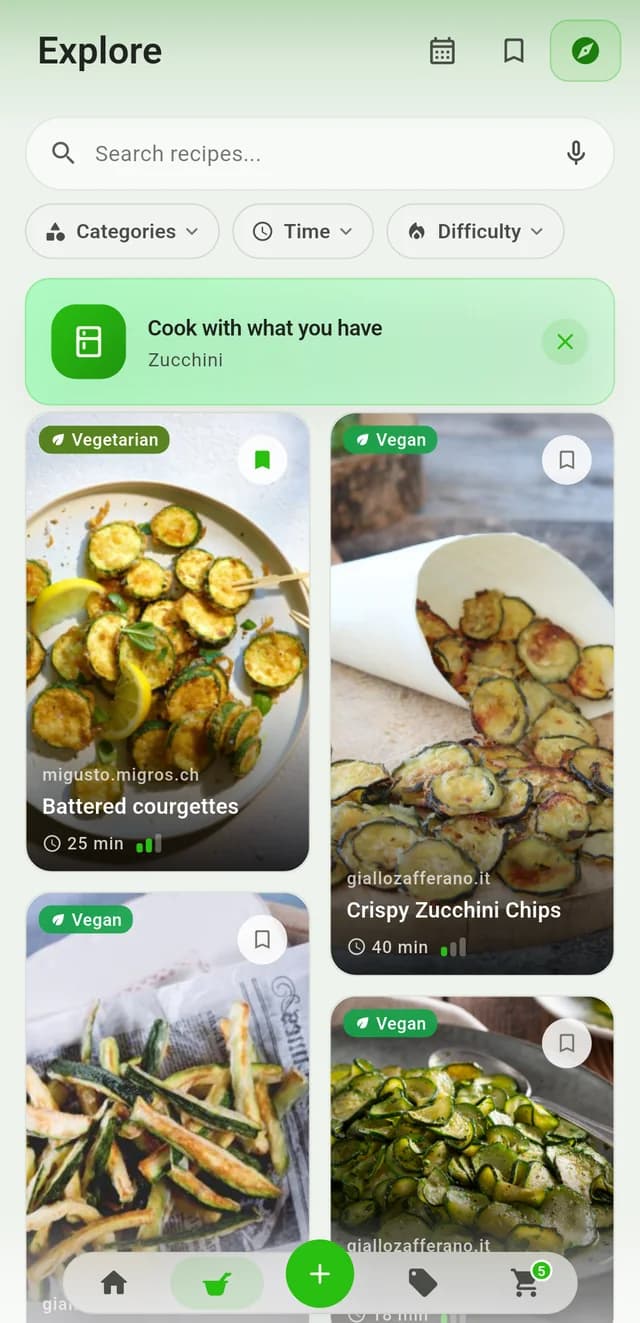
Type what you have
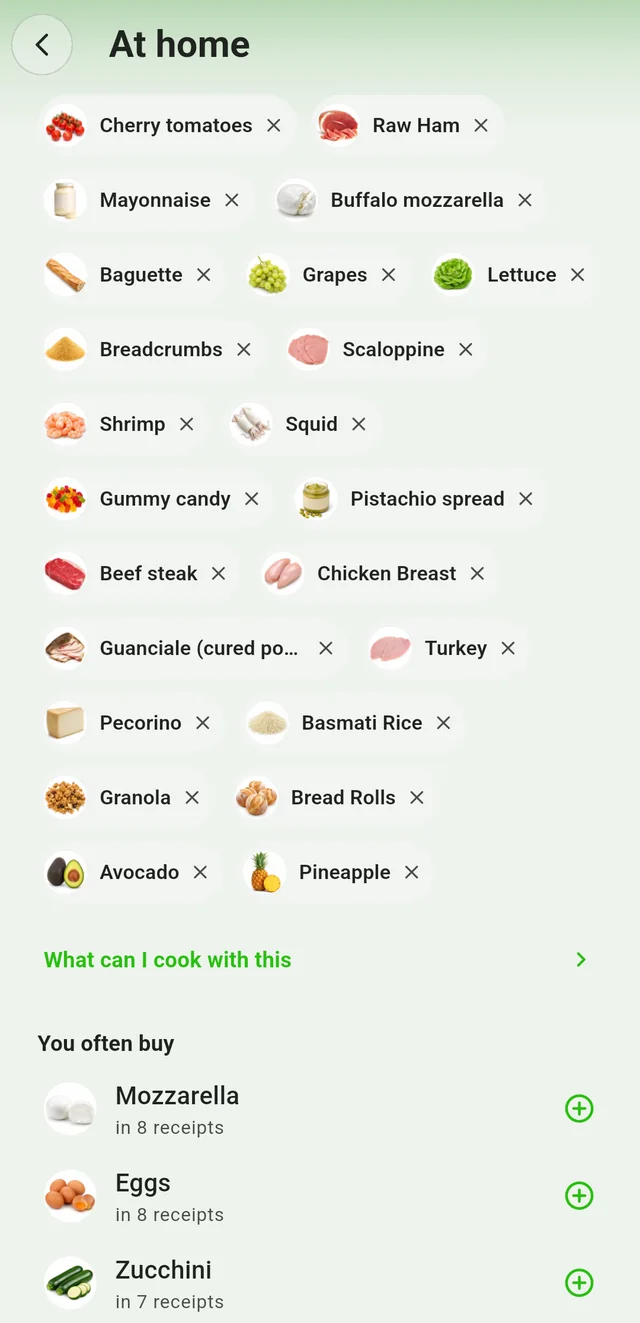
Keep track of what is at home
What freezes well, and what doesn't
The freezer is the cheapest way to stretch leftovers: whatever is left today and won't reach the table tomorrow, portion it and freeze it instead of throwing it away later. You are simply moving a finished meal to a day when you have no time or energy to cook, and sparing yourself the ready meal. The key trick is to freeze in single portions. That way you defrost only as much as you actually need, the rest stays untouched in the drawer, and nothing gets needlessly reheated a second time.
| Freezes well | Freezes poorly |
|---|---|
| Cooked rice and pasta | Leafy salads |
| Soups and stews | Cream- or mayonnaise-based dishes |
| Bread | Whole potatoes |
| Cooked meat | High-water vegetables |
Once a week, plan briefly what goes into the freezer and label each portion with its contents, so you keep track. The freezer then becomes a natural extension of your leftover kitchen, and no portion is forgotten at the back until nobody wants to eat it any more.
Wasting less is the simplest saving there is, because you do nothing extra for the money except eat what you already bought. Recipe ideas are in the Rappn recipes, and in the app you can look for recipes by what you already have. For what food waste actually costs, see food waste is money, and the whole saving method in cook cheaply.
Updated: .
Why Rappn?
Rappn is an independent grocery price comparison app in Switzerland, with no commercial agreements with any retailer. Our comparisons are truly independent.
- 100% free: no subscription, no hidden costs
- Neutral: no commercial agreements with Migros, Coop, Aldi, Lidl, Denner, Aligro, or Otto’s
- Updated daily, as soon as the chains publish their deals
- The chains’ deals in one place: search, filter, compare, no subscription
- Meal planner in the Kitchen tab: plan the week, send the ingredients to your list

Ready to save on groceries?
Install Rappn and compare for yourself this week. No account required.Scan the code, install Rappn and compare current offers. No account needed.




Frequently Asked Questions
How do I best use up leftovers?
By the principle of leftovers plus one cheap addition. Check what you have first, make cooked rice, pasta or vegetable leftovers the base for stir-fries, soups, bakes or bowls, and add an egg, seasonal vegetable or a tin of pulses. Leftover recipes matched to your ingredients you find live in Rappn.
How much food does each person in Switzerland throw away?
Around 90 kilograms of still-edible food a year, worth over CHF 600 (foodwaste.ch). Households cause around 40 percent of Swiss food waste, which is why your own behaviour is the biggest lever.
Can I still eat food after the best-before date?
Usually yes. The best-before date is a quality date; most products are perfectly fine after it. Only the use-by date on risk perishables like minced meat or fish is a real safety limit you should respect.
Why is using up leftovers so cheap?
Because the ingredients are already paid for. Turning leftovers into a meal usually costs only one cheap addition like an egg or a tin of pulses. Wasting less is therefore the simplest saving there is.
Which leftovers can I freeze, and which not?
Freezes well: cooked rice and pasta, soups and stews, bread, and cooked meat or portioned mains. Freezes poorly: leafy salads, cream- or mayonnaise-based dishes, whole potatoes and high-water vegetables. Freeze in single portions, so you thaw only what you need.