
Food waste is money: what a household bins each year, and how to get it back
In Switzerland each person throws away around 80 kilograms of food a year at home, worth around CHF 600 (foodwaste.ch). Across the whole value chain it is around 310 kilograms of avoidable losses per capita, and 26 percent of all food losses happen in households. Wasting less is the simplest saving, because you do nothing but eat what you already bought.
Rappn compares the current promotions of 7 Swiss retailers, updated daily: free, no subscription.
Plan, cook and save with Rappn, free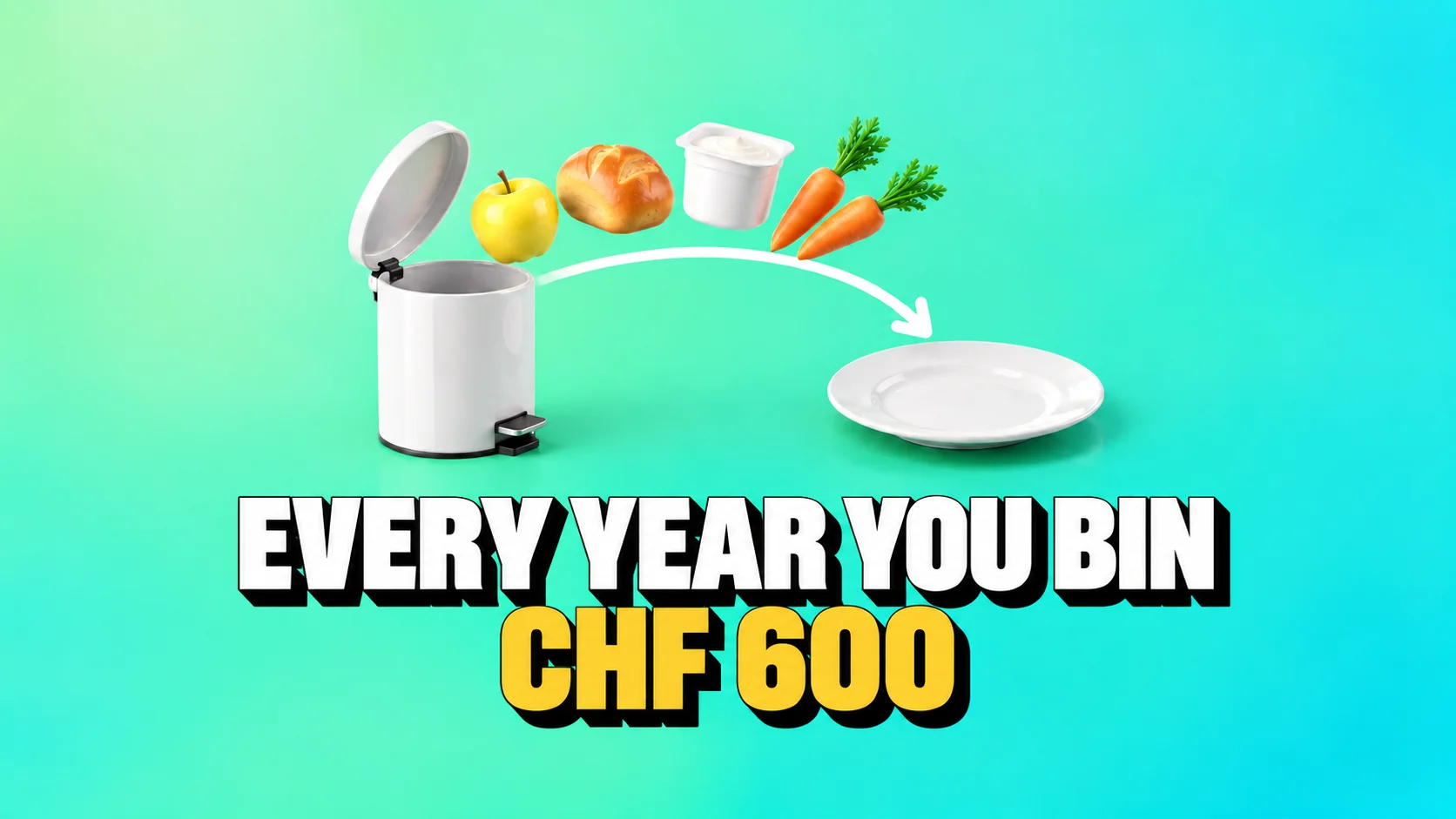
Food waste is not only an environmental issue, it is money: in Switzerland each person throws away around 80 kilograms of food a year at home, worth around CHF 600 (foodwaste.ch, based on the 2025 interim monitoring report by ZHAW and the Federal Office for the Environment). That is food that was bought but never eaten. The good news: you get almost all of that back, with no sacrifice, through a few habits.
Rappn is an independent grocery price comparison app in Switzerland, with no commercial agreement with any retailer. Migros, Coop, Aldi, Lidl, Denner, Aligro and Otto's do not pay us to rank them, and nothing below is sponsored.
How much does food waste cost a household?
| Figure | Value | What it measures |
|---|---|---|
| Household waste | ~80 kg / ~CHF 600 per person/year | your direct lever |
| Whole value chain | ~310 kg per capita/year | farm to catering, NOT household only |
| Households' share of all food losses | ~26 % | consumer behaviour |
This is Rappn's home screen: plan your shop, see which items on your list are on offer this week, and use the recipes to cook from what you already have, a simple way to waste less and save. Tap around to try it.
Plan, cook and save with Rappn, freeFree, no subscription · iOS & Android
Welcome
How do I get the money back?
1. Plan before shopping. Check what you already have first, and buy perishables only in amounts you will actually use (foodwaste.ch). 2. Cook leftovers instead of binning them. The biggest lever against food waste is turning what is left into a meal. That is exactly what the Rappn recipes section is for, and in the app you find recipes for what you already have at home. 3. Read the best-before date correctly. A best-before date is a quality date, not a safety one; many products are perfectly fine after it. Only the use-by date on risk perishables is a hard limit. 4. Rescue surplus. Apps like Too Good To Go sell surprise bags from around CHF 5, well below shop value; more in our how to save on groceries guide.
Which foods most often end up in the bin
Food waste is not spread evenly across your shopping. For Swiss households, foodwaste.ch keeps naming the same three culprits: bread, fruit and vegetables, and cooked leftovers scraped off the plate. All three get bought often and either spoil quickly or slip your mind. That is actually good news, because tightening up just these three groups already claws back the biggest share of the loss without overhauling your whole routine.
Each one has a simple, concrete fix:
- Bread: freeze in portions whatever you will not eat straight away. You then take out only what you need, and the rest stays fresh instead of going hard.
- Fruit and vegetables: store them correctly (many do not belong in the fridge, others do) and cook the softest pieces first. Working through the ripest items first means you lose the least.
- Cooked leftovers: plan them as your next meal from the start, rather than hopefully forgetting them at the back of the fridge. A leftover is a ready-made portion, not waste (you will find ideas in the recipes hub).
None of these moves costs time or money; they just need a little attention at the right moment. Small habits with bread, vegetables and leftovers add up over a year. And the payoff is double, because the food you rescue is money you have already spent.
The core point: wasting less is the simplest saving there is, because you do nothing extra for the money except eat what you already bought. In the Rappn app you plan your shop on the list, see through the price comparison what is on offer this week, and cook with the recipes from what you have. That turns avoided food waste into a real amount in your account.
Updated: .
Why Rappn?
Rappn is an independent grocery price comparison app in Switzerland, with no commercial agreements with any retailer. Our comparisons are truly independent.
- 100% free: no subscription, no hidden costs
- Neutral: no commercial agreements with Migros, Coop, Aldi, Lidl, Denner, Aligro, or Otto’s
- Updated daily, as soon as the chains publish their deals
- The chains’ deals in one place: search, filter, compare, no subscription
- Meal planner in the Kitchen tab: plan the week, send the ingredients to your list

Ready to save on groceries?
Install Rappn and compare for yourself this week. No account required.Scan the code, install Rappn and compare current offers. No account needed.




Frequently Asked Questions
How much food does a Swiss household throw away per year?
Around CHF 600 worth per person per year, equal to around 80 kilograms of food that ends up in the bin (foodwaste.ch, based on the 2025 interim monitoring report by ZHAW and the Federal Office for the Environment). Across the whole value chain it is around 310 kilograms of avoidable losses per capita, but that is not a household-only figure.
How does cutting food waste actually save money?
Plan before shopping, check your stock, buy perishables in manageable amounts and cook leftovers instead of binning them. Wasting less is the simplest saving because you do nothing extra for the money except eat what you already bought.
Is food dangerous once the best-before date has passed?
No. The best-before date is a quality date; most products are perfectly fine after it. Only the use-by date on risk perishables like minced meat or fish is a real safety limit you should respect.
What share of food waste comes from households?
According to foodwaste.ch, 26 percent of all food losses in Switzerland happen in households (2025 interim monitoring report by ZHAW and the Federal Office for the Environment). That is why your own behaviour is the biggest lever you personally control.
Which foods do Swiss households waste most?
According to foodwaste.ch, mainly bread, fruit and vegetables, and cooked leftovers. Targeting these three groups, freezing bread, cooking the ripest first, planning leftovers, claws back most of the roughly CHF 600 per person a year.