
Eat healthy on a budget in Switzerland: what it really costs
Eating healthily is not the cost driver many assume. A BLV study by the Bern University of Applied Sciences (2014) compared weekly baskets for a couple: unbalanced CHF 95, healthy from fresh products CHF 109 (only around CHF 14 more), healthy from ready-made products CHF 145. So the expensive part is convenience, not health. With own-brands and seasonal shopping, you eat healthy and cheap.
Rappn compares the current promotions of 7 Swiss retailers, updated daily: free, no subscription.
Compare healthy staples in Rappn, free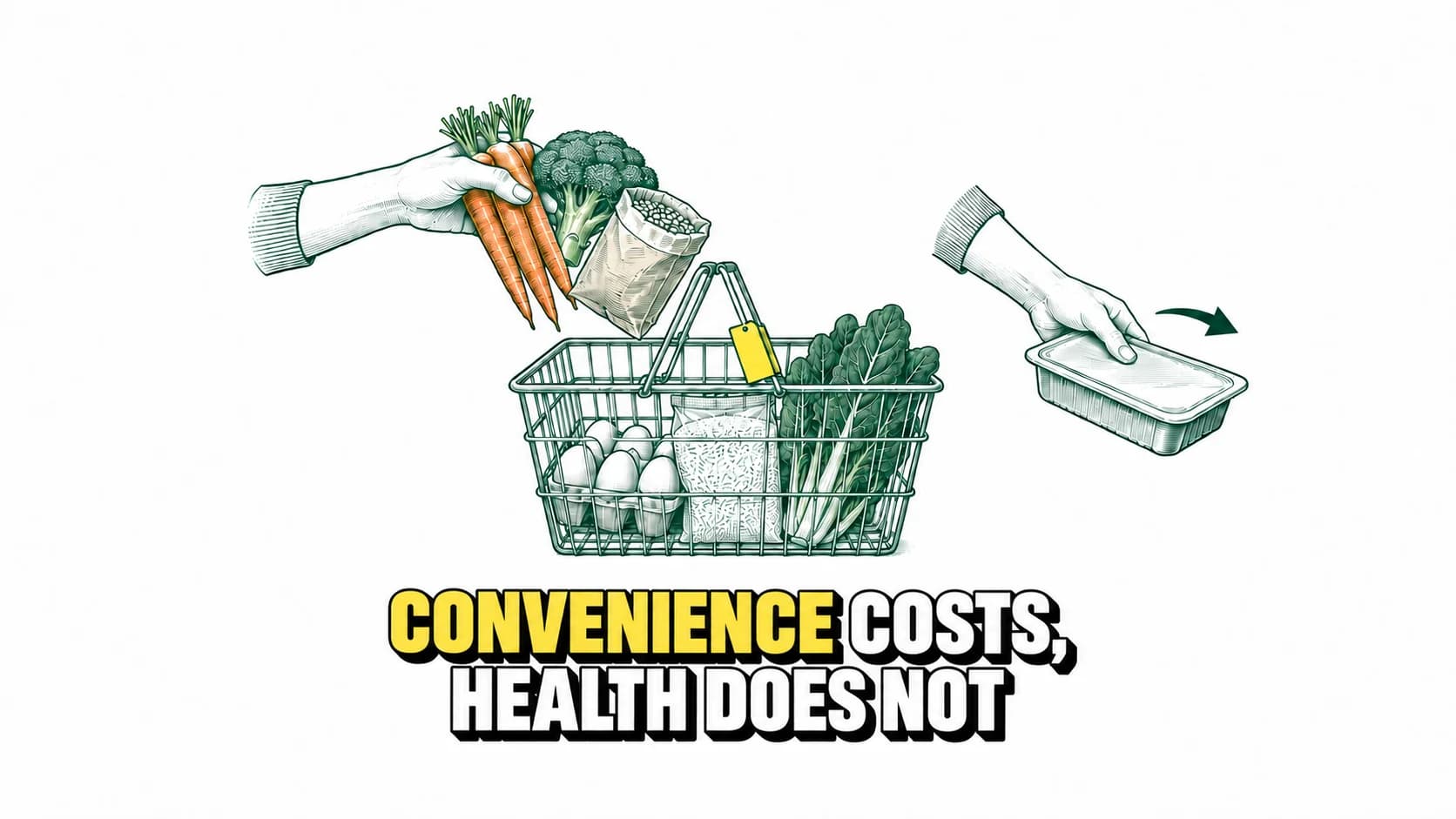
Updated regularly. Eating healthily is not the cost driver in Switzerland that many assume. A study by the Bern University of Applied Sciences, commissioned by the Federal Food Safety and Veterinary Office (BLV), compared weekly baskets for a couple household: an unbalanced basket cost CHF 95, a healthy one from fresh products CHF 109, so only around CHF 14 more per week. Healthy only gets expensive with ready-made products.
Rappn is an independent grocery price comparison app in Switzerland, with no commercial agreement with any retailer. Migros, Coop, Aldi, Lidl, Denner, Aligro and Otto's do not pay us to rank them, and nothing below is sponsored.
Does eating healthily really cost more?
| Weekly basket (couple household) | Cost per week | Source |
|---|---|---|
| Unbalanced (unhealthy) | CHF 95 | BLV / Bern UAS |
| Healthy, cooked fresh | CHF 109 | BLV / Bern UAS |
| Healthy, with ready-made | CHF 145 | BLV / Bern UAS |
These are live offers in Rappn: search healthy staples like vegetables, pulses or oats and see which chains have them on offer this week. Type a product to try it.
Compare healthy staples in Rappn, freeFree, no subscription · iOS & Android
"vegetables"
Offers
How to eat healthily on a budget
Fresh over ready-made. The biggest lever: cook from basic ingredients instead of buying ready meals. Own-brand over brand. In an analysis published on 14 March 2023, K-Tipp found own-brands around 41 percent cheaper on average than branded products in a sample of 100 products, at near-identical lab-test quality. That also holds for healthy staples like oats, pulses, rice and frozen vegetables. Shop seasonally. Fruit and vegetables are cheapest in season, so a look at the seasonal calendar pays off. For context: internationally the premium for a healthy diet is real but small (a meta-analysis across ten countries puts it at roughly one dollar a day more), and it can be almost fully absorbed with own-brands and fresh products.
Thrown-away food is expensive food
| Household food waste | Figure | Source |
|---|---|---|
| Thrown away per person per year | ~CHF 600 (~80 kg) | foodwaste.ch / BAFU |
| Households' share of avoidable waste | around 40 % | foodwaste.ch / BAFU |
| Most-wasted items | bread, fruit, vegetables | foodwaste.ch / BAFU |
Wasting less is therefore the quiet twin of eating healthily on a budget: every franc that does not end up in the bin counts as much as one saved on the shelf, and it costs no quality. Freezing bread, using up open vegetables first and buying only what actually reaches the plate this week saves twice over. It is not about going without, but about planning. Plan the weekly shop around the current offers too, and you buy the fresh ingredients exactly when they are cheap, and only as much as you will use up. For how to turn food waste back into money, see the reduce food waste guide.
In the Rappn app you search specifically for healthy staples like vegetables, pulses or oats and see which of the seven chains have them on promotion this week. That way healthy costs barely more than unhealthy. More levers in the how to save on groceries guide, and whether switching to own-brands pays off, in own-brand or brand.
Updated: .
Why Rappn?
Rappn is an independent grocery price comparison app in Switzerland, with no commercial agreements with any retailer. Our comparisons are truly independent.
- 100% free: no subscription, no hidden costs
- Neutral: no commercial agreements with Migros, Coop, Aldi, Lidl, Denner, Aligro, or Otto’s
- Updated daily, as soon as the chains publish their deals
- The chains’ deals in one place: search, filter, compare, no subscription
- Meal planner in the Kitchen tab: plan the week, send the ingredients to your list

Ready to save on groceries?
Install Rappn and compare for yourself this week. No account required.Scan the code, install Rappn and compare current offers. No account needed.




Frequently Asked Questions
Does eating healthily cost more in Switzerland?
Barely, if you cook fresh. A BLV study by the Bern University of Applied Sciences (2014) compared weekly baskets for a couple household: unbalanced CHF 95, healthy from fresh ingredients CHF 109, so only around CHF 14 more per week. Healthy only gets expensive with ready-made products (CHF 145).
What is the biggest cost driver in food, unhealthy or ready-made?
Ready-made products. In the BLV study the healthy basket from ready-made and semi-prepared products cost CHF 145 per week, versus CHF 109 cooked fresh. So convenience adds around CHF 36, not health.
How do I eat healthily on little money?
Cook fresh instead of ready-made, choose budget own-brands (around 41 percent cheaper on average at near-identical quality, per K-Tipp, March 2023) and shop seasonally. Healthy staples like oats, pulses, rice and frozen vegetables are especially good value as own-brands.
Are healthy own-brands worse than branded products?
Usually not. K-Tipp measured near-identical quality in lab tests (brands 4.57, own-brands 4.58), with own-brands winning 57 of 111 tests and costing on average 41 percent less. The analysis appeared in K-Tipp on 14 March 2023 and covers K-Tipp and Saldo tests from the two years before. For healthy staples, the own-brand is therefore often the smarter choice.
How much food do Swiss households waste, and what does it cost?
Around CHF 600 per person per year, roughly 100 kilograms of food (foodwaste.ch / BAFU). Households cause around 40 percent of avoidable food waste, most often bread, fruit and vegetables. Wasting less saves noticeably, without swapping a single product.