
Monthly Grocery Spending Review: What Should Your Household Actually Spend in Switzerland?
The Swiss BFS average of CHF 637/month for groceries is almost useless because it pools every household size. Here are the real benchmarks by household type, the 5 places budgets leak, and a 30-minute monthly review that shows couples where the money went.
Rappn compares prices across all 7 chains live: free, no account.
Track your spending. Rappn is free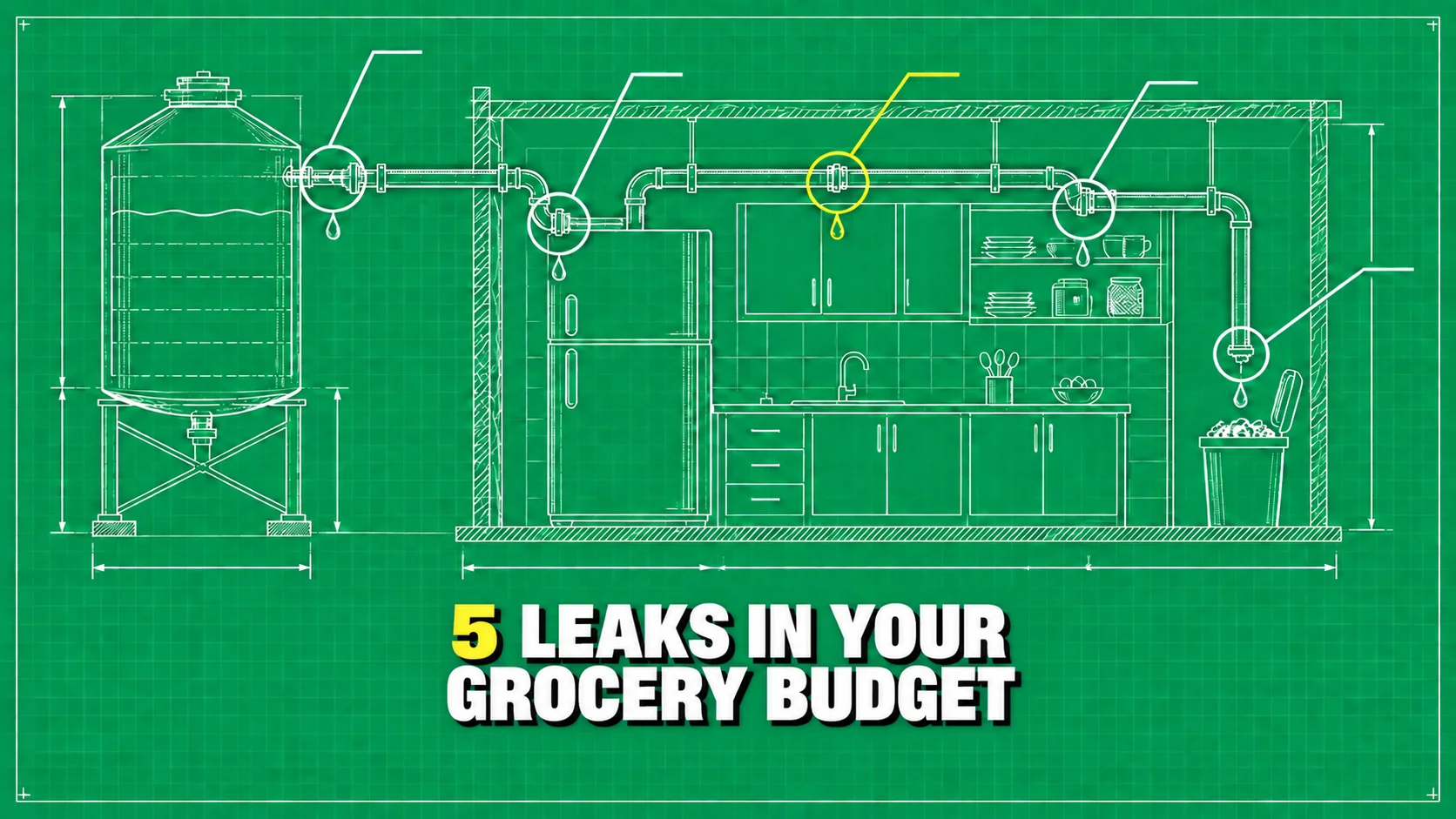
The average Swiss household spends CHF 637 per month on food and non-alcoholic beverages, according to the Federal Statistical Office (BFS) Household Budget Survey. That number is almost useless for you, because it averages a single retiree, a couple, and a family of four into one figure. The useful question is: what should your household spend, given how you actually shop? This guide gives the Swiss benchmarks by household size, the five places grocery budgets quietly leak, and a 30-minute monthly review process that consistently saves CHF 150 to 300 a month for couples.
Sources checked regularly. Data from BFS Household Budget Survey (latest published), Agroscope food-waste data, K-Tipp basket tests. Live offers in the Rappn app.
Rappn is an independent grocery price comparison app in Switzerland, with no commercial agreements with any retailer.
What the average Swiss household actually spends
The BFS Household Budget Survey is the only authoritative source on Swiss household expenditure. The figures below come from the Haushaltsbudgeterhebung 2023, the latest reporting year: an average household with gross monthly income of CHF 10,340, compulsory expenditure of CHF 3,154, total consumption expenditure of CHF 5,049 and CHF 7,186 of disposable income. About 61 percent of households sit below that disposable-income average, so the mean overstates the typical household.
| Category | Average monthly amount | Share of gross income |
|---|---|---|
| Mandatory taxes, AHV/IV, health insurance | CHF 3,154 | ~30.5% |
| Housing and energy | CHF 1,449 | ~14% |
| Transportation | CHF 744 | ~7% |
| Food and non-alcoholic beverages | CHF 637 | ~6.2% |
| Restaurants and accommodation | CHF 593 | ~6% |
| Insurance (other than basic health) | CHF 298 | ~3% |
| Clothing and shoes | CHF 128 | ~1.2% |
Source: BFS Haushaltsbudgeterhebung 2023, the latest published reporting year. Numbers rounded.
Two things stand out. First, food at home is only the fourth-biggest expense category for the average household, well behind mandatory transfers, housing, and transport. Second, "restaurants and accommodation" is a separate CHF 593 line, almost as much as the supermarket spend. For most Swiss households, the eating-out category is where the budget actually leaks, not the grocery line.
| Household type | Realistic monthly grocery budget | Per-person equivalent |
|---|---|---|
| 1 adult, mostly cooks at home | CHF 400 to 600 | CHF 400 to 600 |
| 2 adults, mostly cook at home | CHF 600 to 850 | CHF 310 to 425 |
| 2 adults + 1 child | CHF 1,000 to 1,300 | CHF 333 to 433 |
| 2 adults + 2 children | CHF 1,200 to 1,600 | CHF 300 to 400 |
| Single retiree | CHF 350 to 500 | CHF 350 to 500 |
The per-person figure drops sharply with household size because of bulk-buying, shared cooking, and basket overlap. If your per-person number is above the high end of these ranges, there is room to cut without changing what you eat.
Scan your receipts in Rappn and view recorded spending by category. Review your grocery budget using your own purchases.
Track your spending. Rappn is freeFree, no account required · iOS & Android
Monthly overview
Your spending
The five places Swiss grocery budgets quietly leak
After looking at thousands of household baskets, the same five patterns show up. None of these are about deprivation. They are about visibility.
1. Convenience formats. Convenience formats cost noticeably more on the same item: a K-Tipp test found mark-ups at Coop Pronto of 27% on a 15-pack of Tempo tissues and 31% on a 1.5-litre San Pellegrino against the regular supermarket. Three convenience stops a week add up quietly over a month. Rule that survives real life: at a station shop, 3 items max (one staple, one protein, one fruit/veg), then leave.
2. Protein bought fresh and last-minute. Meat is the single most volatile line on a Swiss grocery bill. Buying meat fresh at full price every shopping trip costs a couple CHF 60 to 100 per week. Mixing in legumes, eggs, tofu, and frozen-then-defrosted protein 2 to 3 times a week brings that down to CHF 35 to 55. Same nutrition, CHF 100 to 200 less per month.
3. Food waste. Agroscope estimates Swiss households waste around 90kg of food per person per year. At Swiss prices, that is roughly CHF 600 to 900 per person annually, or CHF 50 to 75 per month per adult. The fix is meal planning that uses what you already have, not a perfect plan you ignore.
4. Premium brands when the private label is fine. K-Tipp blind tests have repeatedly rated discounter and budget-line products "good", on par with brands costing 2 to 4 times as much. M-Budget at Migros and Prix Garantie at Coop close most of the gap with discounters. Switching staples (pasta, rice, oil, basic dairy) to budget lines typically saves 8 to 12 percent of the monthly grocery bill on its own. See our M-Budget vs Prix Garantie breakdown.
5. The grocery vs eating-out blur. Many households track "food" as one line and never see how much of it is restaurants, takeaway, work-lunch coffees, and weekend snacks. The fastest budget improvement most people can make is splitting food into three subcategories (groceries, eating out, snacks/coffee) for one month. The discovery is usually surprising.
How to run a monthly grocery review in 30 minutes
The review is not a spreadsheet exercise. It takes 30 minutes once a month and gives you actionable answers.
Step 1: Pull last month's grocery total. From your bank statement or your tracking app, get one number: total spent at supermarkets last month. Exclude restaurants and convenience stops; track those separately.
Step 2: Compare to your household-size benchmark. Use the table above. In range, above, or below? If you are above the high end of your row by more than 15 percent, there is meaningful room to cut.
Step 3: Identify the top two leaks. Look at the five categories above. Which two apply most to last month? Convenience? Fresh protein? Waste? Premium brands? Eating-out blur? Be honest. Pick two, not five.
Step 4: Set one behavioral change for next month. Not five. One. "Skip Coop Pronto, do one weekly Aldi run instead." Or "Switch all pasta and rice to M-Budget." Or "Plan three meals around what's in the freezer before adding to the shopping list." Tiny, specific, repeatable.
The trap most people fall into is trying to optimize all five leaks at once. That fails. One behavioral change per month, compounded over a year, takes a CHF 800/month couple to CHF 600/month without anyone feeling like they are on a budget.
This is exactly what the Rappn spending tracker is built to support. It pulls your weekly grocery totals automatically, breaks them down by store, shows month-over-month changes, and surfaces leak categories without you having to maintain a spreadsheet.
See where your grocery money actually goes.
The Rappn spending tracker shows your monthly grocery total by store, by week, and against the BFS benchmark for your household size. No spreadsheets, no guessing. Open Rappn.
A realistic target for your household
The 50/30/20 rule (50% needs, 30% wants, 20% savings) is a useful starting point but rarely fits Swiss households in Zurich or Geneva, where housing eats most of the "needs" bucket. A more practical target for food specifically is:
- 5 to 7 percent of gross household income for groceries
- 1 to 3 percent for restaurants and eating out
- Combined cap of 8 to 10 percent for total food
A couple earning CHF 12,000/month gross should target CHF 600 to 840/month on groceries and CHF 960 to 1,200 on total food. Above that range, the review process above will tell you where the leak is.
The CHF 637/month BFS average is often presented as a target. It isn't. It is the midpoint between a single retiree (CHF 350) and a family of four (CHF 1,500), and it cannot be your number. Pick the right row in the household-size table and work from there.
For deeper savings strategies, see our save money on groceries in Switzerland guide and the weekly grocery basket comparison breakdown across all 7 retailers we cover (Migros, Coop, Aldi, Lidl, Denner, Aligro, Otto's).
Updated: .
Why Rappn?
Rappn is an independent grocery price comparison app in Switzerland, with no commercial agreements with any retailer. Our comparisons are truly independent.
- 100% free: no subscription, no hidden costs
- Neutral: no commercial agreements with Migros, Coop, Aldi, Lidl, Denner, Aligro, or Otto’s
- Updated daily, as soon as the chains publish their deals
- The chains’ deals in one place: search, filter, compare, no account needed
Ready to save on groceries?
Install Rappn and compare for yourself this week. No account required.Scan the code, install Rappn and compare current offers. No account needed.
Built in Switzerland, for Switzerland

Frequently Asked Questions
How much does the average Swiss household spend on groceries per month?
Around CHF 637 per month on food and non-alcoholic beverages, plus another CHF 593 on restaurants and accommodation, according to the BFS Household Budget Survey. The CHF 637 figure represents a 2.2-person reference household. Single-person households typically spend CHF 400 to 600, and a family of four typically spends CHF 1,200 to 1,600 per month on groceries.
Why are Swiss grocery prices so high?
The Swiss price level for food and non-alcoholic beverages stood at 158.5 against an EU average of 100 in 2024, so grocery prices are around 58 percent above the EU average (Eurostat). This is driven by import barriers (especially on dairy and meat), high domestic production costs, retailer concentration, and Swiss labor and rent costs that flow through to shelf prices.
What percentage of income should I spend on groceries in Switzerland?
A practical target is 5 to 7 percent of gross household income on groceries and 1 to 3 percent on eating out, for a combined food share of 8 to 10 percent. The BFS Household Budget Survey shows the average household spends about 6.8 percent on food at home, well within this range.
How much can I realistically save by changing how I shop?
The three changes that move a Swiss grocery bill are switching staples to M-Budget or Prix Garantie, doing one planned weekly shop instead of several impulse trips, and using Aktion weeks for stock-up categories like coffee, household goods and pantry staples. This page puts no franc total on that, because it depends on which of those categories your basket is heavy in and on what is on Aktion in your canton that week. The honest version is the comparison itself: track your own bill for two months against the live prices, and the gap shows up in the categories rather than in a headline number.
Is it worth shopping at multiple supermarkets to save money?
Usually only if the second store is on your normal route and the gap on a single category you already buy regularly is at least CHF 15. K-Tipp tests show roughly CHF 20 difference between Aldi and Coop on 100 standardized items, so if you only buy 20 items at the second store, the real gap is CHF 4 per trip. The math changes in stock-up Aktion weeks (Denner coffee multipacks, Coop heavy household promos).
What is the single biggest mistake people make with their Swiss grocery budget?
Tracking groceries and eating out as one line. The two behave completely differently and need different fixes. Groceries respond to planning, store choice, and Aktion timing. Eating out responds to frequency caps and habit changes. Lumping them together makes the leak invisible.