
Electronic Shelf Labels and Dynamic Pricing in Swiss Supermarkets
Electronic shelf labels are already widespread in Swiss supermarkets: according to RSI (10 August 2025), about two thirds of the supermarkets of one big chain have them. The chains questioned say they do not use them for prices that change during the day. The PIO requires the price to be stated at all times.
Rappn compares the current promotions of 7 Swiss retailers, updated daily: free, no subscription.
See this week’s deals, free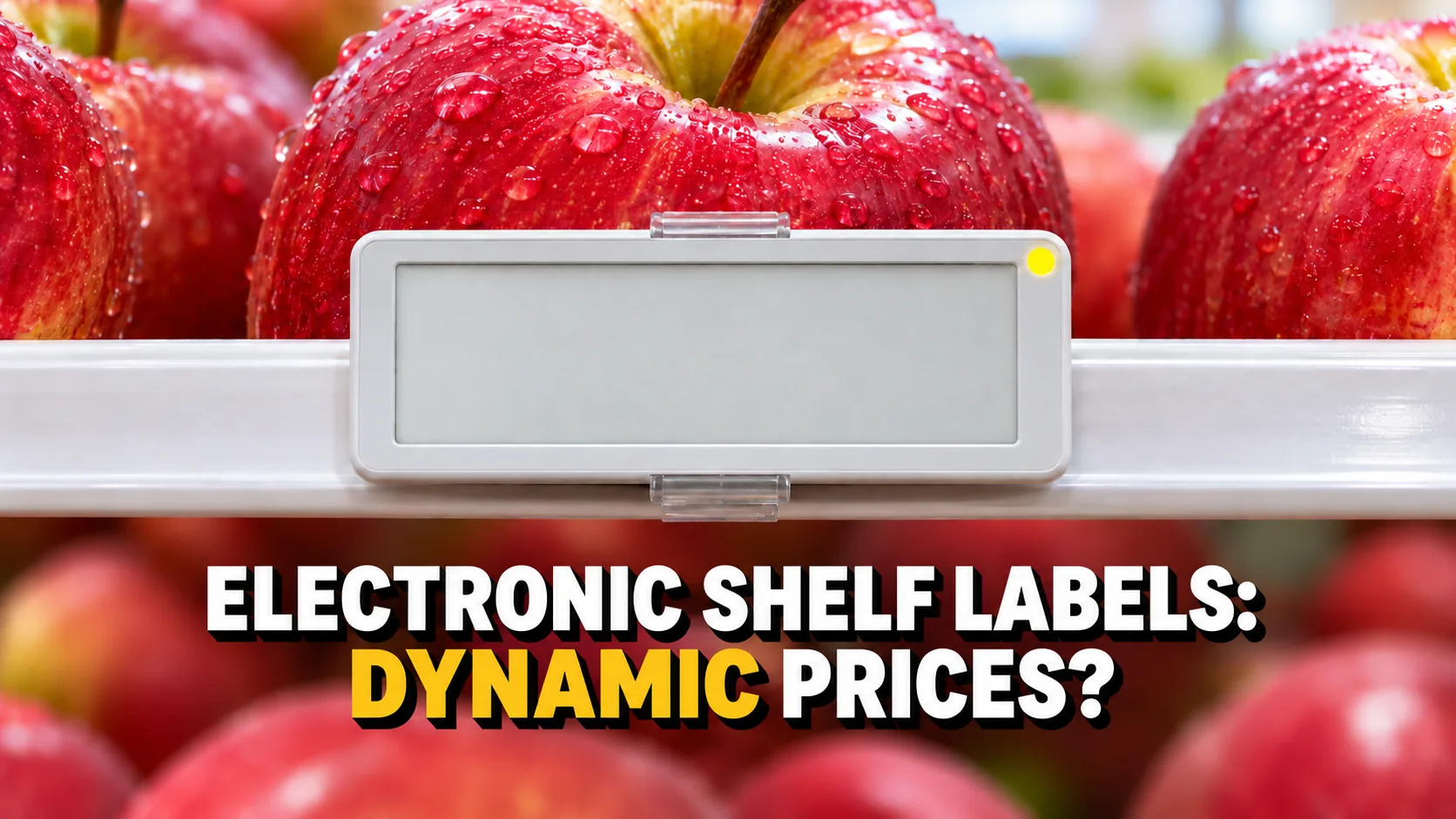
Electronic shelf labels are displays on the shelf that show the price and can be updated remotely. In Switzerland they are already widespread: according to an RSI report of 10 August 2025 they are more common than people think, and the big chains say they do not use them for prices that change during the day. The Price Indication Ordinance (PIO/PBV) requires the price you actually pay to be stated at all times.
Updated November 2026. Sources: RSI, 10 August 2025; SRF, 5 August 2025; SRF, 27 September 2019; SRF, 7 April 2025; Price Indication Ordinance (PIO/PBV, German text) and Swiss Code of Obligations (CO) on Fedlex; SECO, FAQ on price indication (German; all read on 9 November 2026). General information: this is not legal advice.
What are electronic shelf labels, and who uses them in Switzerland?
They are digital tags in place of paper: the price is changed from a computer, without walking the aisles. According to RSI (10 August 2025), one big chain began converting its stores about six years earlier, a discounter replaced its labels on a large scale about five years earlier, another discounter uses them everywhere, and about two thirds of the supermarkets of another big chain have them. The report notes that the chains could, at least in part, change prices at any time.
The oldest announcement we found is from SRF, 27 September 2019: a regional cooperative of a big chain decided to install them in all new and refurbished supermarkets, and a second chain adopted them in new stores. We did not find a current public figure for how many stores use them.
Look at the current promotions with their unit price and validity dates: a fixed reference point when a shelf price changes.
See this week’s deals, freeFree, no subscription · iOS & Android
Offers
What do they make possible?
- Central changes: an offer starts at the same time in every store, with no labels to swap by hand.
- Fewer outdated labels: the problem of last week’s tag, described in the guide to receipt errors and your rights at the till, gets smaller, but it does not disappear if the till system and the display are out of step.
- More frequent changes: in theory several times a day, depending on demand, time or stock. This is the controversial part.
Do prices change during the day in Switzerland?
| Who | What they state (RSI, 10 August 2025) |
|---|---|
| A big chain | Aims for stable prices; dynamic pricing is not part of current policy |
| A discounter | Prices adjusted at most once a day, at night |
| Another discounter | Keeps betting on fixed prices |
| Another big chain | The same prices apply across Switzerland |
Abroad, prices change several times a day at a Norwegian discount chain, cited by RSI and SRF, and SRF reports that in the United States a big chain is moving to digital labels, with experts divided on the risk of dynamic pricing. For Switzerland we found no survey showing grocery prices that vary over the course of a day: these are statements by the sellers, not measurements.
What do consumer organisations say?
The Swiss Consumer Protection Foundation (SKS) has voiced concern. In 2019 its managing director Sara Stalder warned on SRF that the displays make time-based and region-based price changes easy, and that customers can hardly notice them. On 7 April 2025, speaking about an online electronics shop and not a supermarket, she called the dynamic pricing system extremely opaque. A lecturer at HWZ predicted back in 2019 that dynamic pricing will spread: that is an opinion, not a fact. To keep an eye on prices, the guide to supermarket price traps is a good place to start.
Is it legal? What does the Price Indication Ordinance say?
In the official texts we read, no provision speaks expressly about prices that change during the day. What they say:
- Art. 3 para. 1 PIO: for goods offered to consumers, the price actually payable in Swiss francs (the retail price) must always be stated with the offer.
- Art. 5 para. 1 PIO: for goods sold by measure, the unit price (per kilo or litre) must also always be stated. See the comparison of prices per litre and per kilo.
- Art. 7 para. 1 PIO: the price goes on the goods or right next to them; art. 8: it must be easy to see and easy to read. The SECO FAQ adds that on a shelf, a notice is enough in place of a tag on every item.
In the articles we read, the PIO does not mention electronic shelf labels: a display counts like a paper tag, as long as the price is correct and legible. This is our reading, not an official opinion.
Does the shelf price apply at the till?
As a rule, yes. Art. 7 para. 3 CO says that displaying goods with a price is, as a rule, an offer, and the SECO FAQ says that goods on display with a price are normally a binding offer. An obvious mistake is different: a gold ring at 59.90 francs instead of 599 (an example from the guide to till errors). If the till shows a different amount from the shelf, say so straight away, show the photo of the tag and ask for a check.
How do you notice a price change?
- Photograph the shelf tag (price, unit price, date and time on the photo) for products you buy often or that cost a lot.
- Check the lines on the receipt before you leave: the guide to receipt errors recommends it too.
- Keep the receipt or a legible photo: see how long to keep receipts.
- Compare the unit price, not just the tag price: pack sizes change, the price per kilo or litre is comparable.
- Once a month, review your spending: an increase you cannot explain shows up better in the total per category. The guide to personal grocery inflation shows how.
For self-checkouts and self-scanning, where the way the price reaches you also changes, there is the guide to self-checkout and scan and go. To see what is on promotion this week, open the offers.
How to go about it with Rappn
Rappn is a free Swiss app (iOS and Android) that compares the current promotions of seven Swiss retailers in all 26 cantons, in 4 languages. The promotions are updated daily as the chains publish them. You can search by product and unit price, follow a product and get a price alert, and scan receipts to see your monthly spending by category. Rappn has no commercial agreements with any retailer. It does not measure shelf prices: the proof of what you paid remains the receipt.
Updated: .
Why Rappn?
Rappn is an independent grocery price comparison app in Switzerland, with no commercial agreements with any retailer. Our comparisons are truly independent.
- 100% free: no subscription, no hidden costs
- Neutral: no commercial agreements with Migros, Coop, Aldi, Lidl, Denner, Aligro, or Otto’s
- Updated daily, as soon as the chains publish their deals
- The chains’ deals in one place: search, filter, compare, no subscription
- Meal planner in the Kitchen tab: plan the week, send the ingredients to your list

Ready to save on groceries?
Install Rappn and compare for yourself this week. No account required.Scan the code, install Rappn and compare current offers. No account needed.



Frequently Asked Questions
What are electronic shelf labels in supermarkets?
They are displays on the shelf that show the price and can be updated remotely, in place of the paper tag. According to RSI (10 August 2025) they are already widespread in Switzerland: one big chain introduced them about six years ago, and about two thirds of the supermarkets of another have them.
Do prices change during the day in Swiss supermarkets?
The chains questioned by RSI and SRF in August 2025 say no: they aim for stable or fixed prices, and one discounter adjusts them at most once a day, at night. Markdowns on products close to expiry are the exception. These are statements by the sellers, not independent measurements.
Is dynamic pricing in supermarkets legal in Switzerland?
In the texts we read, no provision bans or regulates it expressly. Art. 3 of the Price Indication Ordinance requires the price actually payable to be stated at all times. This is not legal advice.
Does the shelf price apply at the till?
As a rule, yes: under art. 7 para. 3 of the Code of Obligations, displaying goods with a price is, as a rule, an offer, and SECO confirms this in its FAQ. An obvious pricing mistake is an exception.
How do I notice a price change in a supermarket?
Photograph the tag of products you buy often, check the lines on the receipt before you leave and compare the unit price. Keep the receipt or a legible photo so you can prove the amount you paid.