
Fish & Seafood Prices in Switzerland: Where to Actually Buy in 2026
20 fish deals at 4 chains for the canton of Zurich, most valid until Wed 7 Oct. Lowest price per kilo: CHF 6.94/kg. Updated 4 Oct 2026.
Lowest prices per kilo
See all 20- deals
- 20
- chains
- 4

 Denneruntil Wed 7 Oct
CHF 6.94 per kilo
CHF 6.45
 AldiAlmare Seafood · 140 g
CHF 9.64 per kilo
CHF 1.35
- AldiAlmare Seafood · 200 g
CHF 9.95 per kilo
CHF 1.99
Promotions only, not regular shelf prices. Price per kilo: deal price divided by the weight in kilos, checked against the chain’s own figure where there is one. Source: deals published by the chains.
All fish deals
For the canton of Zurich
20 deals
- −20%
- Deal
- Deal
- −36%
- −41%Online only
Dagim kosher light tuna in water
 CoopKing of Sea · 170 g
CHF 11.47 per kilo
CHF 1.95was
3.30until Wed 7 Oct
- −40%
- −45%
- −25%
- −32%
- −33%
- −47%
- −29%
- −33%
- −10%
- 2+ items −50%
- −50%
- −12%
- −8%
- No verifiable price per kilo
- −21%
- −30%


Guide
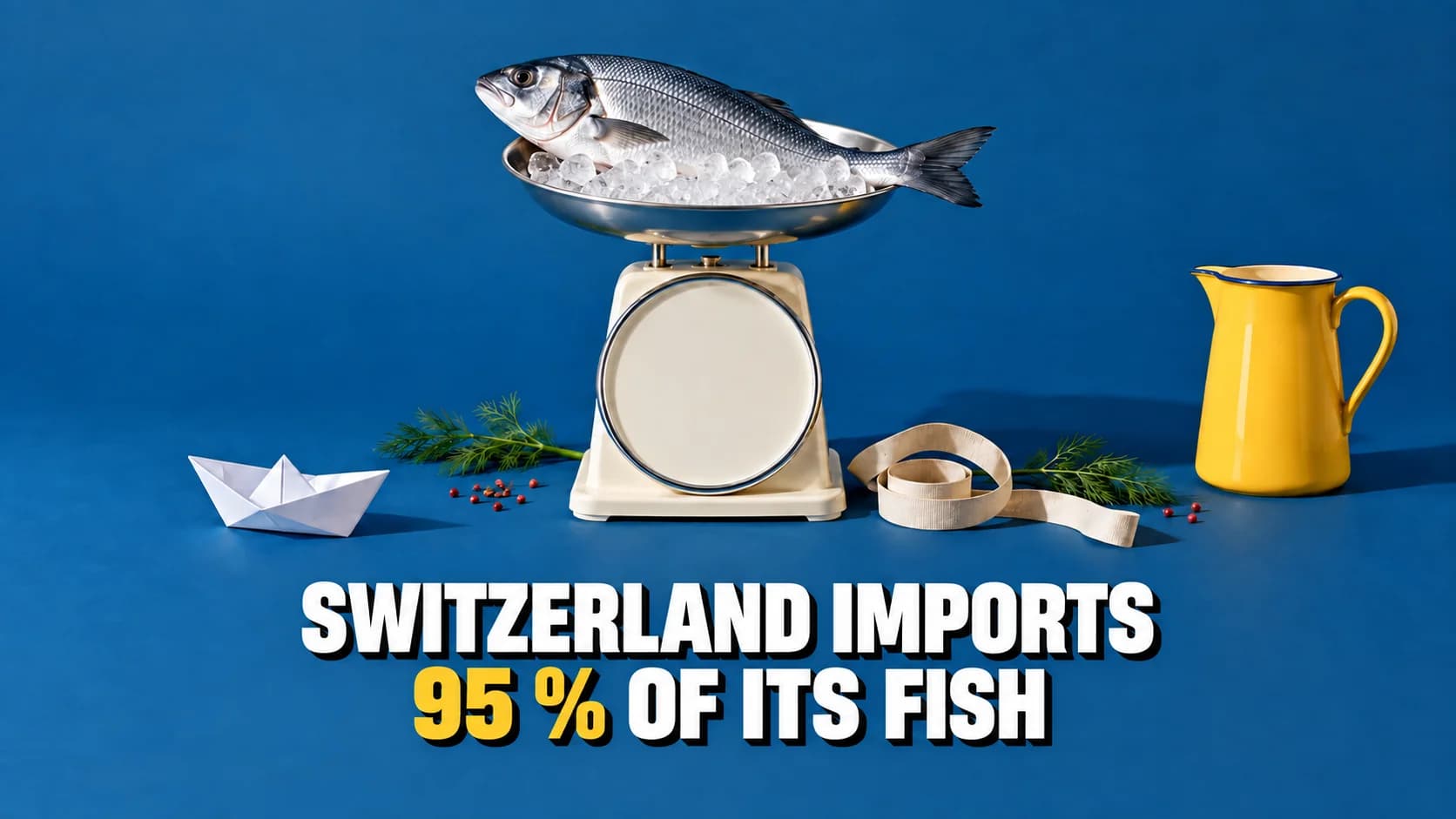
Switzerland imports 95% of its fish (76'000 t / year, salmon = 40%). Per-capita consumption ~9 kg / year (half the EU average). Swiss aquaculture is small (~2'900 t / year): Swiss Lachs in Lostallo (since 2016) and Migros Micarna in Birsfelden (since Sep 2020, Egli + Felchen). Greenpeace 2023: salmon = 24% of Coop fish Aktionen and 13% of Migros, at 41 to 50% off. Dated reference tables (May 2026) for salmon, white fish, prawns, tuna and Swiss freshwater fish.
On farmed salmon, the budget tier of the May 2026 comparison below started at M-Budget ASC Lachsfilet at Migros (CHF 4.80 for 250g), with Coop's equivalent Prix Garantie ASC range alongside it. Premium fresh salmon cost CHF 4 to CHF 6 per 100g at the supermarket counter, dropping to roughly CHF 2.17 per 100g during the heavy Aktion cycles that Greenpeace flagged as problematic in 2023. Swiss freshwater fish (Felchen, Egli) is a premium category at CHF 5 to CHF 9 per 100g.
Sources checked regularly. BFS Bundesamt für Statistik (Swiss fish production / consumption); Proviande per-capita consumption; Eidgenössische Zollverwaltung (EZV) 2019 import statistics; fischereistatistik.ch; Swiss Lachs AG (swisslachs.ch, 10-year anniversary 2025); Migros Corporate Communications (Birsfelden Micarna aquaculture press release September 2020); Greenpeace Switzerland 2023 report on Swiss retailer fish discount practices (NZZ, Watson); 2018 Saldo prawn test; 2022 Kassensturz / SRF prawn test; Migros / Coop / Aldi / Lidl online catalogues. Prices verified May 2026.
Rappn is an independent grocery price comparison app in Switzerland, with no commercial agreements with any retailer.
The Swiss fish reality: landlocked, mostly imported, premium prices
Switzerland has no coastline. About 95% of the fish and seafood eaten here is imported, with Norway as the single largest source (almost one in five imported fish). Total Swiss fish and seafood imports run around 76'000 tonnes per year. Per-capita consumption sits at about 9 kg of fish and shellfish per person per year, which is roughly half of the European average (22 kg) and a third of what Norwegians or Portuguese eat. Salmon dominates: the 2019 customs data showed 14'000 tonnes of salmon imported, equal to 40% of all Swiss fish imports.
Swiss aquaculture exists but is small. The country produces around 2'900 tonnes per year across all species, traditionally trout, with newer additions in perch (Egli), whitefish (Felchen), salmon, pike-perch and prawns. Two facilities are worth knowing about: Swiss Lachs AG in Lostallo (Canton Graubünden), which has farmed Atlantic salmon in an indoor recirculating system since 2016 and celebrated its tenth anniversary in May 2025, and the Migros Micarna aquaculture in Birsfelden (Canton Basel-Landschaft), opened in September 2020 with a capacity of around 240 tonnes per year of Egli and Felchen.
The price implication of all this geography is simple: fresh saltwater fish in Switzerland is structurally expensive, fresh Swiss freshwater fish is even more expensive (because supply is small), and frozen fish is the value option that closes most of the gap.
Compare current offers and their supplied unit prices. Check the pack size, canton and validity dates. Preset search: «salmon».
See this week's salmon offers. Rappn is freeFree, no account required · iOS & Android
"salmon" · Fish · 95% imported, salmon = 40% of imports
Offers
Salmon compared: fresh, smoked, frozen
| Product | Format | Typical price, May 2026 | Channel |
|---|---|---|---|
| M-Budget ASC Lachsfilet | 250g | CHF 4.80 | Migros |
| Prix Garantie ASC Lachsfilet | 250g | CHF 4.50 to 5.50 | Coop |
| M-Classic ASC Lachsfilet (with skin), Norway | 500g | CHF 13.30 (CHF 7.95 on 40% Aktion) | Migros |
| ASC frozen salmon fillets (Coop Qualité&Prix) | 250g | CHF 6.50 to 8.50 | Coop |
| Pelican ASC Atlantic Salmon Fillet | 250g (2 portions) | CHF 7.40 | Migros |
| Fresh Norwegian Atlantic salmon, Coop counter | per 100g | CHF 4 to 6 (CHF 2.17 at 50% Aktion) | Coop counter |
| Swiss Lachs (Lostallo, indoor-farmed) | various | CHF 8 to 12 per 100g | swisslachs.ch direct + fine retailers |
| Smoked salmon (M-Classic / Coop), Norway / Scotland | 100g | CHF 4.50 to 7.50 | Migros, Coop |
The Aktion cycle matters more than the brand. When M-Classic ASC Lachsfilet drops to CHF 7.95 for 500g (CHF 1.59 per 100g), it undercuts even M-Budget at regular price. Watching the Aktion calendar across both Migros and Coop is the single highest-leverage move in this category.
In December 2023, Greenpeace Switzerland published an analysis of Migros and Coop fish promotions over a three-month period. Salmon accounted for 24% of all Coop fish Aktionen and 13% of all Migros fish Aktionen, with the discounts running between 41% and 50%. At 50% off, fresh salmon was priced at CHF 2.17 per 100g. Greenpeace argued that this normalises high consumption of farmed Atlantic salmon, which has documented environmental costs (escapes from sea cages, salmon-lice management, the fish-in-fish-out feed ratio, parts of the certification chain criticised by independent reviewers including the Scottish Wild Fish report). Both Migros and Coop responded that they comply with the relevant sustainability standards. This article reports the criticism without endorsing or dismissing it.
The premium Swiss-farmed option is Swiss Lachs from Lostallo. It is sold mostly direct via swisslachs.ch and through a small set of fine-grocery and gastronomy partners, not at the major supermarket chains. Pricing per 100g runs roughly twice the price of standard ASC-labelled imported salmon. The trade-off is full Swiss origin, indoor closed-loop aquaculture, no antibiotics, no microplastic exposure, no salmon-lice issues, and (uniquely) safe to eat raw without prior freezing, because the indoor system means no parasites.
White fish compared: cod, hake, sea bass, sea bream
| Fish | Format | Typical price, May 2026 | Notes |
|---|---|---|---|
| Cod (Kabeljau) frozen fillet | 400g | CHF 7.50 to 11.50 | Migros, Coop frozen sections |
| Hake (Seehecht) frozen fillet | 400g | CHF 6.00 to 9.00 | Cheaper alternative to cod |
| Sea bream (Dorade) whole | per 100g | CHF 3.00 to 4.50 | Counter, Mediterranean origin |
| Sea bass (Wolfsbarsch / Loup de Mer) whole | per 100g | CHF 3.50 to 5.50 | Counter, Mediterranean / Atlantic |
| Pangasius fillet, frozen | 500g | CHF 6.00 to 9.00 | Mostly farmed in Vietnam, often called out for environmental issues |
| Trout (Bachforelle) fillet, smoked, Swiss | 100g | CHF 4.50 to 6.50 | Swiss aquaculture (largest single Swiss aquaculture product) |
Cod prices climbed steadily after 2020 because of stock-management quota cuts in the North Atlantic. Hake is usually the closest taste-and-texture substitute at a meaningfully lower price. Pangasius is the cheapest white fish at the supermarket counter and the most frequently criticised on environmental grounds. In May 2026 the frozen-cod price at Migros and Coop was typically around CHF 18 to CHF 28 per kg depending on cut, brand and Aktion timing.
Shellfish, prawns and tuna
| Product | Format | Typical price, May 2026 | Notes |
|---|---|---|---|
| M-Budget Crevetten frozen | 100g | CHF 1.30 (2018 Saldo value-for-money winner) | Migros |
| Prix Garantie ASC Crevetten with shell, raw, frozen | 800g | CHF 14 to 17 | Coop |
| ASC Shrimp peeled, raw, frozen (Coop Qualité&Prix) | 600g | CHF 13 to 17 | Coop |
| Aldi Almare Seafood Gamberetti ASC | varies | CHF 3.50 to 6.00 per pack | Aldi Suisse |
| Premium tiger prawns, fresh Mediterranean | 100g | CHF 5.50 to 11.50 | Counter, Coop and selected Migros |
| MSC canned tuna (M-Classic / Coop) | 150g | CHF 2.20 to 3.50 | Migros, Coop, Aldi, Lidl, Denner |
| Premium tuna in olive oil (e.g. Rio Mare MSC) | 80g | CHF 2.90 to 4.50 | All retailers |
A 2022 Kassensturz / SRF prawn test found that prawn quality at the major Swiss retailers had broadly improved (fewer dangerous bacteria), but flagged ongoing concerns about chlorate residues at some products (including Aldi's Golden Seafood line) and the wider environmental cost of prawn aquaculture. Migros's response was that all frozen prawns from Asia are tested for antibiotic residues at origin and released only on negative result. Coop has stated that all its fresh and frozen fish and seafood are now MSC or ASC certified. The pragmatic takeaway: prawns are best treated as an occasional category rather than a weekly staple, and ASC or organic certification matters more here than in any other fish category.
In May 2026, canned tuna was the category with the widest gap between Aldi and Lidl on one side and Migros and Coop on the other. MSC-certified canned tuna in brine at Aldi Suisse or Lidl Schweiz typically landed at CHF 1.80 to CHF 2.50 per 150g tin, versus CHF 2.50 to CHF 3.50 at Migros and Coop for comparable own-brand product. Premium brands (Rio Mare, Costa) were priced consistently across all retailers within roughly CHF 0.30 per tin.
Swiss freshwater fish: Felchen, Egli, Bachforelle
| Fish | Typical price per 100g, May 2026 | Source / Origin |
|---|---|---|
| Egli (perch) fillet | CHF 6.50 to 9.00 | Swiss lakes (wild) or Migros Micarna Birsfelden aquaculture (farmed) |
| Felchen (whitefish) fillet | CHF 5.50 to 8.00 | Lake-caught (Bodensee, Vierwaldstättersee) or farmed (Birsfelden) |
| Bachforelle (brown trout) whole or fillet | CHF 3.50 to 6.50 | Swiss aquaculture (largest single Swiss aquaculture species) |
Migros began farming Egli and Felchen at the Micarna Birsfelden facility in September 2020, targeting 240 tonnes per year. The aim was to make Swiss freshwater fish available year-round (rather than seasonally lake-dependent) and to reduce reliance on imported freshwater fish. About 72% of freshwater fish consumed in Switzerland is still imported even though these are nominally Swiss species. Bachforelle from Swiss aquaculture is the most accessible and consistently priced Swiss fish in supermarkets.
Sustainability: MSC and ASC at Migros and Coop
Both Migros and Coop have made strong commitments on fish sustainability labelling.
- MSC (Marine Stewardship Council) certifies wild-caught fish. The blue MSC label is awarded to fisheries that meet defined sustainability standards. Migros has been a member of the WWF Seafood Group since 2008 and reports that 97% of its fish range is sourced from sustainable fisheries or responsible aquaculture.
- ASC (Aquaculture Stewardship Council) certifies farmed fish. The green ASC label covers most farmed salmon, shrimp and trout at Migros and Coop. Coop has stated that, as the first and only Swiss retailer in this position, all fresh and frozen fish and seafood in its assortment is now MSC or ASC certified.
The ASC label has been criticised by independent reviewers in recent years, most prominently in a 2023 report by the Scottish conservation organisation Wild Fish, which documented welfare and environmental issues at certified salmon farms in Scotland and Norway. The certification body responded that some of the cited cases reflected unusual operational conditions and that the certification framework continues to be tightened.
For the price-conscious shopper, the practical position is: prefer MSC and ASC over uncertified product where the price difference is small (usually it is small), prefer Bio or Demeter labels where they are available and the budget allows, and treat prawns and farmed salmon as the categories where the certification choice has the largest downstream environmental significance. See the organic food price comparison for the wider Bio context.
Beyond the supermarket: fish counters at Manor Food and Globus
Check the store finder first. Manor Food is shrinking in German-speaking Switzerland: the supermarkets in Rapperswil, Emmen and Basel pass to Coop across 2026 and 2027, the Morges floor goes to Migros, and the Delemónt, Wohlen AG and Sargans SG department stores close from Q1 2027. The chain is being concentrated on French- and Italian-speaking Switzerland, so confirm your nearest branch on manor.ch before making the trip.
For Saint-Pierre, line-caught tuna, sushi-grade fresh fillets, oyster origins, or whole Mediterranean dorade and bar, the premium supermarket counters at Manor Food and Globus Delicatessa carry species and origins that are rare at the mainstream supermarket chains. Prices sit above the mainstream supermarkets where an equivalent exists, but for the specific cuts these are often the only Swiss-market source.
Fish is also the single most Aktion-heavy category in Swiss grocery. Greenpeace's 2023 analysis showed salmon Aktionen running between 41% and 50% off, with similar discount cycles on prawns and selected white fish. The retail-shelf regular price is rarely what households actually pay over a year. For the cheapest-overall ranking, see cheapest supermarket in Switzerland.
Updated: .
Why Rappn?
Rappn is an independent grocery price comparison app in Switzerland, with no commercial agreements with any retailer. Our comparisons are truly independent.
- 100% free: no subscription, no hidden costs
- Neutral: no commercial agreements with Migros, Coop, Aldi, Lidl, Denner, Aligro, or Otto’s
- Updated daily, as soon as the chains publish their deals
- The chains’ deals in one place: search, filter, compare, no account needed
Ready to save on groceries?
Install Rappn and compare for yourself this week. No account required.Scan the code, install Rappn and compare current offers. No account needed.
Built in Switzerland, for Switzerland

Frequently Asked Questions
Where can I buy the cheapest salmon in Switzerland?
In our May 2026 price check, M-Budget ASC Lachsfilet at Migros (CHF 4.80 for 250g) and Coop's Prix Garantie ASC range were the lowest-priced mainstream options for frozen and packaged salmon. Weekly promotions reshuffle that order, and the live list on this page shows the current fish deals by price per kilo. For fresh counter salmon, the price is heavily Aktion-dependent: standard counter pricing runs CHF 4 to CHF 6 per 100g, but Migros and Coop regularly discount fresh salmon by 40 to 50%, dropping it to roughly CHF 2.17 per 100g (the Greenpeace 2023 reference point). Setting up Rappn alerts on your specific salmon SKU catches these cycles consistently.
Why is fresh fish so expensive in Switzerland?
Switzerland has no coastline. About 95% of fish consumed here is imported, mostly from Norway, the Netherlands, France, Denmark and Vietnam. Add cold-chain logistics, retailer margins, Swiss general price levels (Eurostat 2024: food and non-alcoholic beverages at 158.5, EU average = 100, roughly 58% above) and the relatively small market size, and fresh fish ends up more expensive than in coastal European countries. Frozen fish closes most of the gap because the logistics chain is simpler and the supply is less time-sensitive.
Is frozen salmon as good as fresh?
For most home-cooking purposes, yes. Most fresh salmon at Swiss supermarkets has been frozen at some point during transport anyway (Swiss food safety law requires either prior freezing of the fish or a Swiss origin without parasite risk before raw consumption). Frozen-at-source salmon often retains better cell structure than salmon that has been thawed for counter display. The categories where fresh matters most are sushi-grade and very high-end preparation; for pan-frying, baking and curing at home, frozen is functionally equivalent at half the price.
Where can I buy MSC-certified fish cheapest?
Migros and Coop both carry extensive MSC ranges in their budget lines (M-Budget at Migros, Prix Garantie at Coop). Aldi Suisse and Lidl Schweiz also carry MSC-certified frozen fish and canned tuna at meaningfully lower prices than the supermarket mainstream. For canned tuna specifically, Aldi and Lidl undercut Migros and Coop by CHF 0.30 to CHF 1.00 per tin on comparable MSC product in May 2026.
Are Swiss freshwater fish available in supermarkets?
Yes, though supply is small and seasonal. Migros sells Egli and Felchen from its own Micarna aquaculture in Birsfelden (opened 2020, 240 tonnes per year). Coop carries Swiss trout and Felchen from various Swiss producers. Bachforelle (brown trout) is the most consistently available Swiss species year-round. Swiss Lachs from Lostallo is mostly sold direct via swisslachs.ch and through gastronomy partners, not the supermarket chains.
Why is canned tuna often cheaper at the discounters?
Three reasons. First, Aldi Suisse and Lidl Schweiz operate on a discount-retail margin model that runs structurally lower than the full-service supermarket model. Second, canned tuna is a commodity category where private-label sourcing is highly competitive and the discounters source efficiently. Third, the discounters carry fewer SKUs per category and turn volume faster, which compresses unit costs. The trade-off is range: Aldi and Lidl typically stock 2 or 3 canned-tuna options, where Migros and Coop carry 15 to 20.