Portion Sizes per Person: Chart for Pasta, Rice and Meat
50 to 100 g of dry pasta, 45 to 75 g of rice, 100 to 120 g of meat: portion sizes per person according to Swissmilk and the Swiss recommendations of the FSVO and the SSN/SGE, in one chart. With children’s portions, the maths for guests and how to cook double without waste.
Rappn compares prices across all 7 chains live: free, no account.
Scale recipes in Rappn, free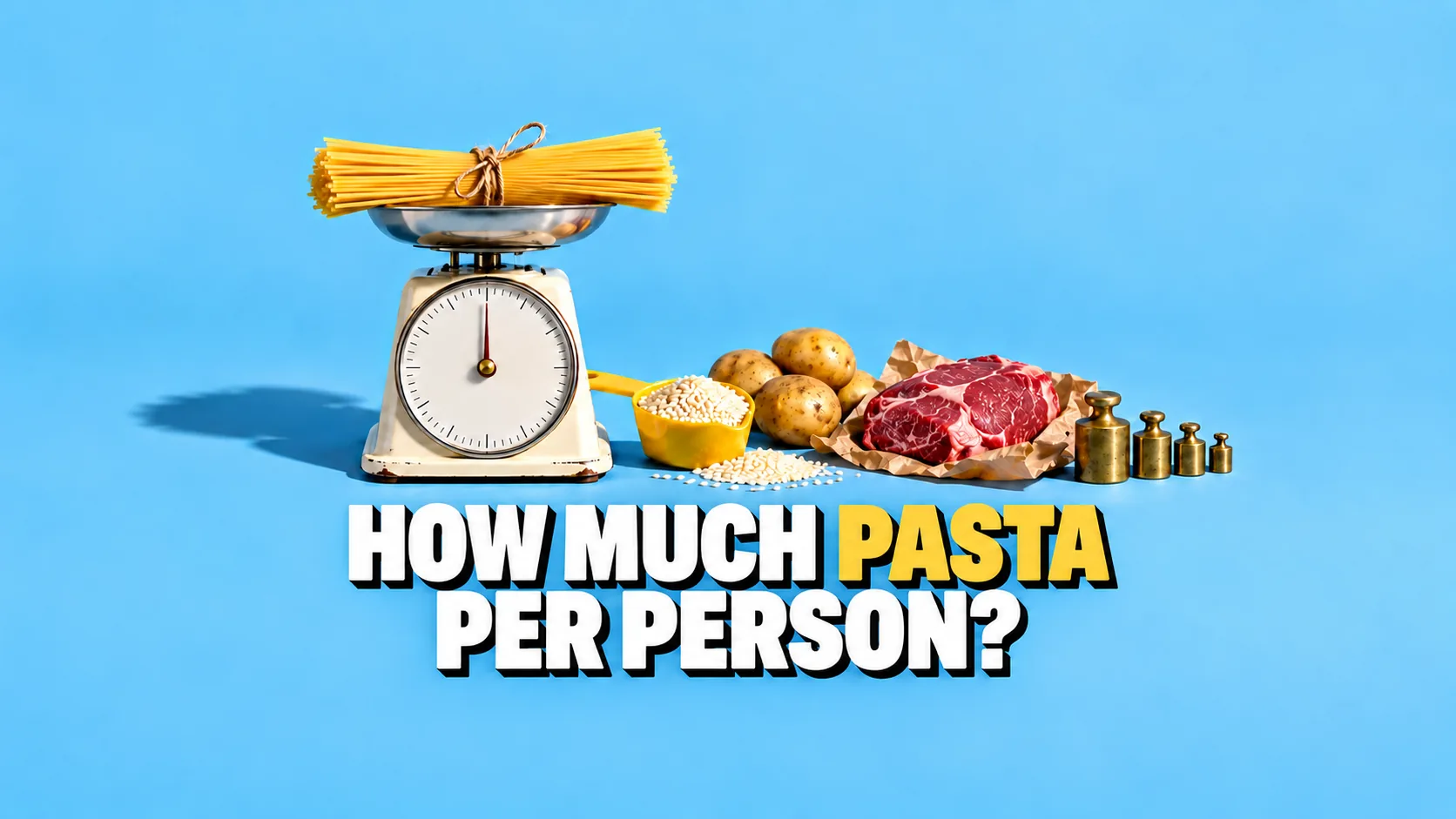
For one adult, plan on 50 to 100 g of dry pasta as a main course, 45 to 75 g of rice or polenta (raw weight), 200 to 300 g of potatoes and 100 to 120 g of meat or fish per person. These are the guide values from Swissmilk and from the 2024 Swiss nutrition recommendations of the FSVO and the Swiss Society for Nutrition (SSN/SGE), summarised in the chart below together with sides, salad, bread and cheese for fondue and raclette. For small children start at about half; for guests, add a margin only on the sides.
Updated October 2026. Sources: Federal Food Safety and Veterinary Office (FSVO, in German BLV) and Swiss Society for Nutrition (SSN/SGE), Swiss nutrition recommendations 2024 (blv.admin.ch, seen 5 October 2026); Swissmilk, “Mengenberechnung pro Person” (swissmilk.ch, seen 5 October 2026); dairy portions for children from the SSN/SGE, as quoted by Switzerland Cheese Marketing (schweizerkaese.ch, seen 5 October 2026). All weights are raw and without waste unless stated otherwise. 1 dl is 100 ml.
How much should you cook per person? The chart
| Food (raw) | FSVO/SSN reference portion | Adult, main course or side (Swissmilk) | Child 1-6 years, rule of thumb |
|---|---|---|---|
| Dry pasta | 45-75 g | 50-100 g as a main course | about half |
| Fresh pasta | not stated | 100-125 g main course, 80-100 g side | about half |
| Rice, polenta, couscous | 45-75 g | 45-75 g | about half |
| Potatoes (unpeeled) | 200-300 g | 200-300 g | about half |
| Bread | 75-125 g | 75-125 g | about half |
| Dry pulses (lentils, chickpeas) | 60 g | 60-80 g | about half |
| Meat: stew pieces, minced meat, thin strips, cutlets | 100-120 g | 100-120 g | about half |
| Roast, meat on the bone | not stated | 150-200 g | about half |
| Fish: fillet / whole fish | 100-120 g (fillet) | 100-120 g / 200-220 g | about half |
| Eggs | 2-3 | 2-3 | 1 |
| Tofu, tempeh, seitan | 120 g | 120 g | about half |
| Vegetables | 120 g (a handful) | 180-200 g main course, 100-150 g side | a child-sized handful |
| Salad (untrimmed) | not stated | 50-80 g main course, 40-50 g side, lamb’s lettuce 30 g | a few leaves fewer |
| Cheese for fondue or raclette | 30 g is the everyday portion of hard cheese | 150-200 g | see below |
| Soup (ready to eat) | not stated | 1.5-2 dl as a starter, 3-4 dl as a main course | about half |
| Sauce | not stated | 0.5-1 dl | about half |
Two rows need a note. The 30 g reference portion of cheese applies to an ordinary day, not to a fondue evening where the cheese is the whole meal: there Swissmilk gives 150-200 g, and our guide to the cost of a fondue night starts from the 200 g per person given by Switzerland Cheese Marketing. For a raclette night the same range applies, plus 200-300 g of potatoes. For fondue chinoise, the sources cited in our fondue chinoise guide, Swissmilk among them, agree on 200-250 g of meat per person.
Set the servings in a recipe and the ingredient quantities rescale: this page’s chart, recipe by recipe.
Scale recipes in Rappn, freeFree, no account required · iOS & Android
Adjust the servings
How much do children eat?
We did not find an official chart for children’s pasta and meat, but there is one solid reference point. For dairy, the SSN/SGE halves the portions exactly for children aged 1 to 6: 1 dl of milk instead of 2 dl, 15 g of hard cheese instead of 30 g. From age 7 the dairy portions are already those of adults. Applying “half” to pasta, rice and meat for the youngest as well is a rule of thumb suggested by Rappn, not an official value: a child’s appetite changes a lot from one day to the next and grows in spurts.
In practice, for a family of four with two small children you count three adult portions, not four. With two children of upper-primary age you count four full portions; for a sporty teenager start at the upper end of the range. The family meal plan uses exactly this calculation.
How do you calculate quantities for guests?
- Count people as portions, not as heads. Adults 1, small children 0.5, school-age children and teenagers 1. Eight adults plus two small children make nine portions, not ten.
- Multiply the chart by the portions. Nine portions of rice at 75 g make 675 g: you buy one 1 kg pack, not two 500 g packs plus a stockpile.
- Put the margin on the sides, not on the meat. If you worry about running short, add more bread, potatoes or a bigger salad: they are inexpensive, they keep or they can be reused. Leftover meat is what most easily ends up in the bin.
- More courses, smaller portions. With a starter and a dessert, the main course can drop towards the low end of the range: 50 g of pasta instead of 100 g.
- Round to the pack size. The calculation says 675 g, the shop sells 500 g or 1 kg. Decide beforehand what you will do with the rest: that is where waste is created or avoided.
For a longer festive meal such as dinner on 25 December, our guide to Christmas dinner planning applies these values to a December shopping calendar.
Is it worth cooking extra on purpose?
The quantities in the chart are for one meal. Often, though, it pays to cook double once: stew, minestrone, lentils and rice keep in the fridge for the next day or can be frozen in portions. Plan it like a proper meal, with its own day in the plan, instead of hoping the leftovers find a use on their own. According to foodwaste.ch, each person in Switzerland throws away on average about 80 kg of food a year at home, worth about CHF 600: a good part comes from portions guessed by eye and from leftovers without a plan. Concrete ideas are in the guide to using up leftovers, and storage times in the one on freezing food.
A dish meant to last two days is written into the plan like this: Monday risotto for four at double quantity, Tuesday rice cakes with a lamb’s lettuce salad. The quantity on the shopping list follows the plan, not the other way round. The full method, in five steps, is in the guide to meal planning in Switzerland.
How does the Rappn app adjust portions?
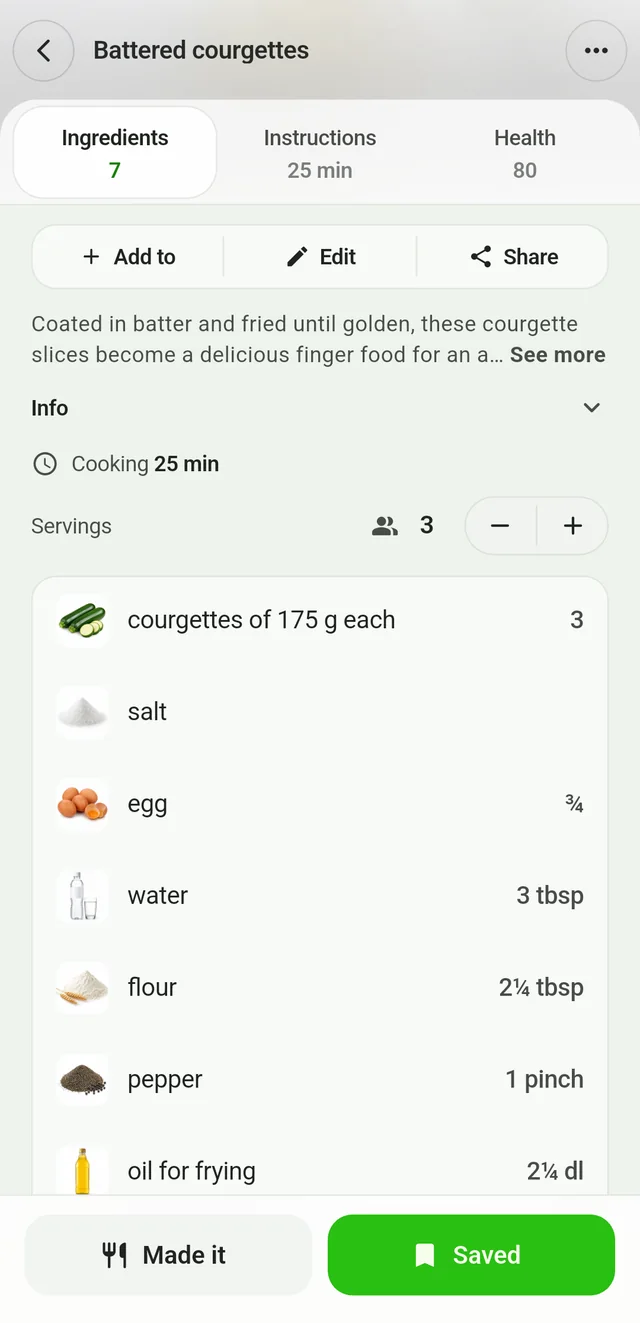
In Rappn’s Kitchen, every recipe shows the “Servings” with minus and plus buttons: when you change the number, the ingredient quantities recalculate by themselves. That is the step of the chart above, done for you, recipe by recipe. The recalculation is purely mathematical, though, so it can show you “¾” of an egg: rounding to the pack size stays your decision. With “Add to” you send the ingredients to a cart such as “Weekly shop”, choosing which ones to tick; for each line of the list you see which stores have the product on offer this week. The recipes in the app come from external publishers named in the app; the app is free, no account required, for iOS and Android.
Updated: .
Why Rappn?
Rappn is an independent grocery price comparison app in Switzerland, with no commercial agreements with any retailer. Our comparisons are truly independent.
- 100% free: no subscription, no hidden costs
- Neutral: no commercial agreements with Migros, Coop, Aldi, Lidl, Denner, Aligro, or Otto’s
- Updated daily, as soon as the chains publish their deals
- The chains’ deals in one place: search, filter, compare, no account needed
- Meal planner in the Kitchen tab: plan the week, send the ingredients to your list
Ready to save on groceries?
Install Rappn and compare for yourself this week. No account required.Scan the code, install Rappn and compare current offers. No account needed.
Built in Switzerland, for Switzerland

Frequently Asked Questions
How much pasta per person as a main course?
50 to 100 g of dry pasta per person according to Swissmilk; the FSVO and SSN/SGE reference portion is 45-75 g raw. For fresh pasta, plan on 100-125 g.
How much rice per person, raw?
45 to 75 g of raw rice per adult; the same range applies to polenta and couscous (FSVO/SSN and Swissmilk). For a risotto as a one-dish meal, stay towards the higher value.
How much meat per person?
100 to 120 g of raw meat for stew, minced meat or thin strips, 150 to 200 g for a roast or meat on the bone (Swissmilk). For fondue chinoise, our fondue chinoise guide gives 200-250 g.
How much cheese per person for fondue or raclette?
150 to 200 g of cheese per adult according to Swissmilk; Switzerland Cheese Marketing starts from 200 g for fondue. With raclette, add 200-300 g of potatoes per person.
How much does a child eat compared with an adult?
For children aged 1 to 6, the SSN/SGE halves the dairy portions (1 dl of milk instead of 2 dl). Using half for pasta and meat too is a rule of thumb, not an official value; from age 7 the portions quickly approach those of adults.
How many potatoes per person?
200 to 300 g of unpeeled potatoes per adult, both as a side and for raclette (FSVO/SSN and Swissmilk).