
Pork Prices in Switzerland: What Fillet, Chop and Roast Cost per Kilo
35 pork deals at 3 chains for the canton of Zurich, most valid until Wed 28 Oct. Lowest price per kilo: CHF 5.50/kg. Updated 22 Oct 2026.


Lowest prices per kilo
See all 35- deals
- 35
- chains
- 3
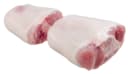
 Aligrountil Sat 24 Oct
CHF 5.50 per kilo
CHF 5.50
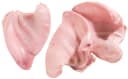 Aligrountil Sat 24 Oct
CHF 5.90 per kilo
CHF 5.90

Naturafarm Pork Stewing Meat approx. 600g
 Coopuntil Wed 28 Oct
CHF 8.00 per kilo
CHF 4.80
Promotions only, not regular shelf prices. Price per kilo: deal price divided by the weight in kilos, checked against the chain’s own figure where there is one. Source: deals published by the chains.
All pork deals
For the canton of Zurich
35 deals
- −21%
- −28%
- −52%
- −23%
- −21%
- −31%
- 3+ items −30%
- −50%
- −20%
- −22%
- −24%
- −41%
- 3+ items −30%
- −22%
- 3+ items −30%
- −50%
- 3+ items −30%
- −25%
- −28%
- −30%
- −41%
- −43%
- 3+ items −30%
- 3+ items −30%
Bell Naturafarm marinated pepper pork steak 320g
CoopCHF 25.81 per kilo
CHF 8.26was
11.80until Wed 28 Oct

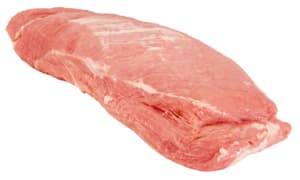
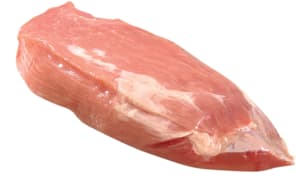
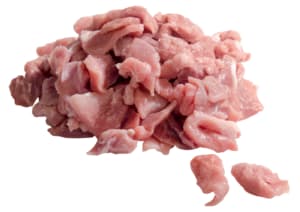


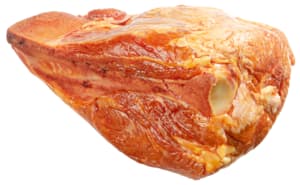





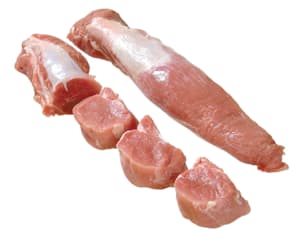


Guide
Pork is the most eaten meat in Switzerland, at 19.17 kilos per person in 2024 (Swiss Agricultural Report 2025). The price per kilo depends almost entirely on the cut, from the ex-farm producer price to the fillet on the shelf. This guide explains the price ladder with dated fixed points from Blick and Suisseporcs, plus labels, promotion days and the base price on the ticket.
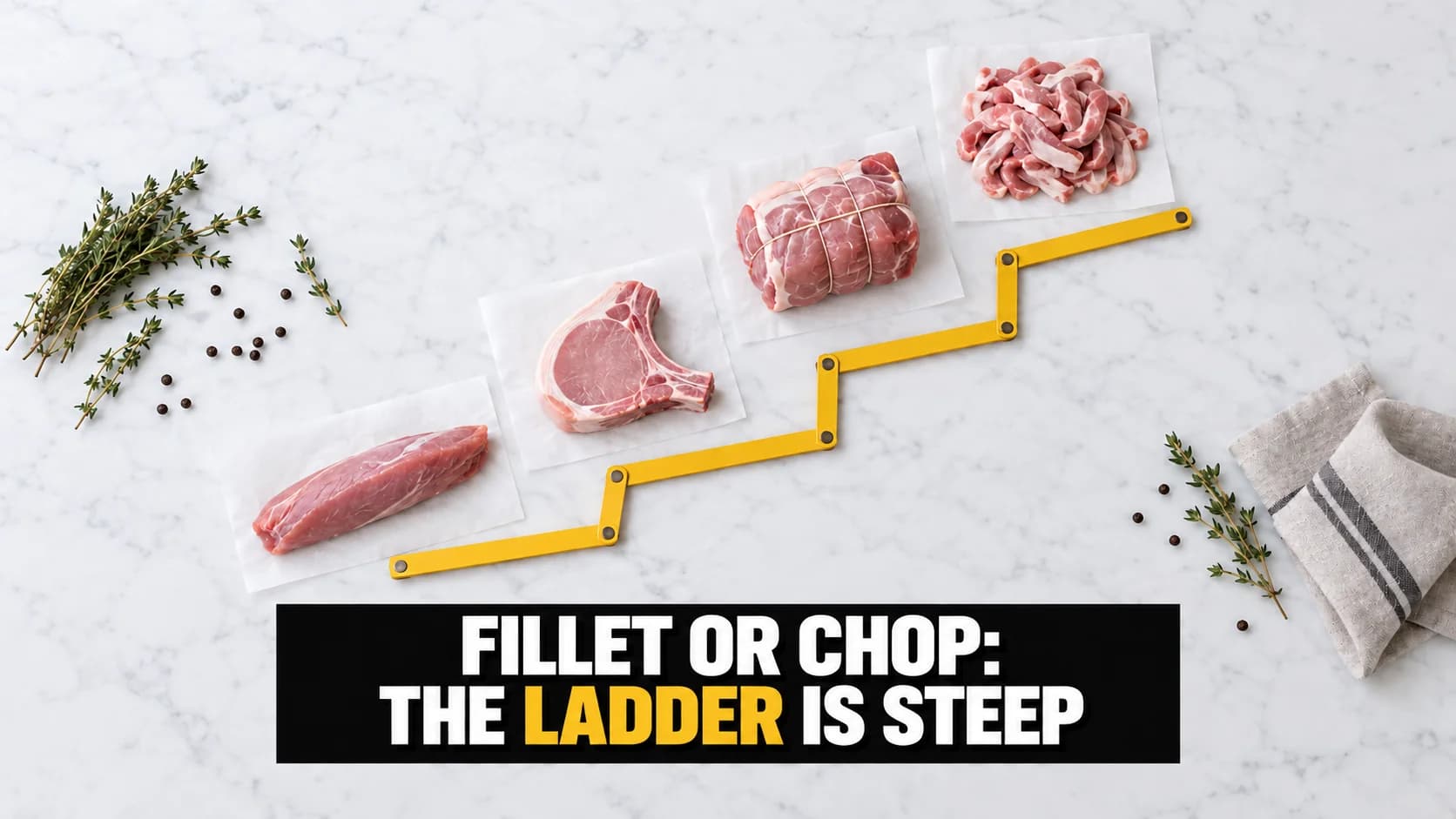
There is no single price per kilo for pork. There is a price ladder, and the cut decides which rung you are standing on. Two dated fixed points show the spread: on 7 July 2026 Blick recorded pork fillet under Coop’s Prix Garantie label at CHF 28.90 per kilo, and pork escalopes at Migros at CHF 2.85 per 100 grams, which is CHF 28.50 per kilo. At the other end of the chain, in the week of 4 to 10 September 2026 the farmer received CHF 3.20 (QM) to CHF 3.45 (IP-SUISSE) per kilo carcass weight ex-farm, according to Suisseporcs. Everything this guide explains sits between those two numbers.
Last updated: September 2026. Sources: Swiss Agricultural Report 2025 (agrarbericht.ch) for consumption, meat supply and the domestic share, 2024 figures; Proviande (proviande.ch) for the 2025 meat supply; Suisseporcs (suisseporcs.ch) for producer prices in the week of 4 to 10 September 2026; Blick of 12 September 2025 and 7 July 2026 for the dated retail prices; ipsuisse.ch for the label mapping; kmu.admin.ch, "Kennzeichnung der Preise", for the unit price and the comparison price under Art. 16 para. 1 PBV. This week's promotion prices are not in the guide text but live in the deals list on this page.
Rappn is an independent grocery price comparison app in Switzerland, with no commercial agreements with any retailer.
What does pork cost per kilo in Switzerland?
| Stage | Product | Price | Source and date |
|---|---|---|---|
| Producer, QM | Slaughter pigs, per kg carcass weight ex-farm | CHF 3.20 | Suisseporcs, week of 4 to 10 September 2026 |
| Producer, IP-SUISSE | Slaughter pigs, per kg carcass weight ex-farm | CHF 3.45 | Suisseporcs, week of 4 to 10 September 2026 |
| Retail, Coop | Pork fillet, Prix Garantie | CHF 28.90 per kilo | Blick, 7 July 2026 |
| Retail, Migros | Pork escalopes (Schweinsplätzli) | CHF 2.85 per 100 g, that is CHF 28.50 per kilo | Blick, 7 July 2026 |
Those four rows are deliberately not a ranking. The top two apply to a whole slaughtered pig, the bottom two to one single premium cut each, and they come from two different months. Reading the gap as a margin gets the arithmetic wrong: between the barn and the chilled shelf sit slaughter, butchery, the cold chain, packaging, and the whole part of the animal that is never sold as fillet.
This is Rappn: all current pork offers from the chains side by side, with the price per kilo next to the pack price, free and without an account.
Compare pork pricesFree, no subscription · iOS & Android
"pork"
Offers
Fillet, chop, roast, strips: why the ladder is so steep
The order follows the anatomy. Fillet and chop come from the back, the least worked and smallest part of the animal by volume. Roasting joints come from larger pieces such as the shoulder, strips from the smaller offcuts of butchery, and belly bacon from the underside. One pig yields exactly two fillets but a great deal of shoulder, and that ratio sits at the root of every price gap on the shelf.
Two practical consequences follow. First, "pork" is worthless as a unit of comparison between two chains: only the same cut and the same programme compare, fillet against fillet and label against label. Second, the largest franc amount in a promotion almost always lands on the fillet, simply because its price per kilo is the highest. Starting from the CHF 28.90 per kilo Blick recorded at Coop on 7 July 2026, a ten percent discount is worth nearly three francs a kilo; on strips, considerably less.
The meat price war: what was measured in 2025 and 2026
| Chain | What Blick reported on 7 July 2026 | Cut |
|---|---|---|
| Coop | Prix Garantie pork fillet now CHF 28.90 per kilo, one franc less | Fillet |
| Migros | Pork escalopes now CHF 2.85 per 100 grams, 70 centimes less | Escalopes |
| Lidl Schweiz | Farmer sausages now CHF 3.99; a kilo of pork medallions with bacon three francs less | Sausages and medallions |
| Denner | 150 grams of shoulder ham 10 centimes less | Shoulder ham |
| Aldi Suisse | Prices down by up to 16 percent | Fresh meat range |
This table is a snapshot too, not a ranking. The five rows cover five different products in five different pack sizes, and they describe a movement observed on a single day in July 2026. What survives is the direction: 2026 was a year of falling pork prices on the shelf. Where your cut sits today is in no article, only in the live comparison. For the wider view across all meats, see our guide to the cheapest meat in Switzerland.
What the pig farmer gets, and why that is not your price per kilo
Suisseporcs publishes producer prices weekly. For the week of 4 to 10 September 2026 it lists CHF 3.20 for QM slaughter pigs and CHF 3.45 for IP-SUISSE, each per kilo carcass weight ex-farm. On 7 July 2026 Blick reported that slaughterhouses were then paying CHF 2.50 per kilogram, without stating the weight basis, and that at the end of 2025 the slaughter price still stood at CHF 4.50 per kilo. The same article described roughly 4'000 surplus pigs going to slaughter every week and more than 900 piglets sent weekly to an abattoir near Stuttgart.
Behind that sits the pig cycle the Agricultural Report also describes: the domestic pig market suffered an oversupply in 2022 and 2023, which was met with higher exports. None of this tells you what to buy, but it does explain something: when pork appears in the promotions unusually often for months on end, the reason normally lies in supply rather than in a retailer’s generosity. Across all meats together, the domestic share in 2024 was 79.6 percent, 3.3 percentage points lower than in 2023 (Agricultural Report 2025).
The label on the pack: IP-SUISSE, Naturafarm and the ladybird
A price comparison that ignores the programme compares two different products. According to ipsuisse.ch, IP-SUISSE products carry the ladybird mark at Denner, Migros, Coop, Volg in the AGRI NATURA line and at Manor. For pork the same source gives a specific mapping: IP-SUISSE pork is sold at Coop under the Naturafarm label. Holding Naturafarm against a conventional offer at another chain therefore compares a programme with the absence of one, and part of the price gap is the price of the programme.
The comparison only becomes clean when both sides carry the same thing: same cut, same weight class, same label. What each mark on a Swiss pack actually means is set out in our guide to Swiss food labels. For the processed products from the same animal, ham, sausage and cold cuts, a different per-100-gram logic applies, which we break down here: sausage and cold cut prices in Switzerland.
When does pork get cheaper? The promotion rhythm
The field moves on two weekdays. Migros, Coop and Denner start their weekly Aktionen on Thursday, though not since the same date: Coop switched in the week of 21 January 2025, Migros and Denner followed on 5 February 2026. Aldi Suisse and Lidl Schweiz run two rounds a week, on Monday and Thursday. Prices therefore change every Thursday, and Rappn shows you the ones that apply at the moment you look.
Fresh meat also has a short shelf life, so promotions here stay tied to the selling days instead of running for weeks. If you miss one chain’s Thursday start, the discounters give you a second window on Monday within the same week. How that rhythm plays out across the whole meat counter is covered in our guide to meat deals in Switzerland.
The unit price per kilo: the number that actually compares
Meat is sold in 300-gram, 450-gram or 600-gram trays, so the pack price printed on the front compares nothing at all. Federal rules require a unit price for measurable goods: for measurable goods whose retail price is calculated according to the quantity sold, the base price per litre, kilogram, metre and so on must be shown (kmu.admin.ch, "Kennzeichnung der Preise"). The francs-per-kilo figure is therefore already on the shelf label, just printed smaller than the promotional price.
The second reflex is the crossed-out price. Since 1 January 2025, a comparison price may be shown next to the price actually payable only if the goods were offered at that price for at least 30 days beforehand (Art. 16 para. 1 PBV, via kmu.admin.ch). A "was" price therefore names a price that genuinely existed. It says nothing, however, about what the same cut costs in the same week at another chain.
Which chain has the cheapest pork? It depends
It depends on the cut, the label, the week and your canton. The same chain can lead on fillet and trail on strips, and Blick’s snapshot of 12 September 2025 shows how tight the field can be: four of five retailers at exactly the same price per 100 grams for the lean chop. That is why the guide text carries no weekly price table: every figure in it would be wrong by the following Thursday. The current prices are in the table on this page.
Rappn pulls together the current offers from the seven chains Migros, Coop, Aldi Suisse, Lidl, Denner, Aligro and Otto’s, in four languages and filterable by canton. The comparison shows the unit price per kilo next to the pack price, which for meat is the figure that actually matters, and you can set a price alert on your cut instead of leafing through five flyers every Thursday. Rappn is free, works without an account and is paid by no retailer.
Next step: open the current offers, search for "pork fillet" and filter to your canton. Then compare the rows on the price per kilo, not on the pack price, and set an alert on the cut you buy anyway.
Updated: .
Why Rappn?
Rappn is an independent grocery price comparison app in Switzerland, with no commercial agreements with any retailer. Our comparisons are truly independent.
- 100% free: no subscription, no hidden costs
- Neutral: no commercial agreements with Migros, Coop, Aldi, Lidl, Denner, Aligro, or Otto’s
- Updated daily, as soon as the chains publish their deals
- The chains’ deals in one place: search, filter, compare, no subscription
- Meal planner in the Kitchen tab: plan the week, send the ingredients to your list

Ready to save on groceries?
Install Rappn and compare for yourself this week. No account required.Scan the code, install Rappn and compare current offers. No account needed.




Frequently Asked Questions
What does a kilo of pork cost in Switzerland?
It depends almost entirely on the cut, so there is no useful average price. Two dated fixed points: on 7 July 2026 Blick recorded Coop’s Prix Garantie pork fillet at CHF 28.90 per kilo and Migros pork escalopes at CHF 2.85 per 100 grams, that is CHF 28.50 per kilo. Roasting joints and strips sit lower, belly and processed products follow their own logic. The current prices at your chain are live in Rappn.
Why is pork fillet so much dearer than roast or strips?
Because the price ladder follows the anatomy. Fillet and chop come from the back, the smallest part of the animal by volume; roasting joints come from larger pieces such as the shoulder, strips from the smaller offcuts of butchery. One pig yields exactly two fillets but a great deal of shoulder, and that ratio is the root of every price gap on the shelf.
How much does the pig farmer get per kilo?
According to Suisseporcs, slaughter pigs in the week of 4 to 10 September 2026 were priced at CHF 3.20 (QM) and CHF 3.45 (IP-SUISSE) per kilo carcass weight ex-farm. On 7 July 2026 Blick reported CHF 2.50 per kilogram, without stating the weight basis, and a slaughter price still at CHF 4.50 per kilo at the end of 2025. The gap to the shelf price is not a margin: it covers slaughter, butchery, the cold chain and every part of the animal that is never sold as fillet.
What does the label on a pork pack mean?
According to ipsuisse.ch, IP-SUISSE products carry the ladybird mark at Denner, Migros, Coop, Volg in the AGRI NATURA line and at Manor. For pork the same source gives a clear mapping: IP-SUISSE pork is sold at Coop under the Naturafarm label. A price comparison is therefore only clean when the same programme appears on both sides.
When are there pork deals in Switzerland?
Migros, Coop and Denner start their weekly Aktionen on Thursday, though not since the same date: Coop switched in the week of 21 January 2025, Migros and Denner followed on 5 February 2026. Aldi Suisse and Lidl Schweiz run two rounds a week, on Monday and Thursday. Fresh meat promotions also stay tied to the selling days, because shelf life is short.
Why does the unit price per kilo matter more than the pack price?
Because meat is sold in 300, 450 or 600 gram trays, so the pack price compares nothing. Per kmu.admin.ch, for measurable goods whose retail price depends on the quantity sold, the base price per kilogram must be shown. And since 1 January 2025, a crossed-out comparison price is allowed only if the goods were offered at that price for at least 30 days beforehand (Art. 16 para. 1 PBV).