
Balanced Meal Plan Based on the Swiss Food Pyramid
The Swiss dietary recommendations from SGE and FSVO (2024 edition) give clear daily amounts. Here is how they become a week of lunches and dinners that rotates meat, fish, legumes and wholegrain.
Rappn compares prices across all 7 chains live: free, no account.
Plan your week in Rappn, free
The Swiss food pyramid, officially the Swiss dietary recommendations from SGE (Swiss Society for Nutrition) and FSVO (2024 edition), asks for 5 portions of fruit and vegetables a day (3 vegetables, 2 fruit), 3 portions of cereals and potatoes (at least half wholegrain), 2-3 portions of dairy, 1 portion of protein foods rotated through the week, a small handful of nuts and 2 tablespoons of oil. Meat is capped at 2-3 times a week, legumes at least once. For the other days you rotate the remaining protein sources (fish, eggs, tofu, cheese). The seven-day split below is our own example, not an official figure.
Updated October 2026. Sources: Swiss dietary recommendations (Swiss food pyramid), SGE (Swiss Society for Nutrition) and FSVO, 2024 edition, blv.admin.ch; SRF Wissen and ZHAW Wädenswil on keeping leftovers.
What does the Swiss food pyramid recommend per day?
| Level | Amount per day | 1 portion equals |
|---|---|---|
| Fruit and vegetables | 5 portions (3 vegetables, 2 fruit) | 120 g, a handful; seasonal and colourful |
| Cereals and potatoes | 3 portions, at least half wholegrain | 75-125 g bread or dough, or 200-300 g potatoes, or 45-75 g (dry) pasta, rice, flakes, polenta, couscous, buckwheat, quinoa or flour |
| Dairy | 2-3 portions | 2 dl milk, or 150-200 g yoghurt, quark or cottage cheese, or 30 g semi-hard or hard cheese, or 60 g soft cheese; preferably unsweetened |
| Protein foods | 1 portion, rotated through the week | 60 g raw legumes, or 120 g tofu, tempeh or seitan, or 30-40 g soy granules, or 2-3 eggs, or 100-120 g meat, fish or seafood, or 1 portion of dairy |
| Nuts and seeds | 1 small handful, unsalted | 15-30 g |
| Oils and fats | 2 tablespoons vegetable oil, at least 1 of them rapeseed oil | 20 g oil; butter and margarine sparingly, at most 10 g a day |
| Sweets, sweet drinks, salty snacks | optional, 0-1 portion | 2 dl sweet drink, or 20 g sweets, or 20 g salty snacks |
Drinks: 1-2 litres a day, unsweetened. Cream sauces and fried food only occasionally, alcohol not every day. Across the week: legumes at least once, meat (poultry and processed meat included) at most 2-3 times.
The screens show the day in the Planner with kcal and macros as recipe data, and the categories that help you rotate the week's protein sources.
Plan your week in Rappn, freeFree, no account required · iOS & Android
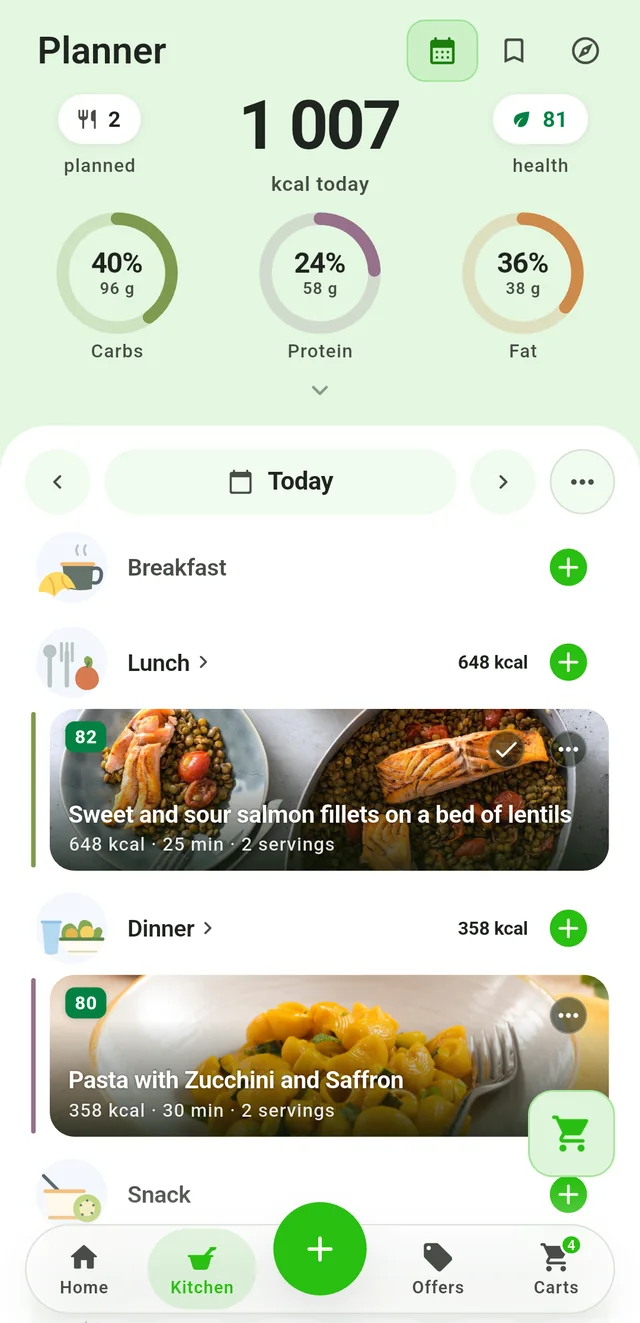
See your day at a glance
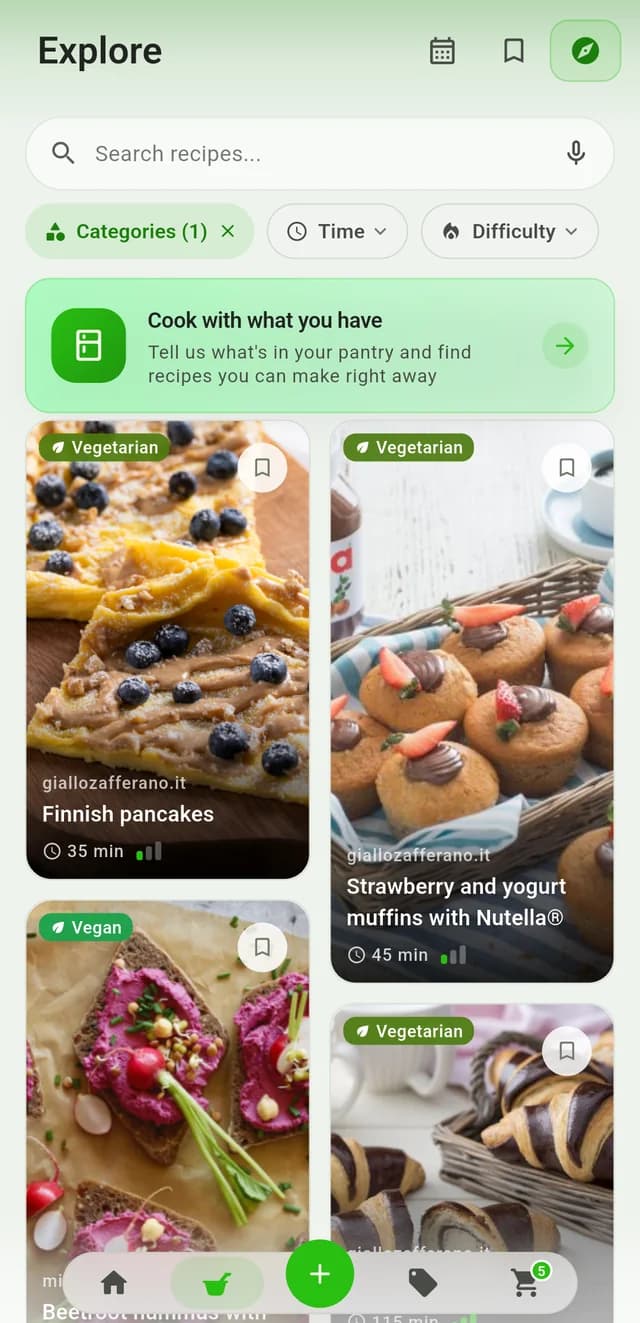
Filter by category
What changed in the 2024 edition?
According to the Swiss dietary recommendations (2024 edition, FSVO page) and the federal press release of 11 September 2024, three points are clear: legumes are counted explicitly among the protein foods, to be eaten at least once a week; meat, including poultry and processed meat, is given as at most 2-3 times a week; dairy is 2-3 portions a day. Sustainability is also taken into account. We do not compare with older values here: for details, the official page is the reference.
How do you turn the pyramid into a 7-day plan?
- Protein first. Decide which evening is meat (2-3 times), fish (1-2), legumes (at least 1), eggs, tofu or cheese.
- Then the starch. Alternate wholegrain pasta, potatoes, rice, polenta and bread, and go wholegrain for at least half of the portions.
- Two vegetable portions at dinner. With the vegetables at lunch you reach 3 portions; the fruit (2 portions) goes into breakfast and snacks.
- Dairy and nuts at breakfast and snacks. Unsweetened yoghurt or quark, oats, fruit and a handful of nuts.
What does a concrete week look like?
| Day | Lunch | Dinner | Protein of the day | Starch |
|---|---|---|---|---|
| Monday | lentil salad with carrot, apple and walnuts | minestrone with small wholegrain pasta | legumes | wholegrain bread, pasta |
| Tuesday | wholegrain sandwich with quark, cucumber and radish | chicken breast with roasted vegetables | poultry (meat) | bread, brown rice |
| Wednesday | tofu and vegetable stir-fry | vegetable soup with wholegrain bread | tofu | buckwheat, bread |
| Thursday | wholegrain pasta with tomato and courgette sauce | baked fish with boiled potatoes and fennel | fish | pasta, potatoes |
| Friday | mixed salad with hard cheese, nuts and bread | mushroom risotto | cheese | bread, rice |
| Saturday | polenta with roasted vegetables | rösti with a fried egg and green salad | eggs | polenta, potatoes |
| Sunday | braised beef with root vegetables | vegetable soup, then oats with yoghurt, apple and nuts (Birchermüesli style) | meat (beef) | wholegrain pasta, oats |
Check: meat 2 times (the ceiling is 3), fish once, legumes once (add chickpeas to another dinner if you like), tofu, cheese and eggs once each. Älplermagronen with apple sauce stay an occasional dish. Cooked rice goes into the fridge and is eaten within two days, other leftovers within three (SRF Wissen, ZHAW Wädenswil).
How do you shop for it?
Write one single list, grouped by category: fruit and vegetables, bread and cereals, dairy and eggs, meat and fish, legumes and tofu, pantry. Pick vegetables in season with the seasonal produce calendar and compare proteins with protein sources compared by price. The method is in the guide to meal planning in Switzerland; see also eating healthy on a budget, quick weeknight dinners, gluten-free or lactose-free plans and the recipes.
How does Rappn help put the plan into practice?
In Rappn's Kitchen, the “Planner” screen shows the planned meals for each day (Breakfast, Lunch, Dinner, Snack) with kcal and minutes, and at the top the day's kcal, Carbs, Protein, Fat and a “health” value: these are recipe data, not nutrition advice. Under “Explore”, the “Categories” filter also includes diet styles (vegetarian, vegan, lactose-free, gluten-free, low carb, protein), handy for the legume or tofu evening. The ingredients of the planned dishes can go into a cart such as “Weekly shop”. Rappn is a free, independent price-comparison app with no commercial agreements with any retailer.
Updated: .
Why Rappn?
Rappn is an independent grocery price comparison app in Switzerland, with no commercial agreements with any retailer. Our comparisons are truly independent.
- 100% free: no subscription, no hidden costs
- Neutral: no commercial agreements with Migros, Coop, Aldi, Lidl, Denner, Aligro, or Otto’s
- Updated daily, as soon as the chains publish their deals
- The chains’ deals in one place: search, filter, compare, no account needed
- Meal planner in the Kitchen tab: plan the week, send the ingredients to your list
Ready to save on groceries?
Install Rappn and compare for yourself this week. No account required.Scan the code, install Rappn and compare current offers. No account needed.
Built in Switzerland, for Switzerland

Frequently Asked Questions
How many portions of fruit and vegetables a day does the Swiss food pyramid recommend?
Five portions a day: three vegetables and two fruit. One portion is about 120 g, a handful (SGE and FSVO, 2024 edition).
How often a week can you eat meat?
The Swiss dietary recommendations say at most 2-3 times a week, poultry and processed meat included. Legumes should be eaten at least once a week.
How much dairy a day does the Swiss food pyramid recommend?
2-3 portions a day, for example 2 dl milk, 150-200 g yoghurt or quark, or 30 g hard cheese. Preferably unsweetened.
What counts as one portion of protein?
For example 60 g raw legumes, 120 g tofu, 2-3 eggs or 100-120 g meat or fish. You eat one portion a day and rotate the sources through the week.
Is a 7-day plan based on the food pyramid right for everyone?
The recommendations are for healthy adults aged 18 to 65. For children, pregnancy, older people or medical diets, ask a doctor or a dietitian.